

Most bedroom ideas for couples start with decorating. Start with the width instead. A queen bed is 60 inches wide, so two people get 30 inches each, and a single adult in a twin gets 38 inches.
Sharing a bed costs each person eight inches of width, and a small room is where that stops being abstract. There is no room to buy the extra width back.
The second cost is access. A bed reachable from both sides needs a walkway on both sides, and the second walkway takes 26 inches of room width that a single sleeper never spends.
Everything else in this article is a question about whether an object needs to exist twice. Some do, most do not, and telling them apart is the whole job.
Thirty inches each
Bed size is the first decision, and it is usually made on what fits rather than on what each person gets. Both numbers are worth seeing.
| Bed | Width | Per person |
|---|---|---|
| Twin, one adult | 38 in | 38 in |
| Full or double | 54 in | 27 in |
| Queen | 60 in | 30 in |
| King | 76 in | 38 in |
| Split king, two twin XL | 76 in | 38 in |
A full bed gives each person 27 inches, which is less than a cot. It is the size most small rooms default to, and it is the one most likely to produce a bad night.
Buy the queen over the full if the room takes it, since three inches each is the difference people notice.
A king only fits a room over 12 feet wide once walkways are counted, so it rarely enters this conversation.
The split king matters more. Two twin XL mattresses on one base give 38 inches each and let both sides pick their own firmness.
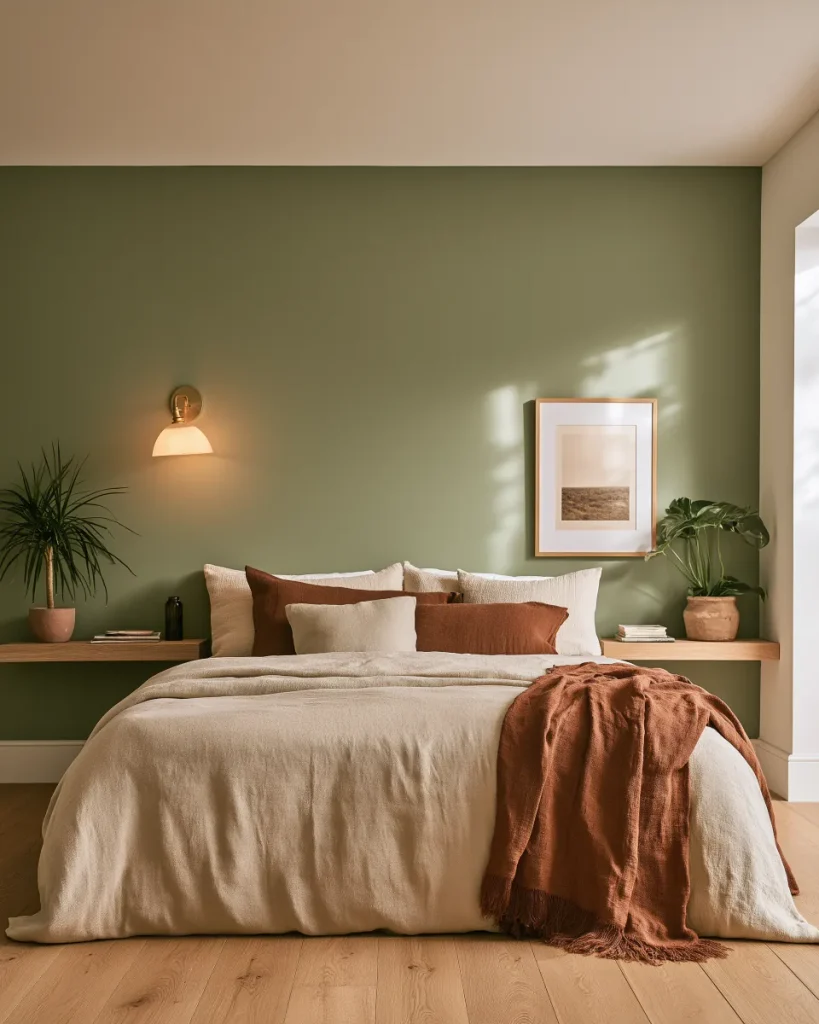
The second walkway costs 26 inches
A bed against a wall needs one walkway. A bed reachable from both sides needs two, and that is the single largest layout cost in a shared room.
| Access | Width needed with a queen | Room width |
|---|---|---|
| One side, 26 in walkway | 86 in | 7.2 ft |
| Both sides, 26 in walkway each | 112 in | 9.3 ft |
| Both sides, 30 in walkways | 120 in | 10.0 ft |
| Difference | 26 in | About 2 ft of room |
In a 10-foot room, that second walkway is 22 percent of the width. It buys one thing, which is that neither person climbs over the other to get out.
Give up the second walkway only if one of you never gets up in the night, and be honest about which of you that is.
The compromise worth knowing is a bed pulled 12 inches off the wall rather than against it. That is not a walkway, and it is enough to change the sheets from both sides without moving the bed.
Everything else in the room competes for the floor those walkways leave over.
How each piece of furniture earns the floor it stands on is the wider version of that arithmetic.
What genuinely needs two
A short list, and every item on it earns the duplication because one person using it stops the other from using it.
Good bedroom ideas for couples are mostly this test applied item by item. If one person using the thing blocks the other, buy two. Otherwise buy one better one.
Two of these, without argument
- A reading light, since one lamp means one person reads and one does not
- A charging point on each side, because a shared cable crosses the bed
- A pillow each, obviously, and increasingly a duvet each
- A surface each, though it does not have to be a nightstand
- A drawer each in whatever storage exists, rather than a shared jumble
Duvets are the one thing people resist and the one that resolves the most arguments. Two single duvets on a queen cost nothing in floor space and remove the tug of war and most of the temperature problem.
Switch to two single duvets on a shared bed, which costs no floor space and solves temperature and movement at once.
Two of anything small also means two containers rather than one shared drawer, for the same reason. Two people need two trays rather than one shared layer applies to anything that gets used daily by both.
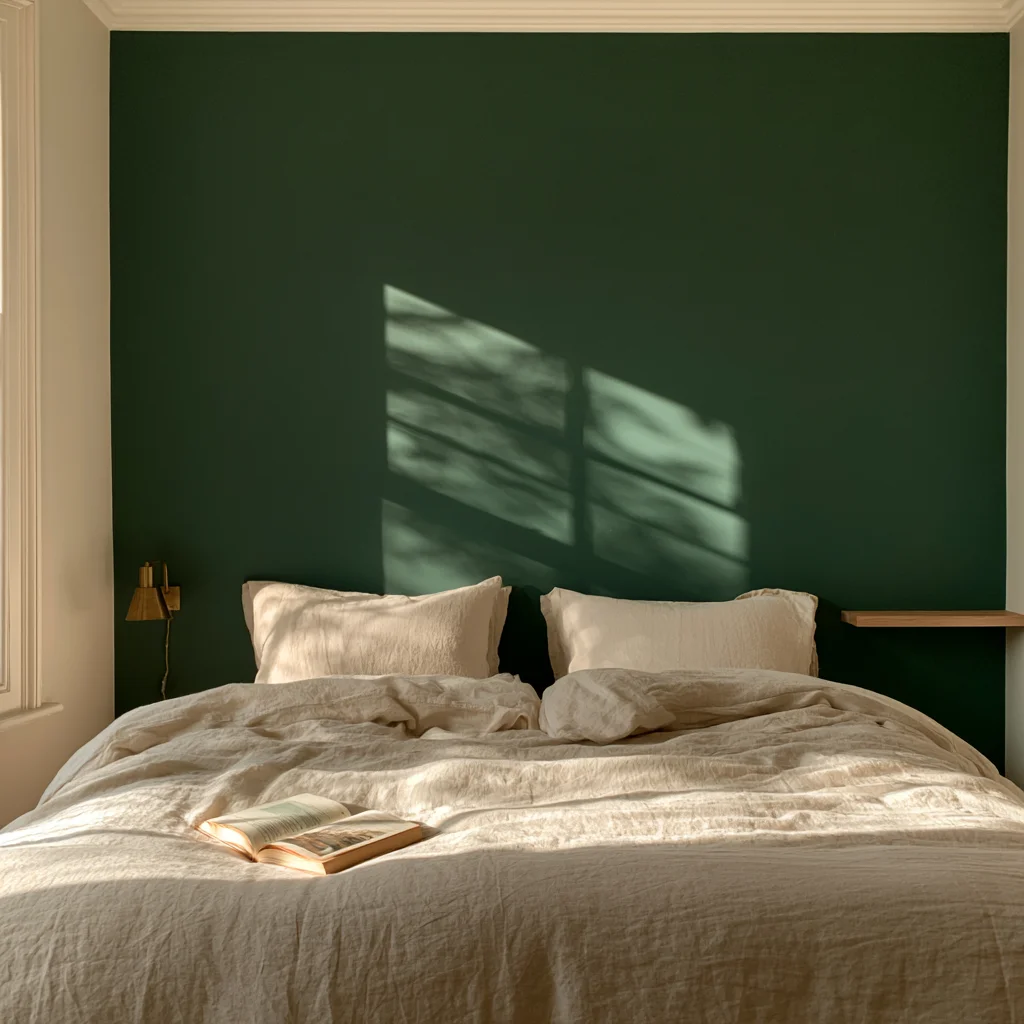
What breaks when you duplicate it
Most furniture is worse in pairs in a small room. Two of a thing means two footprints and half the usefulness of one larger thing.
This is where bedroom ideas for couples usually go wrong, because symmetry looks correct in a photograph and costs floor space in a real room.
Buy one wide piece rather than two narrow ones wherever the item is shared rather than used simultaneously.
| Item | Two of them cost | Better as one |
|---|---|---|
| Nightstand, 18 by 16 in | 4.0 sq ft | A shelf on either side, zero floor |
| Dresser, 36 by 18 in | 9.0 sq ft | One wider dresser, split by drawer |
| Chair, 20 by 20 in | 5.6 sq ft | None, since neither gets sat on |
| Laundry basket, 16 by 12 in | 2.7 sq ft | One basket, sorted at the machine |
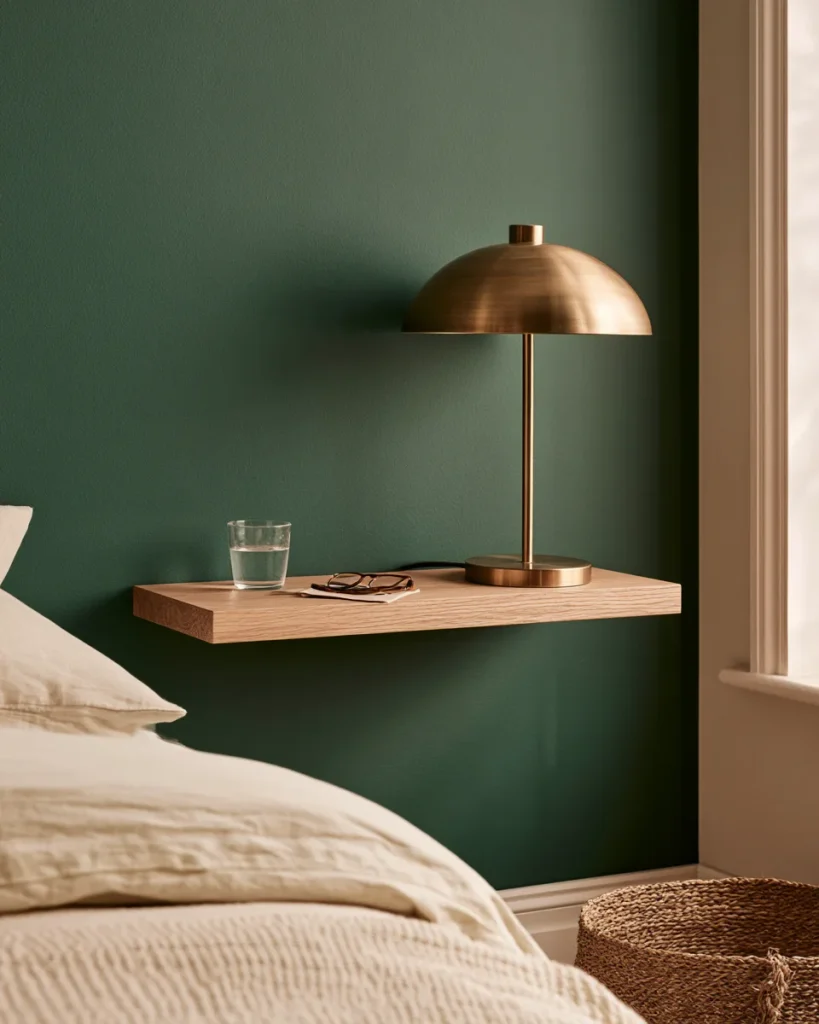
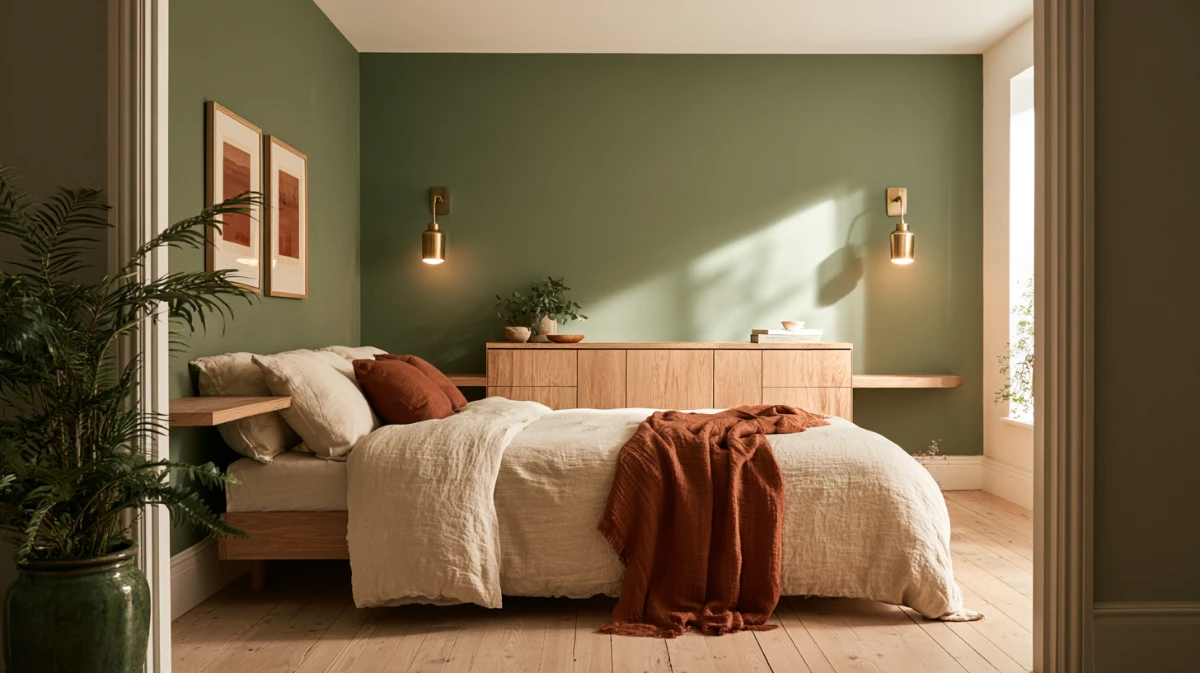
Two nightstands take four square feet in a room where the bed already takes thirty. Two floating shelves at bed height do the same job and take none.
Replace paired nightstands with a shelf on each side, mounted at mattress height rather than above it.
Load is the constraint on that, since a shelf beside a bed carries a lamp, a book, and a glass. What a wall fixing genuinely holds decides whether the shelf version is available.
What goes on that surface is a separate question, and it fills faster than people expect. The three moments a bedside surface has to serve cover what earns a place.
The problems that are not about furniture
Temperature, schedule, and light cause more friction in a shared room than any layout does, and no amount of storage fixes them.
A 2025 American Academy of Sleep Medicine survey found 31 percent of US adults have slept in another bed or space to accommodate a bed partner.
Adults aged 35 to 44 were the most likely at 39 percent, and those over 65 the least likely at 18.
The phrase attached to it sounds dramatic, and the practice is not. AASM frames it as sleep health rather than relationship trouble.
The survey counts a second bed in the same room as well as a separate room, which matters in a flat with no spare one.
That matters in a small flat, because a separate room is usually not available, and a second bed in the same room usually is not either. What is available is the smaller version.
The smaller versions, in order of cost
- Two single duvets, which cost nothing and fix temperature and movement
- An eye mask and earplugs for whichever of you is disturbed
- A silent vibrating alarm for the earlier riser
- A bedside light on the sleeper side rather than an overhead
- Blackout at the window rather than a mask, if one of you cannot sleep in a mask
Fix the disturbance before you rearrange the furniture, since a layout change does nothing about a snore or a 5 am alarm.
Run the cheap fixes for two weeks before deciding the room is the problem. Two duvets, an eye mask and a vibrating alarm come to under fifty dollars between them. If both of you sleep better after that fortnight, the layout was never the thing that needed changing.
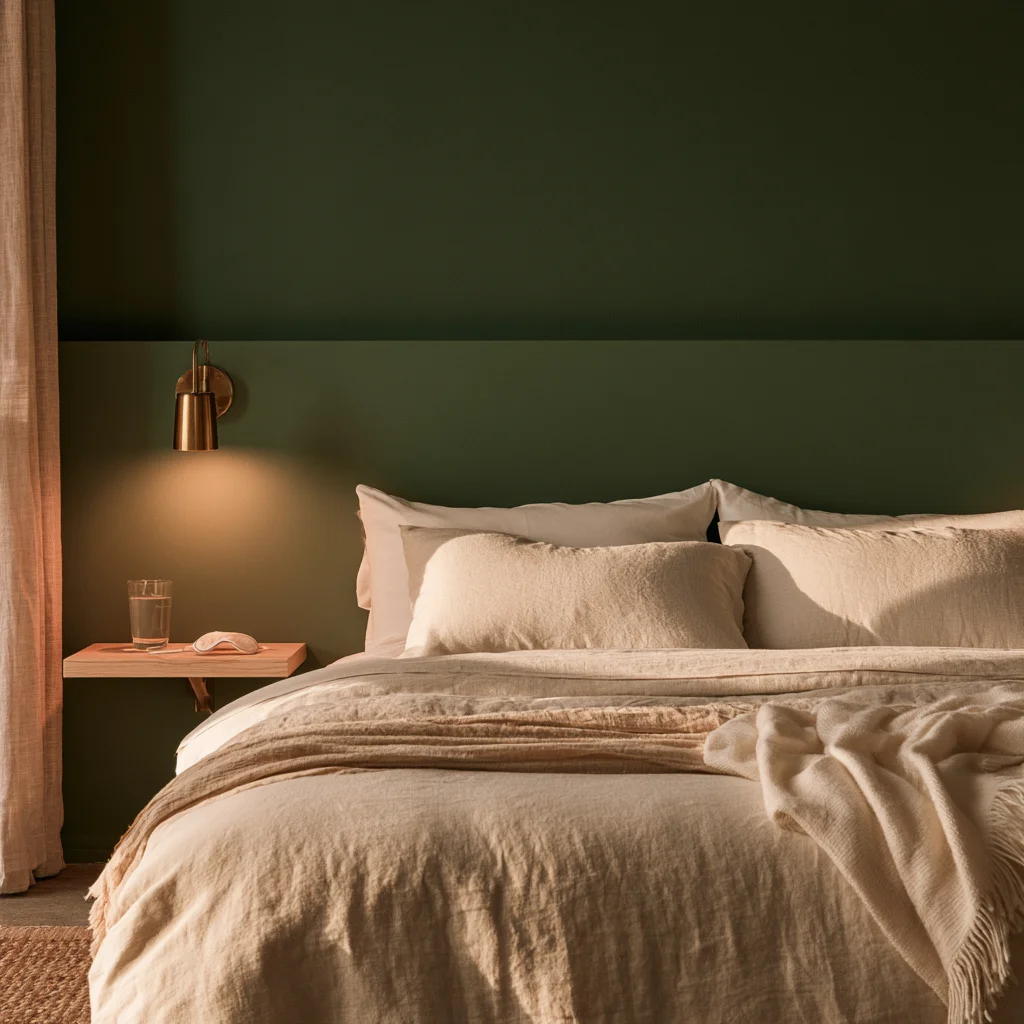
Read more: the storage a small bedroom is not currently using
Two wardrobes of clothes and one closet
A shared room usually has one closet built for one person, and the split is where most of the resentment in the room ends up living.
Splitting it in half by width is the obvious answer and the wrong one, because two people rarely own the same volume of the same shapes.
Better ways to split one closet
- By garment type rather than by person, with both of you in the same rod section
- Long hanging to whoever owns the dresses and coats, short hanging split evenly
- One person takes the rod, the other takes a freestanding rail elsewhere
- Shelves by person, rod by type, which is the hybrid that usually holds
- Off-season for both people out of the closet entirely
The volume question comes before the split question, and a pass through both wardrobes usually changes the answer. Sorting by the reason each item is still hanging there resolves more than any divider does.
Once the volume is known, the bands inside the closet do the rest. Height banding works the same for two people as it does for one.
Move off-season clothing for both people out of the closet before splitting anything.
Split the closet by garment type rather than down the middle, since two people rarely own the same shapes.
Under the bed is the obvious destination and the clearance decides the container. What each clearance band will hold is worth checking before buying flat boxes.
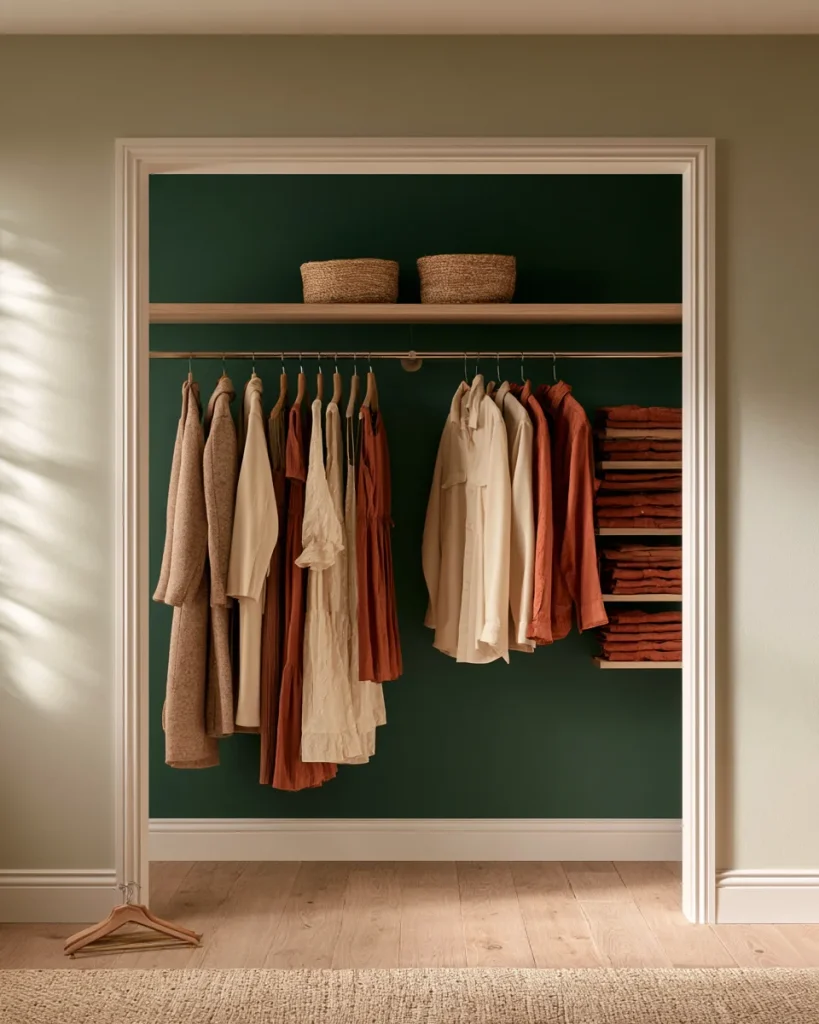
Read more: the five height bands that decide what a closet holds
Style disagreements are a placement problem
Two people rarely want the same room and a small room cannot absorb two schemes. The usual advice is to compromise, which produces a room neither of you chose.
Bedroom ideas for couples that survive contact with a real relationship give each person something they control outright rather than averaging both tastes into beige.
Zoning works better than blending. Give each person the surfaces on their own side and keep the shared surfaces neutral, and the room reads as coherent without either taste being erased.
What each person controls
- Their own bedside surface and whatever sits on it
- Their own reading light
- Their own side of the wall above the bed, if anything hangs there
- Nothing on the shared wall, the floor, or the window
- Bedding decided together, since it is the largest surface in the room
Give each person one surface they control outright and keep every shared surface plain.
Bedding is the exception that has to be agreed, because it covers thirty square feet of a hundred square foot room. Nothing else in there is close.
What leaves a shared room
Two people generate two of most things, and a small room absorbs neither. Four categories go before any furniture decision.
Out on the first pass
- The second chair, which becomes a clothes rail within a week
- Duplicate small furniture bought so each person had one
- Anything stored in the bedroom that belongs to another room
- Off-season clothing for both people
- The full-size dresser, if a wider shared one would fit better
If the room has no built-in storage at all, the whole calculation changes and freestanding comes first. The options for a bedroom with no closet should be settled before anything here.
Where the bedroom is part of a studio, the shared room problem doubles again, and what a divider costs you in daylight becomes the first question rather than the last.
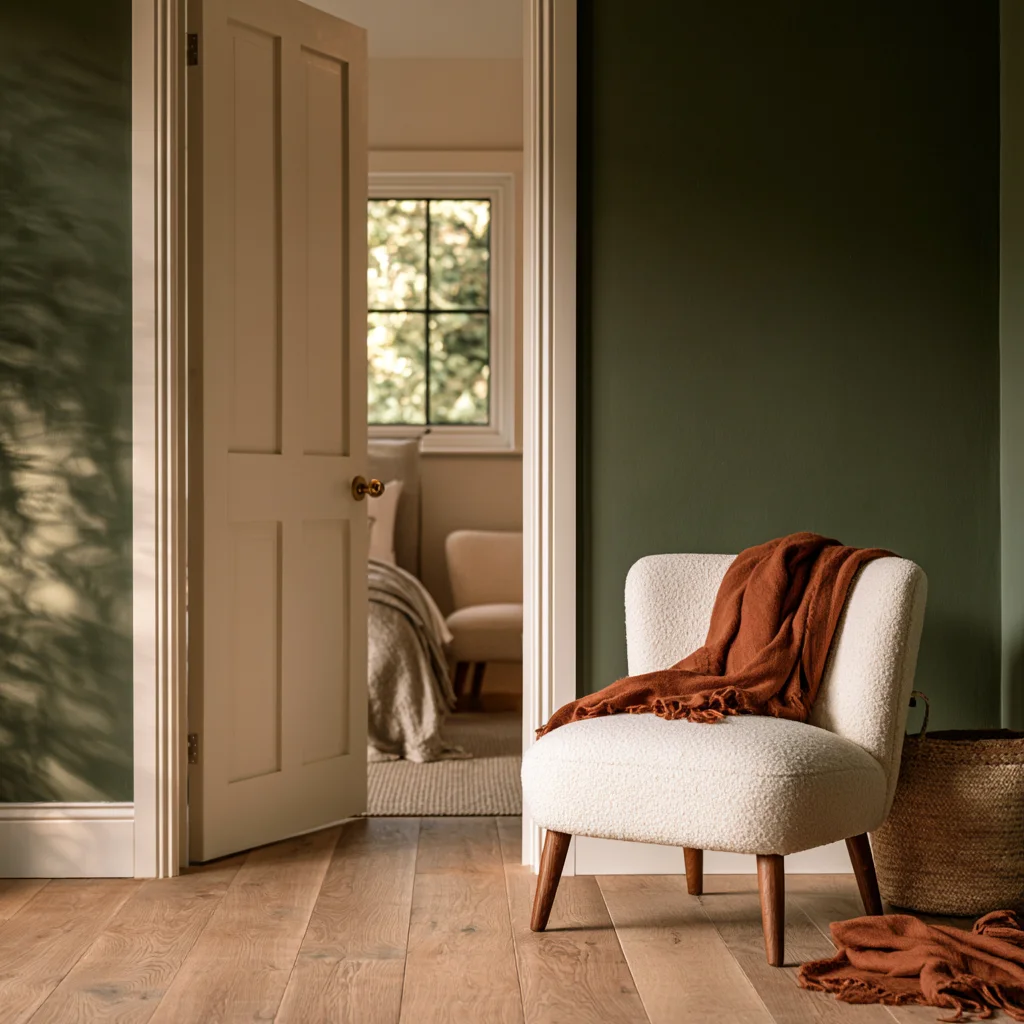
Read more: what a small bedroom looks like once the surfaces are clear
Deciding in order
The bed decision removes options from every step after it, and the disturbance fixes change whether the layout needs to change at all.
The sequence
- Measure the room width and work out whether two walkways fit
- Choose the bed based on width per person, not on what fits
- Fix the temperature and disturbance problems first, since they are the cheapest
- Give each side a light, a charging point and a surface
- Split the closet by garment type after both wardrobes are thinned
- Remove the second chair and any duplicated small furniture
Linen for two people needs a buffer rather than a pile, and the number is smaller than most households keep. The laundry cycle arithmetic that sets how many sets a bed needs applies to a shared bed unchanged.
Most bedroom ideas for couples are about decorating. The ones that hold are about width per person, access on both sides, and which objects genuinely need to exist twice.
Get those three right and the decorating question becomes small, because a room that works for two people has already stopped being an argument.