

A no closet bedroom is not just a room missing a cupboard. A closet does three separate jobs, and every replacement for it drops at least one.
It holds clothes, it hides them from light and dust, and it takes none of the floor you walk on. That third one is the cost people miss.
A reach-in closet is about 6 feet by 2 feet, so 12 square feet. On a floor plan, that area sits outside the room. Replace it with a wardrobe and the same 12 square feet comes out of your usable floor.
In a 10-by-11-foot room, that is 11 percent of the space, gone before a bed arrives. Choosing well means knowing which of the three jobs you are willing to give up.
Three jobs, and what each option drops
Score every option against the same three columns. Nothing on the market does all three, and the alcove is the closest.
| Option | Holds | Hides | Takes floor |
|---|---|---|---|
| Built-in closet | Yes | Yes | No |
| Freestanding wardrobe | Yes | Yes | Yes, 12 sq ft |
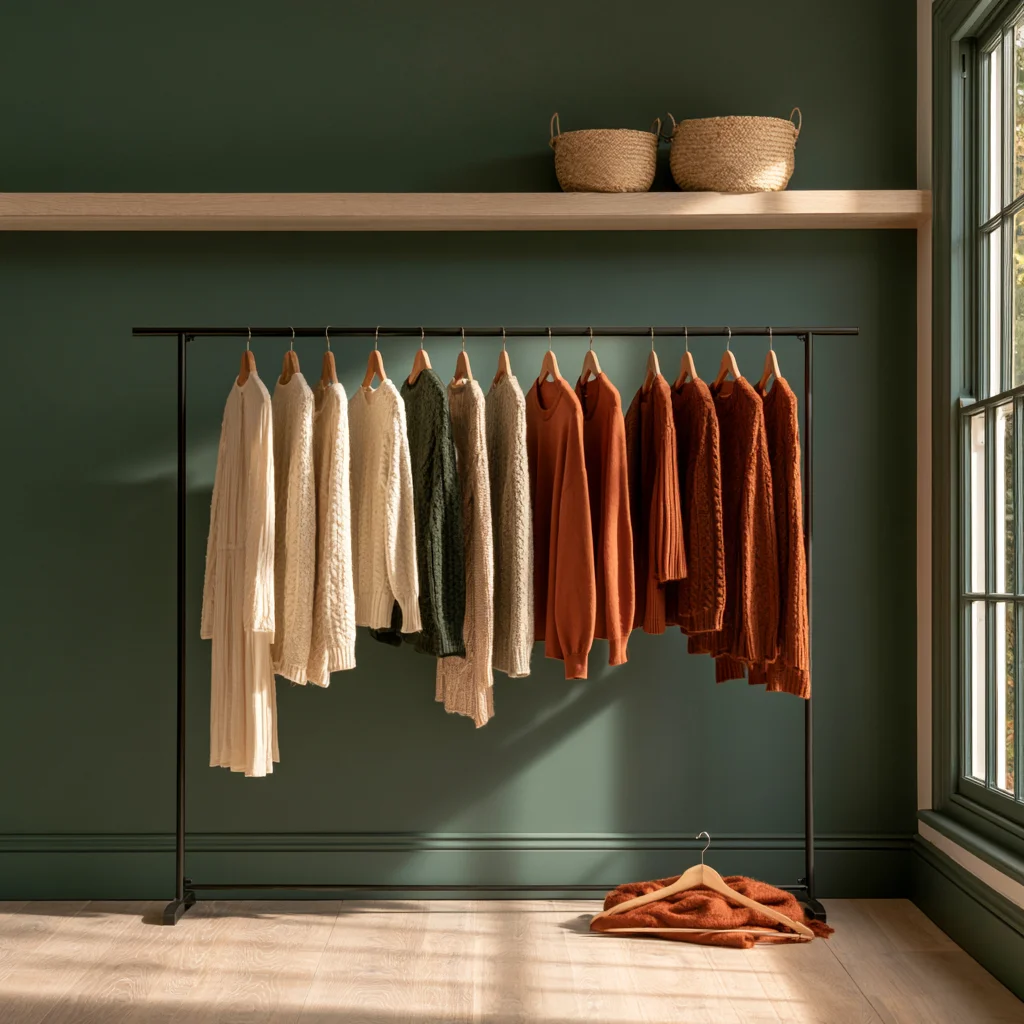
| Open clothes rail | Yes | No | Yes, about 8 sq ft |
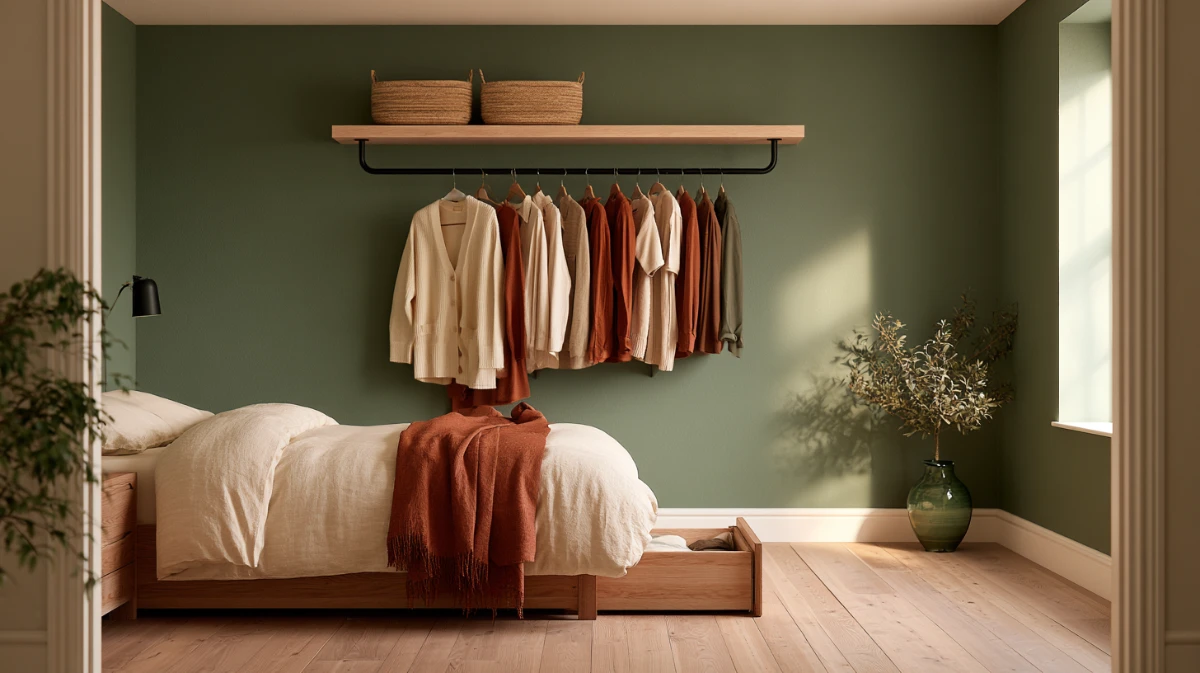
| Wall-mounted rail and shelves | Yes | No | No |
| Under-bed drawers | Flat items only | Yes | No |
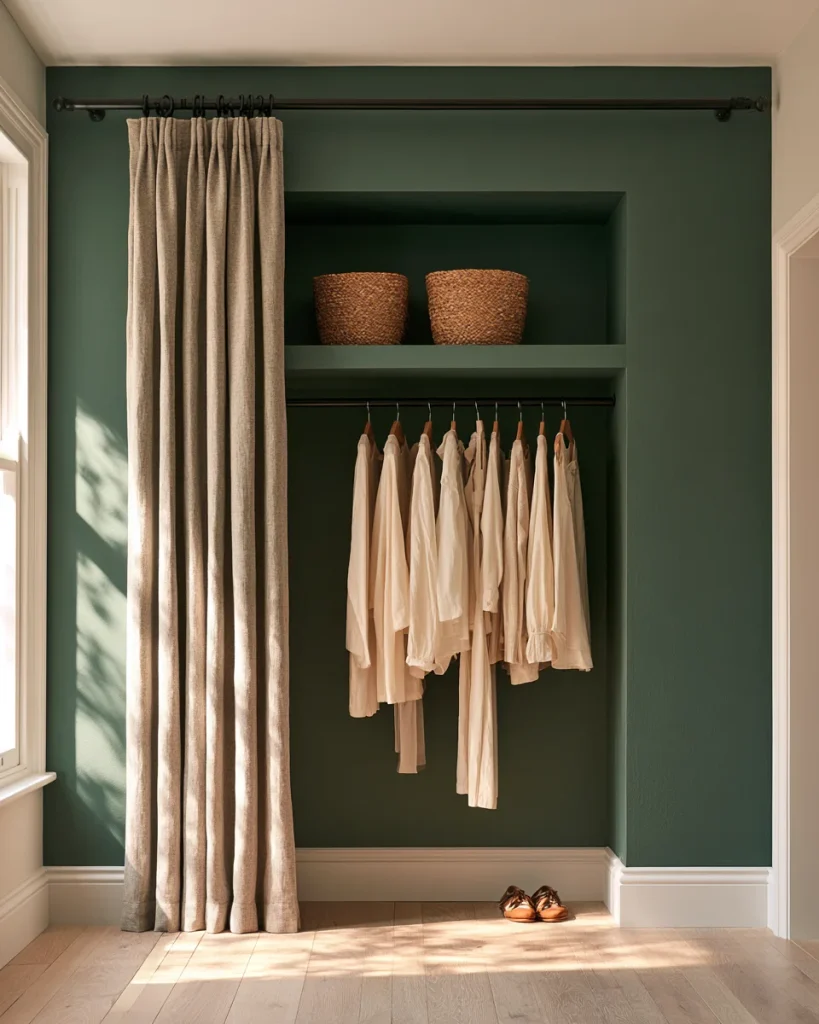
| Curtained alcove | Yes | Yes | Only what the alcove already was |
Pick which of the three jobs you are giving up before you shop, since every product on the market drops one.
The wall-mounted rail is the underrated one. It costs no floor and it holds well, and the only thing it gives up is hiding.
What each option really holds
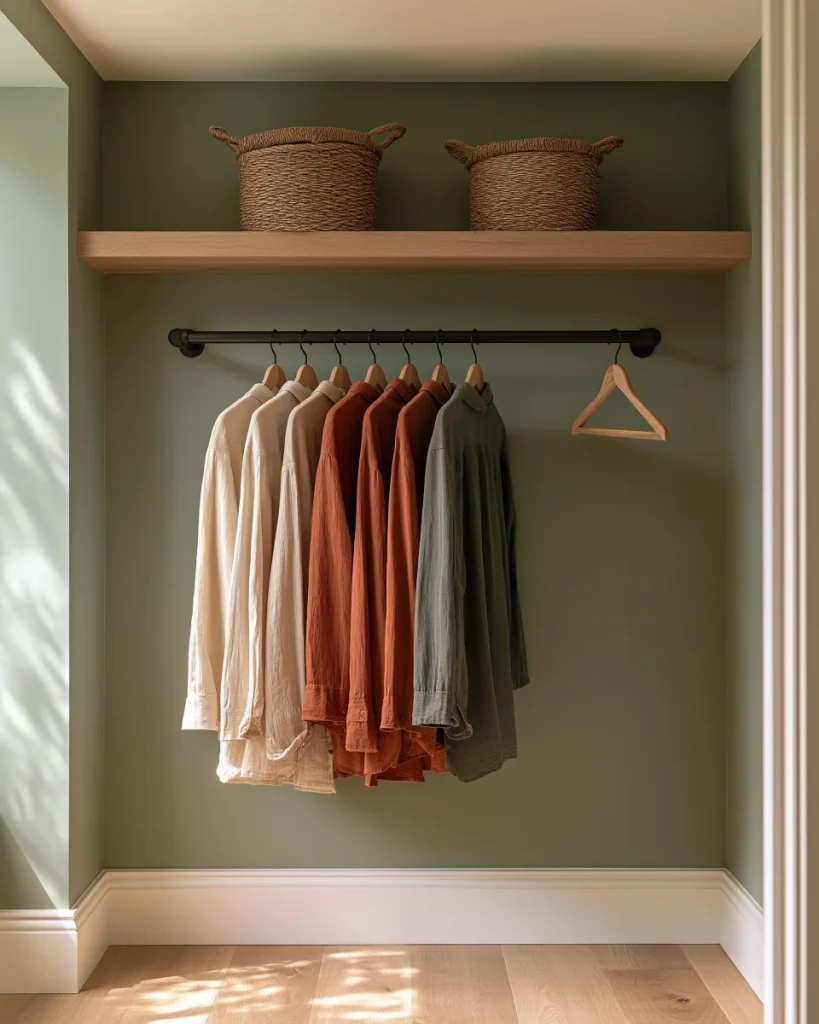
Capacity comes down to inches of rod, at roughly 1.2 inches per hanging garment. That single figure ranks the options faster than any product page.
| Setup | Rod available | Garments |
|---|---|---|
| 6 ft closet rod, double hung | 144 in | 120 |
| Wall rail, 48 in, double hung | 96 in | 80 |
| Freestanding wardrobe, 36 in, double hung | 72 in | 60 |
| Open rail, 60 in, single | 60 in | 50 |
| Under-bed drawers | No rod | Folded only |
A wall-mounted double rail beats a freestanding wardrobe on capacity and costs no floor space at all. It loses on hiding, and that is the whole trade.
Height is what makes it work. Two rails at roughly 40 and 80 inches fit under a standard ceiling with a shelf still above them.
A single rail at 66 inches, which is the default height, wastes almost three feet of wall above it and holds half as much.
Double-hang whatever you install, since two rails hold twice as much on the same wall for the price of one bracket set.
Whether a wall will carry a loaded rail is the constraint that decides this, not the price of the rail. What a fixing genuinely holds on which wall type comes before any purchase.
Hiding is a preservation job, not a tidiness one
Dropping the hiding job looks like the cheap option, and it has a cost that shows up over years rather than weeks.
The Canadian Conservation Institute is direct about it. Light fades colours and weakens fibres, the damage is cumulative and irreversible, and storing textiles in closed cabinets or drawers protects them completely from light and UV.
Total exposure is what counts, measured as light level multiplied by hours. CCI gives the example that 100 lux for 400 hours does the same damage as 50 lux for 800.
A closet door is a light barrier that runs 24 hours a day. An open rail beside a window is the opposite, and the clothes on it are accumulating exposure the whole time you are at work.
What an open rail costs the clothes on it
- Cumulative fading, worst on dark dyes and anything near a window
- Yellowing and fibre weakening from the UV in daylight
- Dust, which CCI notes contains sharp silica that cuts fibres when handled
- Nothing at all if the rail sits on an interior wall away from daylight
- Nothing at all for the clothes you wear weekly, which never sit long enough
Put an open rail on an interior wall rather than beside a window, and keep the pieces you rarely wear off it.
The split that works in practice is a hybrid rather than a single choice. Put the current fortnight on an open rail where you can see it, and everything else behind a curtain, in a drawer or under the bed. The open half is worn too often to fade, and the hidden half is protected, and neither half costs more floor than one wardrobe would.
That last line matters more than any curtain. The rail is fine for the rotation you wear every week, and the coat you wear twice a year should be somewhere dark.
Read more: the five height bands that decide what any closet holds
The alcove is the only one that gets all three back
A chimney breast alcove, a dormer recess or the space beside a built-in already sits outside the walking floor. Filling it costs nothing that the room was using.
That is why a curtained alcove scores on all three columns while a wardrobe standing proud of the wall scores on two.
Measure the alcove depth before anything else. Under 22 inches, and a garment on a rail projects past the face, which puts the floor cost straight back.
Check that the alcove is at least 24 inches deep, since a hanging garment needs 22 and the curtain needs the rest.
What makes an alcove work
- A tension rod or a batten across the recess for the rail
- A ceiling track curtain rather than a door, which needs no swing
- A shelf above the rail for the folded items
- Full height, since the top 18 inches of an alcove is usually wasted
- Nothing projecting past the alcove face, or the floor cost comes back
If the room has an alcove big enough to walk into, the calculation changes again, and the width thresholds decide it. The two widths that settle what a converted space can become cover that case.
Use an alcove before you use the open floor, since an alcove was never floor you walked on.
Where the folded half goes
Roughly half a wardrobe folds rather than hangs, and folded storage is the part a no closet bedroom usually solves badly.
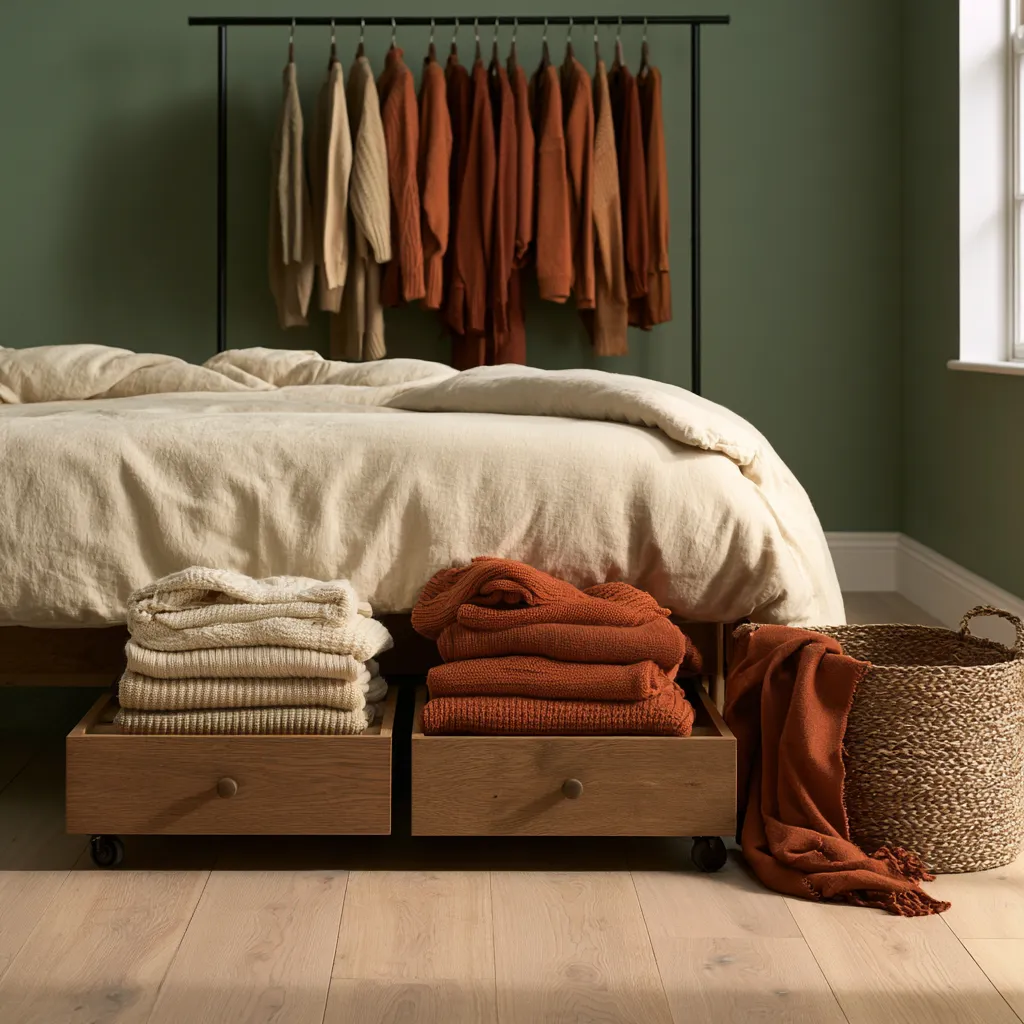
Under the bed is the strongest answer because the floor is already spent on the bed. It holds, it hides, and it costs no additional floor.
The clearance decides the container rather than the other way round, so measure from the floor to the frame before buying anything flat.
Folded storage, ranked by floor cost
- Under the bed, zero additional floor
- A shelf above the hanging rail, zero floor
- The top of a wardrobe you already own, zero floor
- A chest of drawers, about 4.5 sq ft
- Stacked boxes on the floor, which cost floor space and hide nothing
Shoes are the category that defeats a no closet bedroom fastest, since they land on the floor by default. Nine storage methods ranked by pairs per square foot settle what should be down there.
Renting removes the best option
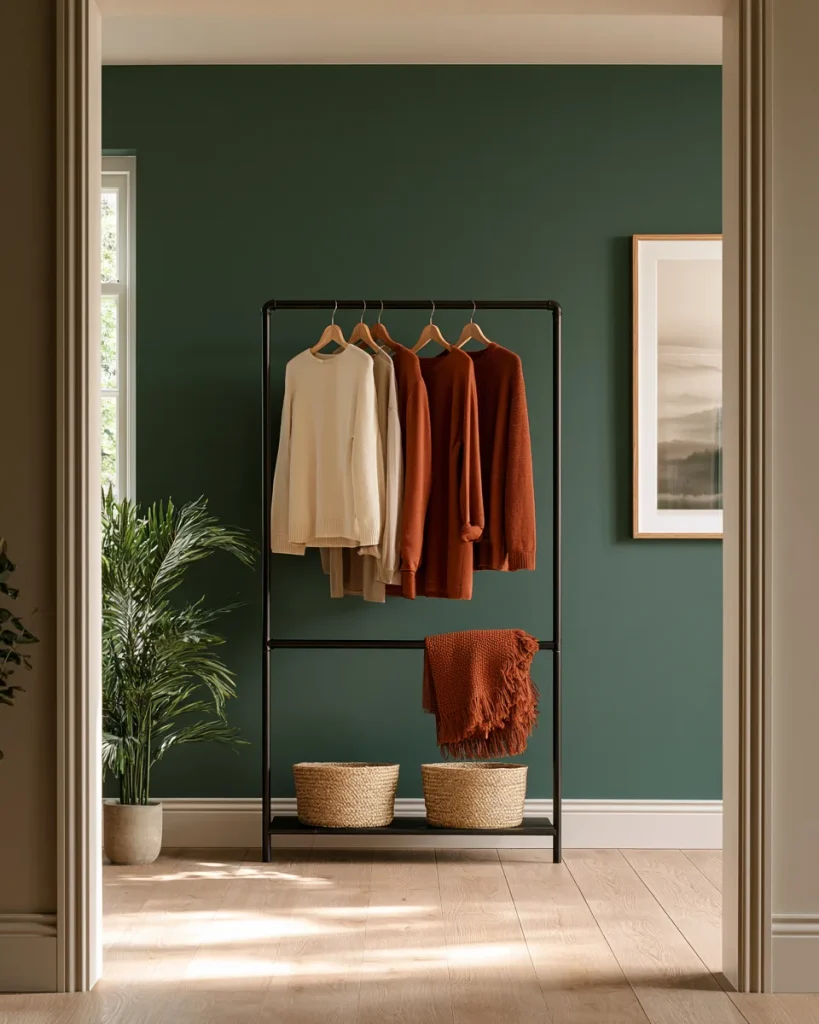
A tenancy that bans drilling removes the wall rail, which is the option that costs no floor. That is the worst possible thing for it to remove.
It also removes the shelf above the rail, which was the free half of the folded storage. Both losses land on the same wall.
The freestanding versions are all still available, and every one of them charges floor. That is the honest position rather than a workaround.
Available without a single hole
- A freestanding double rail, which is the closest substitute for the wall version
- A tension rod across an alcove, for light garments only
- An over-door rail on the bedroom door, for the current week
- Open shelving units, which need no fixing if they are shallow and low
- Under-bed drawers, which need nothing at all
Ask about a wall rail before assuming the answer is no, since two brackets fill in a minute and the rail is not a fitted unit.
A freestanding wardrobe against an exterior wall is the one to watch, since CCI names cabinets pushed against a cold exterior wall as a damp risk. Leave an air gap behind it, for the same reason still air inside a closed cupboard causes problems.
Read more: the clearance bands under a bed and what each one holds
Two people and one rail
A shared no closet bedroom doubles the volume and does not double the wall. The split matters more here than in a room with a built-in closet, because there is no door to close on the mess.
Splitting by garment type rather than down the middle is the version that holds, and the wider set of shared bedroom decisions covers the rest of the room.
Split a single rail by garment type rather than by person, since two people rarely own the same shapes.
Count the hanging garments before choosing anything, since the count decides the option rather than the room does.
What has to leave a no closet bedroom
The volume question comes before the storage question, because the storage you need is a function of what you keep.
Out before anything is bought
- Off-season clothing, which belongs under the bed or out of the room
- Anything unworn for a year, which is taking rod inches at a premium
- Empty hangers, which take rod space and hold nothing
- Boxes stored in the bedroom that belong to another room
- Duplicate storage bought before the count was known
A pass through the wardrobe usually changes which option you need, and sometimes removes the problem. Sorting by the reason each item is still hanging there comes before any purchase.
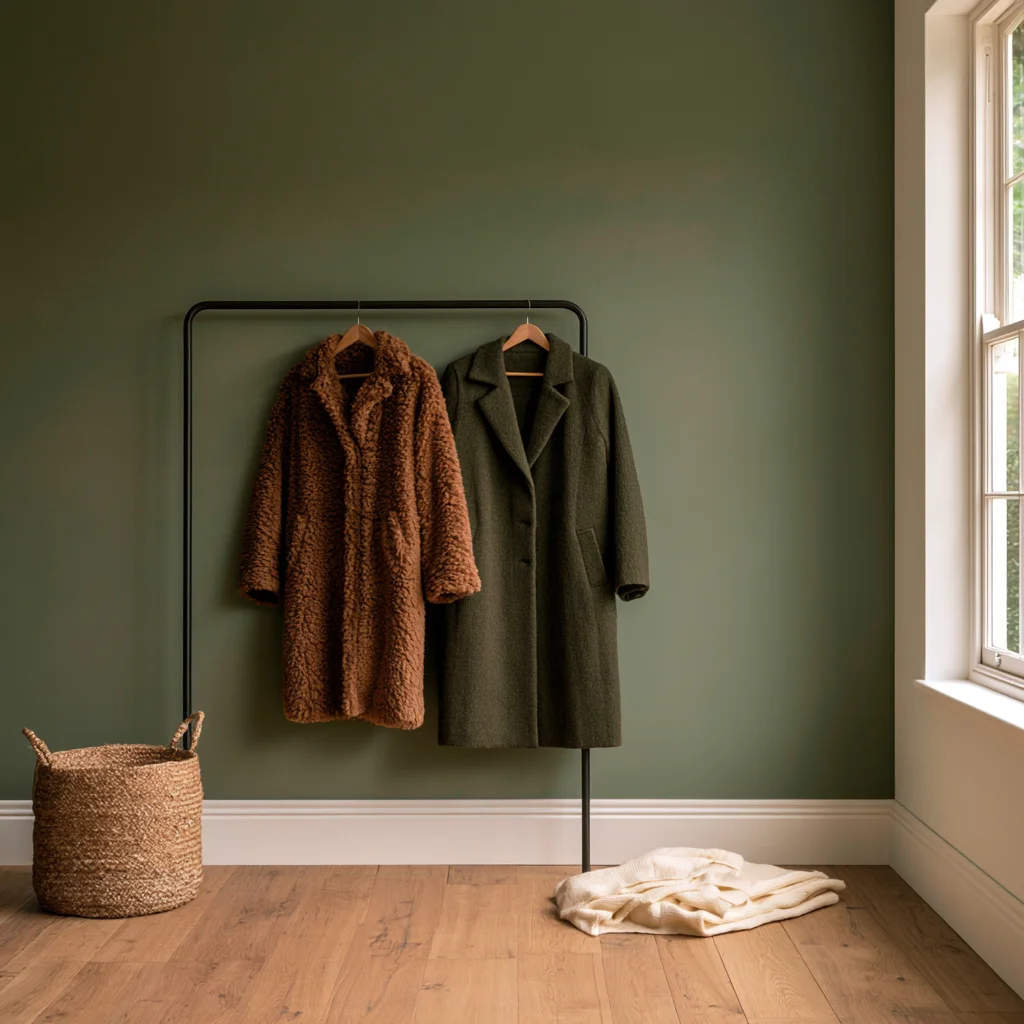
Whatever is left has to live somewhere in the room, and the room usually has more unused wall than it looks. The storage a small bedroom is not currently using is where to look first.
Read more: what a small bedroom looks like once the surfaces are clear
Deciding in the right order
The count comes first because it changes the capacity you need, and the wall comes second because it removes the cheapest option if it fails.
The sequence
- Count the hanging garments after a proper wardrobe pass
- Check the walls for studs and check the tenancy for fixings
- Look for an alcove or recess before giving up any open floor
- Choose the option knowing which of the three jobs you are dropping
- Put off-season and rarely worn items somewhere dark
- Buy the storage last, sized to the count rather than to the wall
Where the bedroom is part of a studio, the whole calculation runs against the room as a single space. How each piece of furniture earns the floor it stands on is the version that covers it.
A closet that exists but has been given to something else is a different problem with a better answer. What a converted closet was never built to supply covers the reverse move.
A no closet bedroom is a trade rather than a deficiency. Give up hiding, and you keep the floor, give up the floor and you keep the hiding, and an alcove lets you keep both.