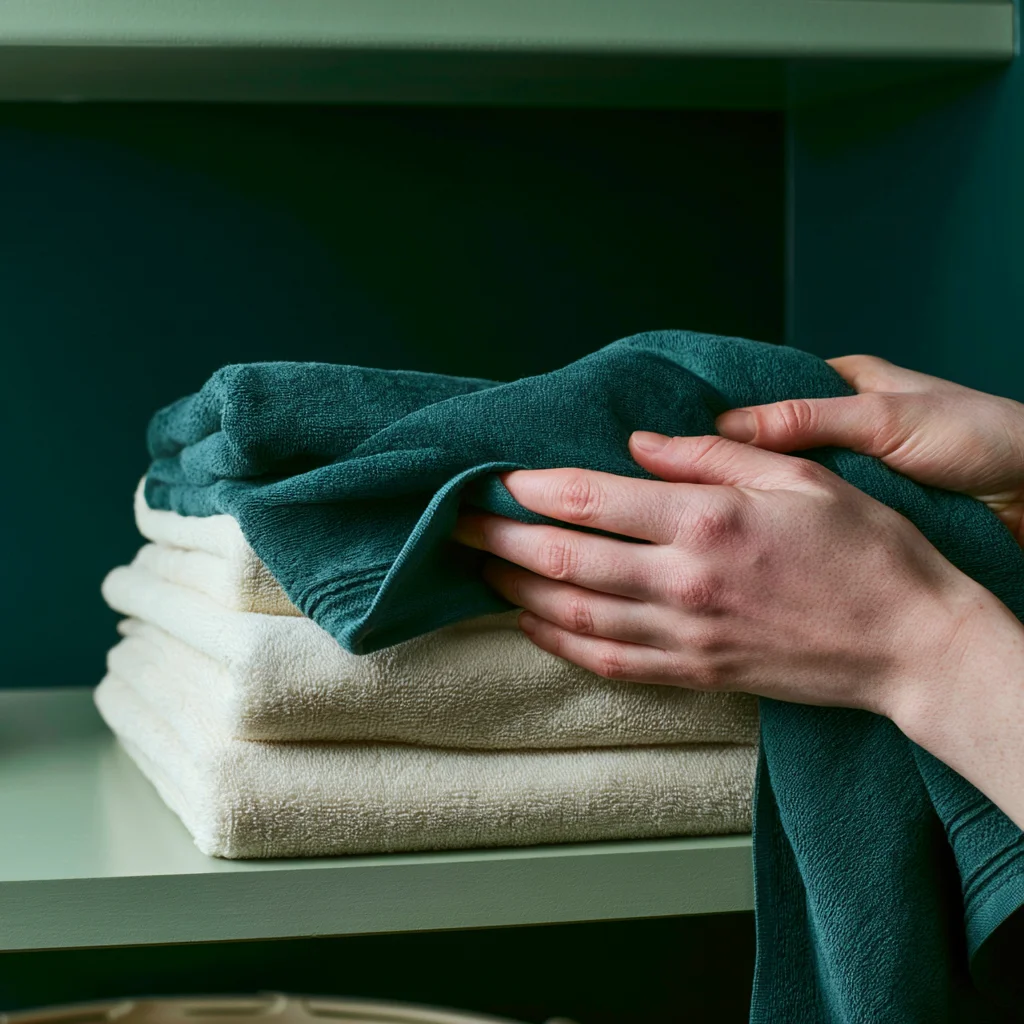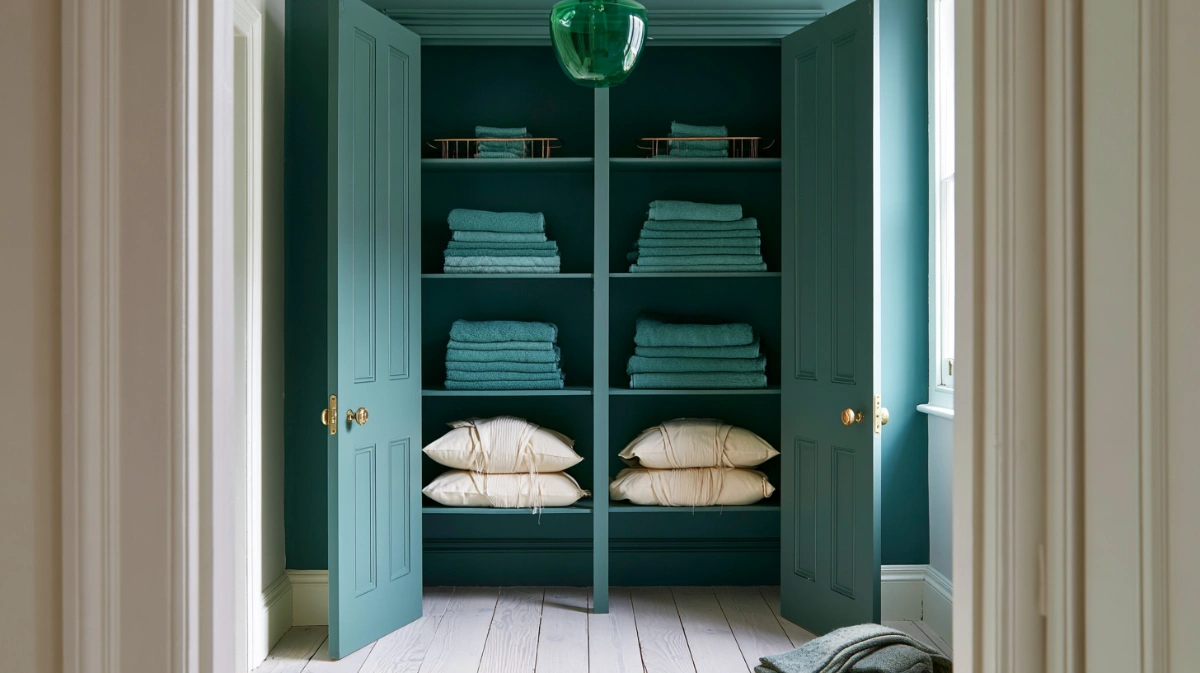


A linen closet loses about 5 inches at the top of every shelf, and no folding method gets them back. A stack of towels taller than 9 inches topples or stops being dug through.
Shelves in a linen closet are usually spaced 14 inches apart. That leaves 5 inches of headroom doing nothing above every stack in the cupboard.
Most linen closet organization advice goes straight to folding, and folding cannot help. A bath towel is the same volume of fabric whichever way you fold it.
What the fold changes is the footprint, which decides how many separate stacks fit across the shelf. That is worth getting right, and it is a different problem from capacity.
The closet is a buffer, not a store
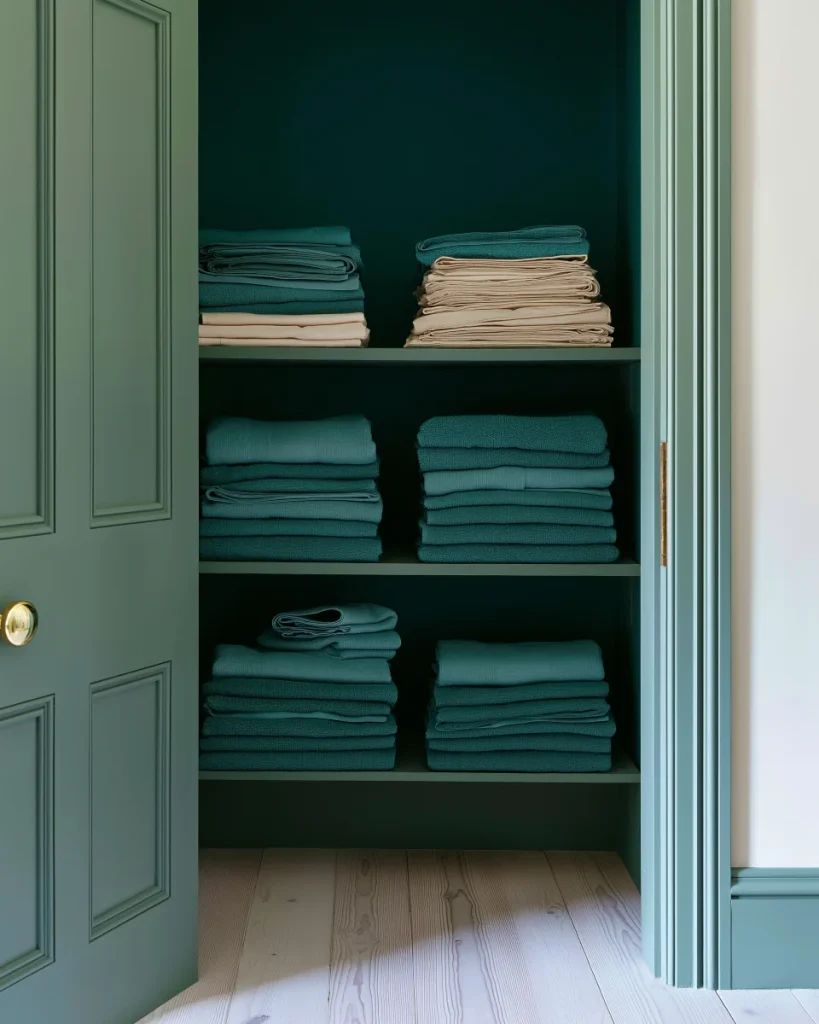
Sheets and towels are on a cycle. One set is on the bed, one is moving through the wash, and only what is left over ever sits on a shelf.
That is the part linen closet ideas tend to skip. The container comes after the count, and the count comes from the laundry rhythm rather than from the shelf.
So the shelf requirement is not the number of sets you own. It is the number you own minus the two that are always in circulation.
| Sets owned per bed | On the bed | In the wash cycle | Sitting in the closet |
|---|---|---|---|
| 2 | 1 | 1 | 0 |
| 3 | 1 | 1 | 1 |
| 4 | 1 | 1 | 2 |
| 6 | 1 | 1 | 4 |
Three sets per bed is the working number. One is in use, one covers a missed laundry day, and one sits folded and ready.
At six sets, four are permanent residents of the shelf. They are not a rotation, they are stock, and they are the reason the closet is full.
Count the sets you own before you touch a single shelf.
Towels run a shorter cycle than sheets. A bath towel gets replaced two or three times a week, so the same two-in-circulation rule gives a different number.
Two people at two towels each in use, plus a clean set waiting, is six bath towels for the household. Anything past that is stock rather than rotation.
The laundry side of that sits with the routine that keeps a small laundry area moving, since the cycle length is what sets every number on this page.
Guest bedding is the honest exception. One spare set that never enters the rotation is reasonable, and a second one is a cupboard full of hypothetical visitors.
Read more: how much bedding a room that only hosts occasionally needs
The 5 inches at the top of every shelf
Stack height has a practical ceiling that has nothing to do with the shelf. Past about 9 inches, a folded stack leans, and long before it falls, you stop reaching under it.
A standard shelf gap in these cupboards is 14 inches. Nine inches gets used, five inches sit empty, and that pattern repeats on every shelf.
On a four-shelf closet, that is 20 inches of vertical space held by nothing. It is more than one whole shelf worth of storage.
Measure the clear gap between shelves rather than the shelf itself, and measure it at the front edge.
What a riser recovers
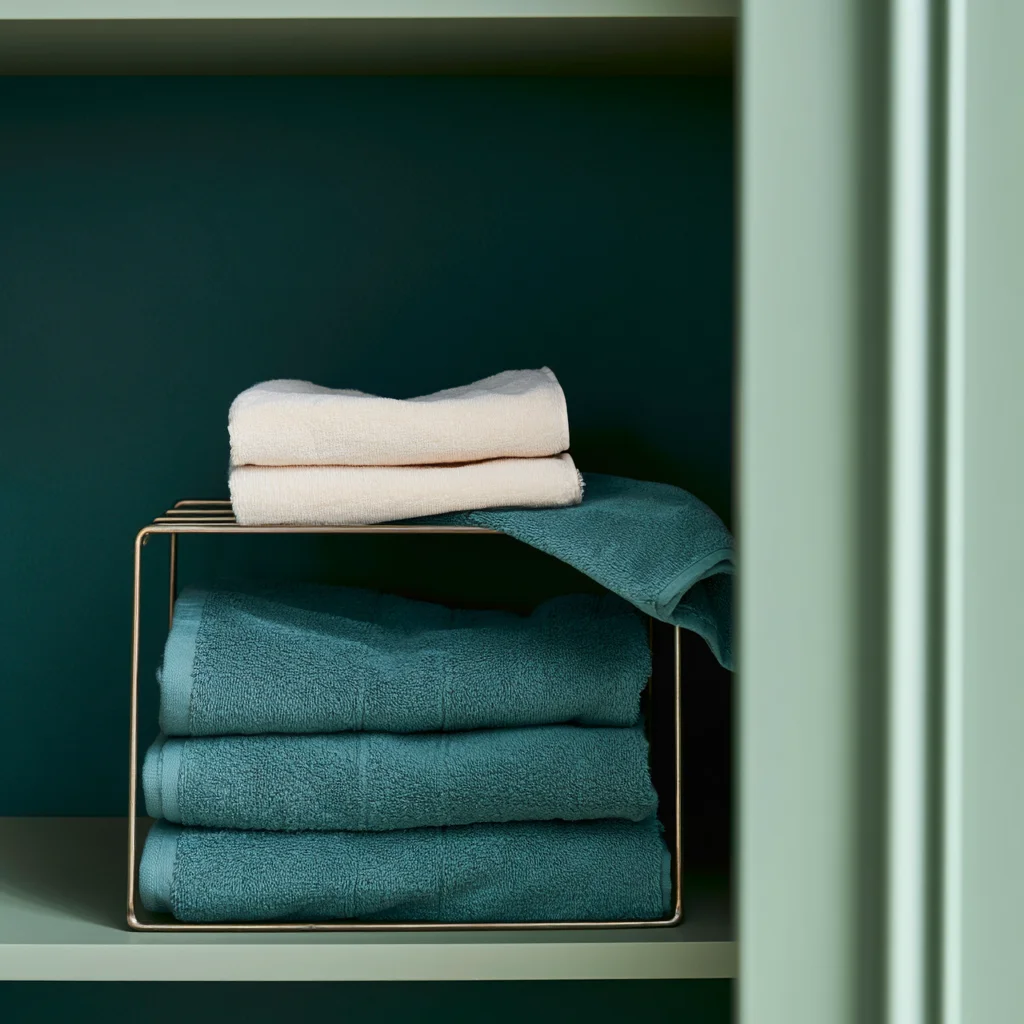
Splitting a 14-inch gap into a 9-inch zone and a 5-inch zone turns dead headroom into a second short stack.
Take a towel folded to 9 by 13 inches at 3 inches thick. One 9-inch zone holds three of them. The 5-inch zone above holds one more.
Two stacks across the shelf take that from six towels to eight, which is a third more on the same shelf without folding anything differently.
Fit a riser rather than refolding, if the shelf gap is over 12 inches.
Wire risers work better than solid ones here, since air moves through them and this cupboard has none to spare.
The riser also gives you a natural split between categories. Bath towels below, hand towels and flannels above, with no divider needed.
A riser carries real weight once it is loaded, so check what it is standing on. What a shelf and its fixings genuinely hold applies to a closet shelf as much as to a wall-mounted one.
Folding tighter does not create space
A US bath towel is around 27 by 52 inches and about a quarter of an inch thick. That works out to roughly 351 cubic inches of fabric.
Folding rearranges those cubic inches. It never removes any. A tighter fold is thicker in proportion to how much smaller its footprint got.
| Fold | Footprint | Height each | Stacks across 24 in | Towels per shelf |
|---|---|---|---|---|
| Half lengthwise, then thirds | 13.5 by 17.3 in | 1.5 in | 1 | 5 |
| Thirds lengthwise, then quarters | 9 by 13 in | 3.0 in | 2 | 6 |
Five towels against six. The folds look completely different on the shelf, and they hold almost the same amount, because the fabric did not change.
Every guide that promises more storage from a better fold is describing a tidier shelf. Tidier is worth having, and it is not extra room.
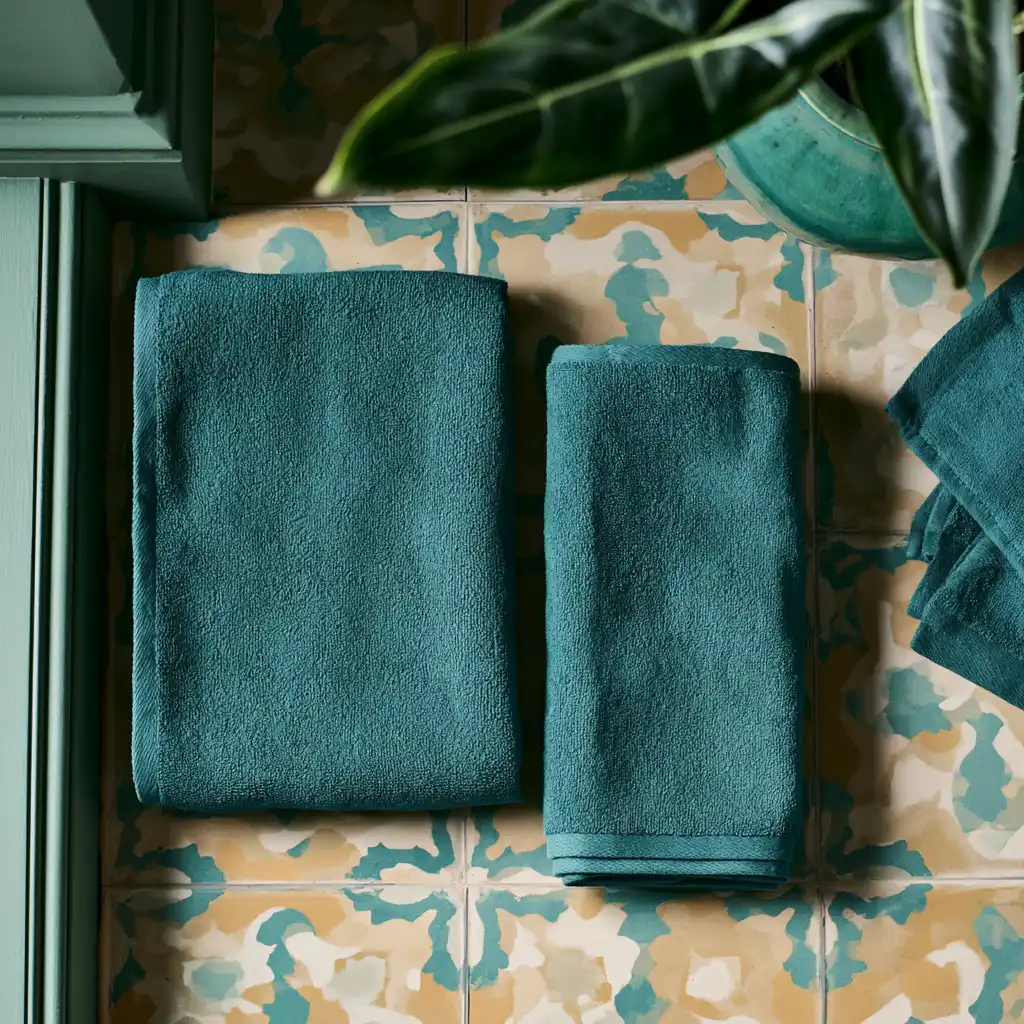
Match the fold to the shelf width
Here is where the fold does earn something. A 24-inch shelf takes one stack of a 17-inch footprint or two stacks of a 9-inch one.
How to organize a linen closet comes down to this one decision more than any other, because it sets how deep you have to dig for the rest of the year.
Two stacks means two categories separated, and each stack is shorter, so you dig through fewer items to reach the bottom.
Choose the fold whose width divides evenly into your shelf width, then keep every item in that category to the same fold.
The gain is in reach rather than in volume. A stack six deep means lifting five items to get the sixth, and two stacks of three means lifting two.
Over a year of laundry days, that is the difference between a shelf that stays folded and one that turns into a heap by March.
Folds that divide cleanly into common shelf widths
- A 24-inch shelf takes two 12-inch stacks or one 17-inch stack
- A 30-inch shelf takes three 9-inch stacks with room to pull them out
- A 36-inch shelf takes three 12-inch stacks
- Anything under 20 inches wide takes one stack, so fold for depth instead
- Leave an inch of slack per stack, since a folded edge is never square
What one shelf really holds
Sheet sets are bulkier than they look. A queen set of flat, fitted, and two cases comes to around 911 cubic inches once it is compressed into a stack.
Folded to a 12 by 16 inch bundle that is nearly 5 inches tall, a 24 inch shelf takes one of them across. Folded to 12 by 12, it stands 6.3 inches tall, and two fit side by side.
Two queen sets on one shelf is exactly the buffer a single bed needs at three sets owned. The arithmetic lands where the cycle does.
A king set runs about a quarter larger and a twin about a third smaller, so run your own numbers if the beds in the house are not queens.
Duvets and blankets break the pattern entirely. They compress badly, they do not stack flat, and one of them will take a whole shelf if you let it.
Keep those off the linen shelves and treat them as seasonal bulk, which is a different storage problem with a different answer.
Storing each set inside one of its own pillowcases is the one folding trick that survives scrutiny, because it stops the stack from becoming a search. The same logic that ranks storage methods by how fast you can reach into them applies here.

The stack you never reach
Every stack is loaded from the top and used from the top, so the bottom two items never move. In this cupboard, that means the same towels are washed every week while two sit untouched for years.
They still age. Cotton yellows, elastic in fitted sheets perishes, and folded creases set hard enough to stay after washing.
Put incoming clean linens at the bottom of the stack rather than the top.
It takes an extra four seconds on laundry day, and it is the only thing that makes a stack rotate. Nothing else in this article changes that behaviour.
Shorter stacks help here too. Lifting two items to slide a clean towel underneath is a habit that survives, and lifting six is not.
Signs a stack has stopped rotating
- A colour at the bottom you had forgotten you owned
- Sharp permanent creases on the lower items
- Elastic that has gone slack on a fitted sheet you never use
- A different smell at the bottom of the pile than at the top
- Dust along the front edge of the bottom item
Damp, and what lives in it
A linen closet is usually interior, unventilated, and full of absorbent cotton. If it sits against a bathroom wall or an exterior wall, it collects moisture.
That matters beyond the musty smell. The American Lung Association advises keeping indoor humidity below 50% to control dust mites, which live in bedding and are a common indoor asthma trigger.
A closed cupboard of stored bedding is a reservoir for exactly that. It is warm, still, and made of the material mites feed on.
Keep a hygrometer on a shelf if anything in the closet smells musty, act on the reading rather than the smell.
What to change when the cupboard is damp
- Leave the door open for an hour after any hot shower nearby
- Swap solid shelves for wire, which lets air move vertically
- Keep stacks an inch clear of the back wall
- Store nothing that went in even slightly damp
- Put a moisture absorber on the lowest shelf and replace it when it fills
Fully dry means dry inside the fold rather than dry to the touch. A towel that comes out of a dryer slightly damp at the hem will smell of the cupboard within a week.
Wash before storing, and store only when the item is dry inside the fold rather than dry on the surface.
The smell test is unreliable because you stop noticing it. Pull one item from the bottom of each stack and smell that instead, since it is the one that has been sitting in whatever the closet does to fabric for the longest.
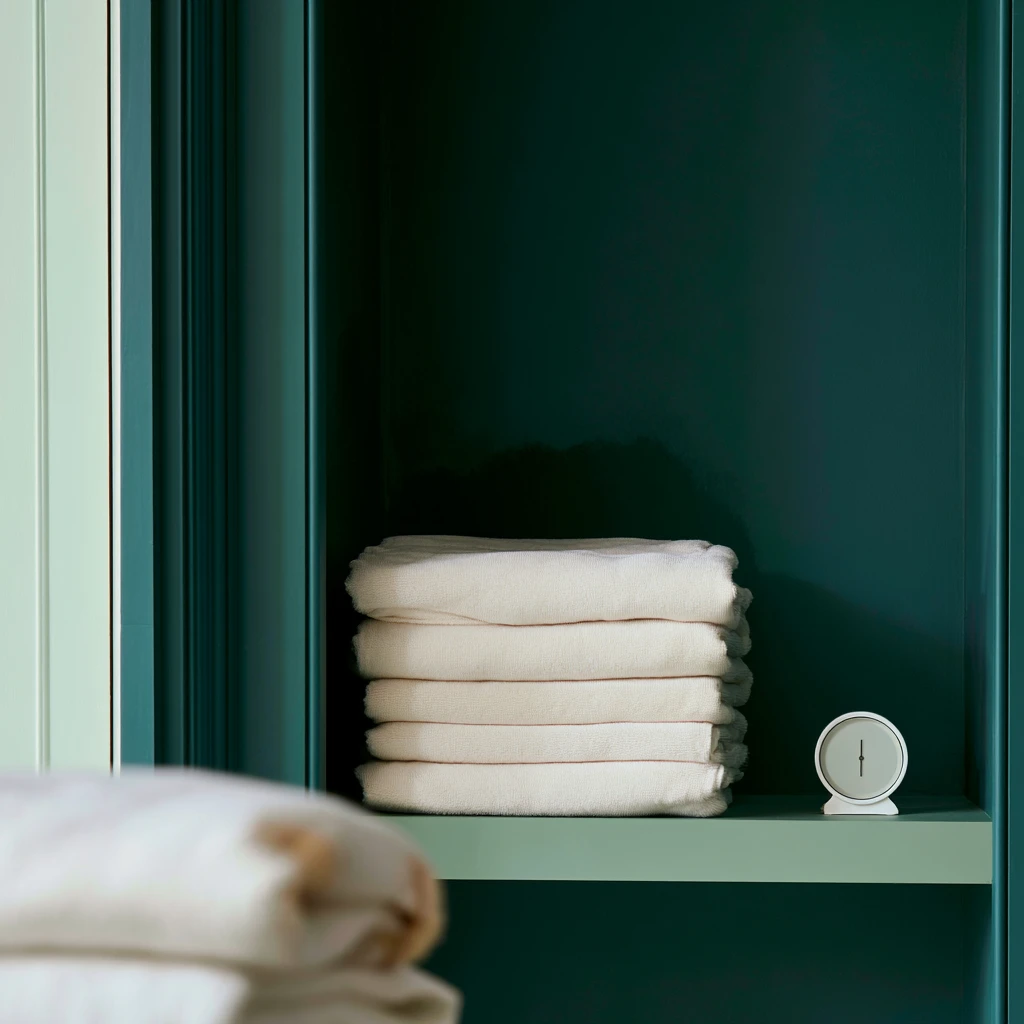
Read more: the height bands that decide what any closet can hold
What comes out
Most of these cupboards are holding two things that are not linen and one thing that is well past use.
Toiletry overflow, medicines, and spare bulbs migrate in because the shelves are the right height and nobody assigned them anywhere else.
They are not harmless residents. Each one takes a footprint that was sized for a folded stack, and a bottle wastes the vertical space above it.
Medicines are the ones worth moving first. A cupboard that gets steam from a nearby bathroom is a poor place to store anything with a shelf life on it.
Store nothing in the linen closet that is not a textile, and give the strays a home the same day.
Out on the first pass
- Sheets for a bed size nobody in the house sleeps on
- Fitted sheets whose elastic has gone
- Towels kept as rags that never get used as rags
- A fourth or fifth set for a single bed
- Anything stored damp that now smells of the cupboard
Old towels have one honest destination, and it is not the back of the shelf. Sorting them by the reason each one is still there clears more shelf than any container will.
If the pile feels immovable rather than large, that is a different problem with a different approach, and starting when the whole job feels stuck is the more useful place to begin.
Replacement is where the count creeps back. Towels are a cheap purchase that feels justified every time, which is exactly the pattern worth interrupting before it repeats.
Shallow shelves and closets that do not exist
A small linen closet under about 10 inches deep is where bins stop helping. A bin takes its own wall thickness off each side and leaves less usable width than an open stack.
Fold for depth instead. A towel folded to 9 inches deep sits on a 10-inch shelf with nothing overhanging, and overhang is what makes a shallow shelf feel unusable.
The overhanging item is also the one that gets knocked off. A stack that sits flush to the front edge stays put, and a stack that projects an inch does not.
If there is no linen closet at all
- A shelf inside the bathroom door, for the current rotation only
- The top shelf of a bedroom closet, for sheets that match that bed
- A flat bin under the bed, for off-season bedding
- A rolling cart parked in the bathroom or hallway
- One basket per bed, kept in that bedroom rather than centrally
The last of those is the one that suits small flats. Splitting linens by bed removes the central cupboard entirely, and the storage a small bedroom is not currently using usually has room for one basket.
Off-season bedding is bulk rather than rotation, so it belongs under a bed. The clearance bands and which containers suit each one decide what fits.
Two people generate two rotations and often two preferences about weight and warmth, which is worth settling early. The conflicts that come up when a bedroom serves two people cover the same ground for bedding.
Read more: converting an unused alcove into the storage the flat is missing
The working sequence
Each step changes the number for the next one, so the sequence saves more time than any single fix on the list.
The working order
- Count the sets per bed and take everything above three off the shelf
- Measure the clear gap between shelves and the shelf width
- Pick a fold whose width divides into the shelf width
- Fit a riser wherever the gap is over 12 inches
- Reload with the oldest items on top and the newest at the bottom
- Check the humidity reading before you buy any container
Containers come last on purpose. A bin bought before the fold is decided will be the wrong width, and the same mistake shows up wherever a container gets chosen before the space is measured.
A linen closet is one of the few storage problems with a right answer you can calculate. Count the sets, measure the gap, then fold to fit the width.