

Jewelry organization has one variable behind almost every problem in it. Whether the piece is free to move while it sits in storage.
Movement is what ties chains into knots, what scratches soft metal, and what turns a pair of studs into a single stud.
Most jewelry organization ideas start with a product. This one starts with a tape measure, because the length of your longest chain decides the method.
Chain length decides how bad the tangling gets, and the dividing line sits at about 18 inches. Below it, a chain left loose in a dish rarely knots. Above it, the odds climb fast.
So the storage question is not which organizer to buy. It is which pieces need to be held still, and which are short enough to leave alone.
Movement is the whole problem
The tangling part has been measured. Physicists at UC San Diego published a study in PNAS on the spontaneous knotting of an agitated string, tumbling a string inside a box and counting the knots that formed.
Complex knots appeared within seconds. Across 3,415 trials, they recorded 120 different knot types, some with as many as eleven crossings.
The finding that matters here is the threshold. No knots formed at all when the string was shorter than 0.46 metres, which is 18.1 inches.
Between 0.46 and 1.5 metres, the probability rose sharply. Past 1.5 metres, it levelled off near 50 percent, held back only by the string jamming against itself.
| Chain length | In metric | Where it sits |
|---|---|---|
| 16 in choker | 41 cm | Below the threshold, rarely knots loose |
| 18 in princess | 46 cm | On the line |
| 20 in matinee | 51 cm | Inside the sharp-rise band |
| 24 in | 61 cm | Inside the sharp-rise band |
| 30 in opera | 76 cm | Well inside it |
| 36 in rope | 91 cm | Well inside it |
Measure your chains before buying any organizer, because 18 inches is the line that decides the method.
The second variable in that experiment was the box. The string coils to a radius close to the width of its container, so a narrower compartment gives it less room to loop over itself.
That is the whole case for small compartments rather than one large tray, and it is a physical reason rather than a tidiness one.
It also explains why a deep bowl is the worst container available. A bowl gives a chain the widest possible coil and the most room to fall through its own loops.
Jewelry organization products are mostly sold on appearance, so the deep dish and the open tray sell well. Both are the shape the experiment used to generate knots.
Chains and the 18-inch line
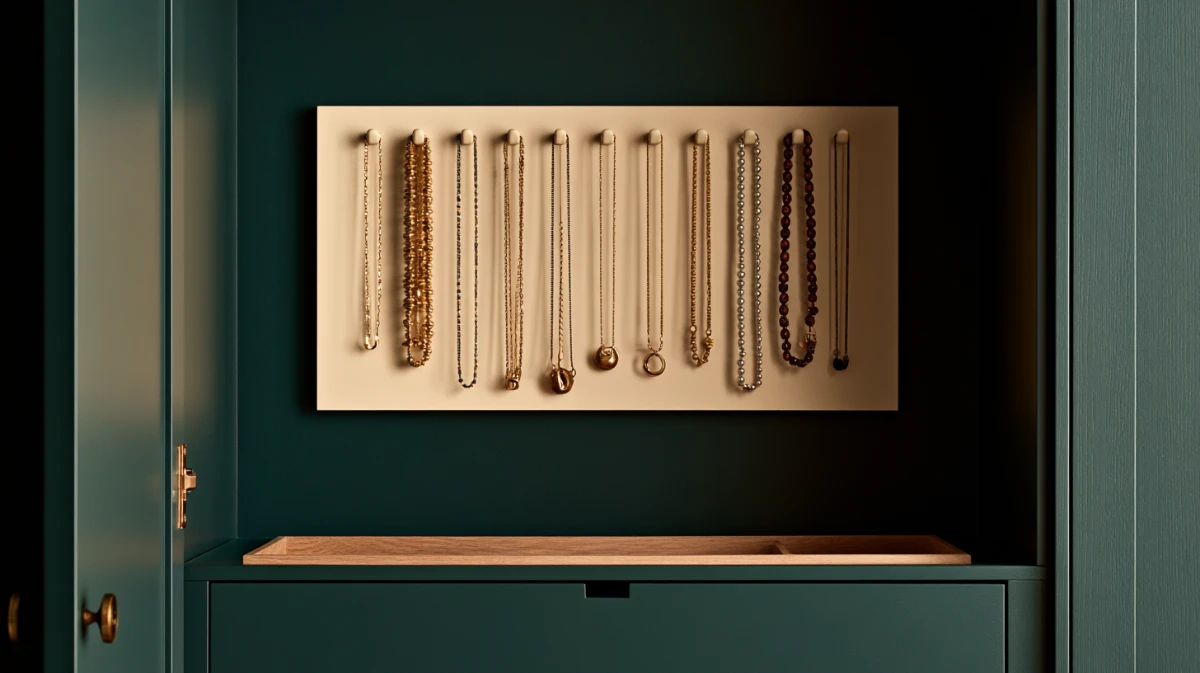
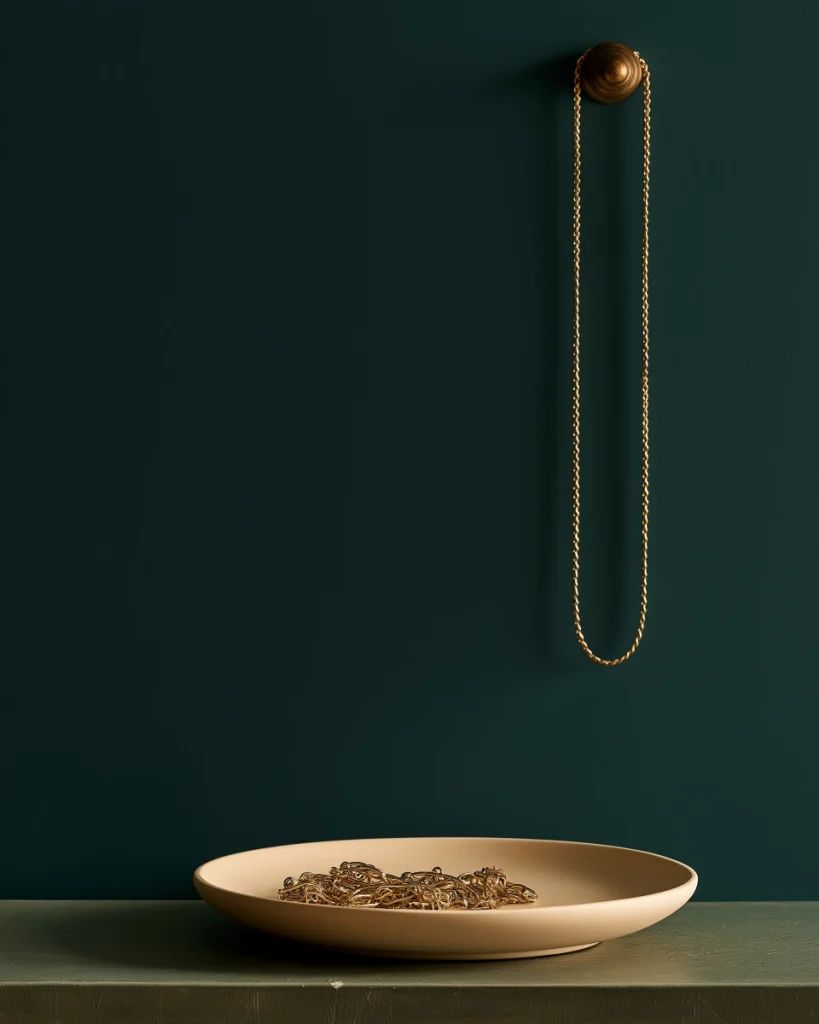
Anything longer than 18 inches wants to hang. Hanging removes the tumbling entirely, and a chain that cannot tumble cannot knot.
Hang anything over 18 inches, and let anything under it lie flat in its own compartment.
Spacing matters more than the hook. Two chains sharing a hook are two strings in one container again, which is the exact condition the experiment tested.
Give every chain its own hook, with nothing touching it on either side.
A 24-inch board at 1.5-inch hook spacing carries 16 necklaces. At 1-inch spacing, it carries 24, and at that point they start to touch when the door shuts.
Height is the other spacing question. A 30-inch chain hung from a hook drops 15 inches, so the hooks need at least that much clear wall below them.
A necklace organizer sold as a stand rarely gives you that drop. A board or a rail on a door does, and it costs less.
Hanging costs you two things worth knowing about. The pieces collect dust, and the ones on display are the only ones you remember owning.
Ways to hang without drilling
- Adhesive hooks in a row on the inside of a wardrobe door
- A tension rod across a shallow shelf with S hooks along it
- A cork or fabric pinboard, which takes pins anywhere
- A hanging fabric organizer looped over the closet rod
- A towel rail mounted low on a door, for the longest ropes only
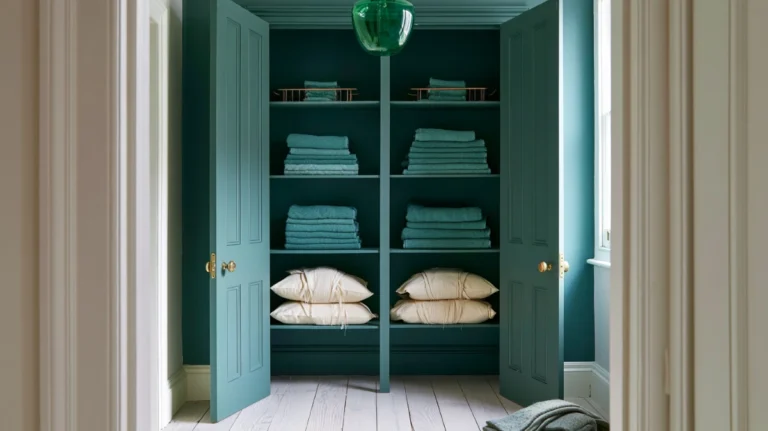
A door interior is the highest value surface in most bedrooms, and it is usually empty. The door and side walls of a closet hold more than the rod does in a small room.
Everything that has to lie still
Short chains, studs, rings, and bracelets all fail differently, and all of them fail from the same cause. They slide.
A stud with a loose back walks across a tray every time the drawer opens. It falls into the next compartment, then behind the insert, then it is gone.
What each item needs to stay put
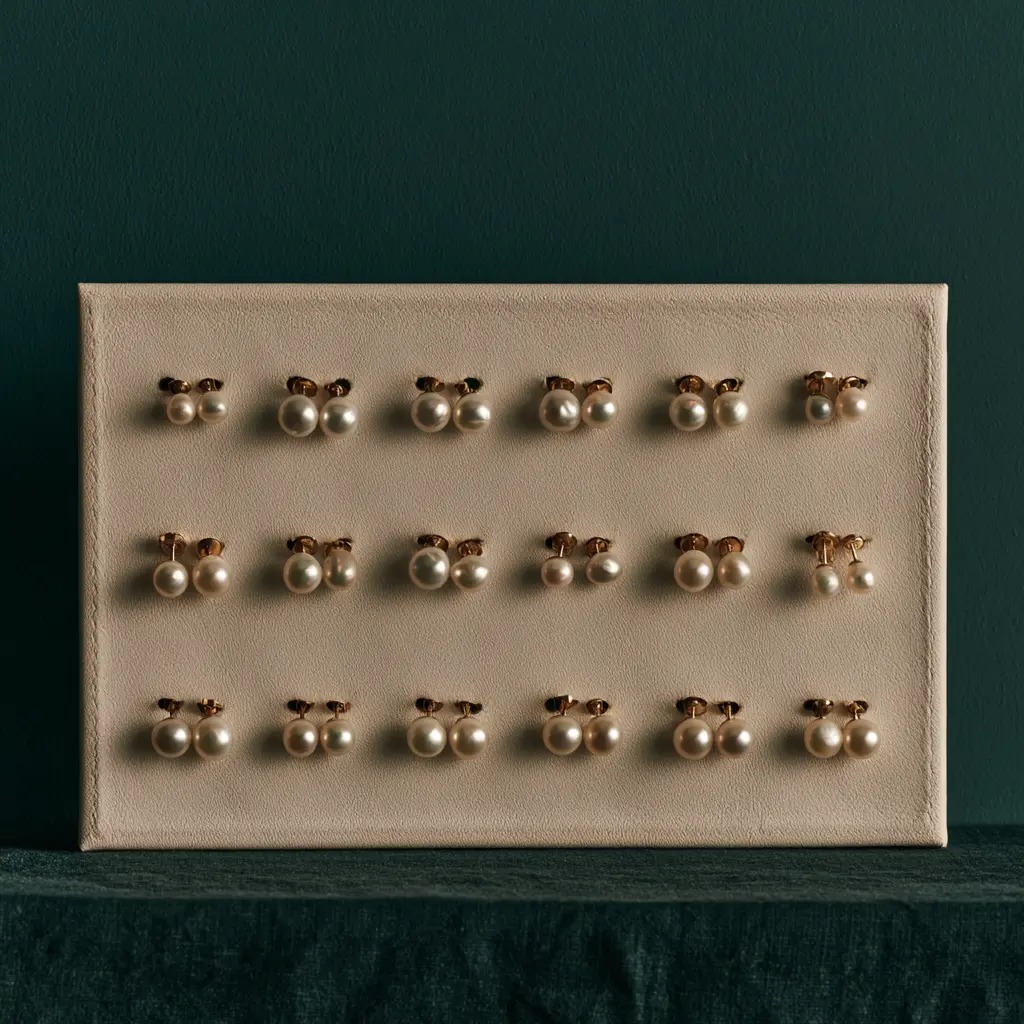
- Studs, a foam or leather pad with holes rather than an open dish
- Hoops and drops, a bar or a slotted rail so they hang rather than lie
- Rings, a slotted roll where each one sits in its own channel
- Bracelets, a vertical post or a compartment narrower than the bangle
- Short chains, a compartment small enough to stop the coil forming
Fasten every clasp before the piece goes away, since an open clasp is what catches the piece beside it.
Read more: the surface that fills up first in any bedroom
Hardness, and why one shared dish is expensive
The other cost of movement is abrasion, and it follows a rule you can look up. On the Mohs scale, a harder mineral scratches a softer one and never the reverse.
| Material | Mohs hardness | What it scratches |
|---|---|---|
| Amber | 2 to 2.5 | Almost nothing |
| Gold and silver | 2.5 to 3 | Amber |
| Pearl | 2.5 to 4.5 | Gold, silver, amber |
| Opal | 5.5 to 6.5 | Everything above |
| Quartz and amethyst | 7 | Everything above |
| Topaz | 8 | Everything above |
| Sapphire and ruby | 9 | Everything except diamond |
| Diamond | 10 | Everything, including other diamonds |
A gold chain sits at 2.5 to 3. A diamond sits at 10. Put them in the same dish, and the diamond wins every single time they touch.
The damage is not dramatic, and it is cumulative. Fine surface scratches on gold read as dullness long before anyone sees a mark.
Keep diamonds and sapphires out of any dish that also holds gold, silver, or pearls.
Line every compartment, and never let two pieces share one.
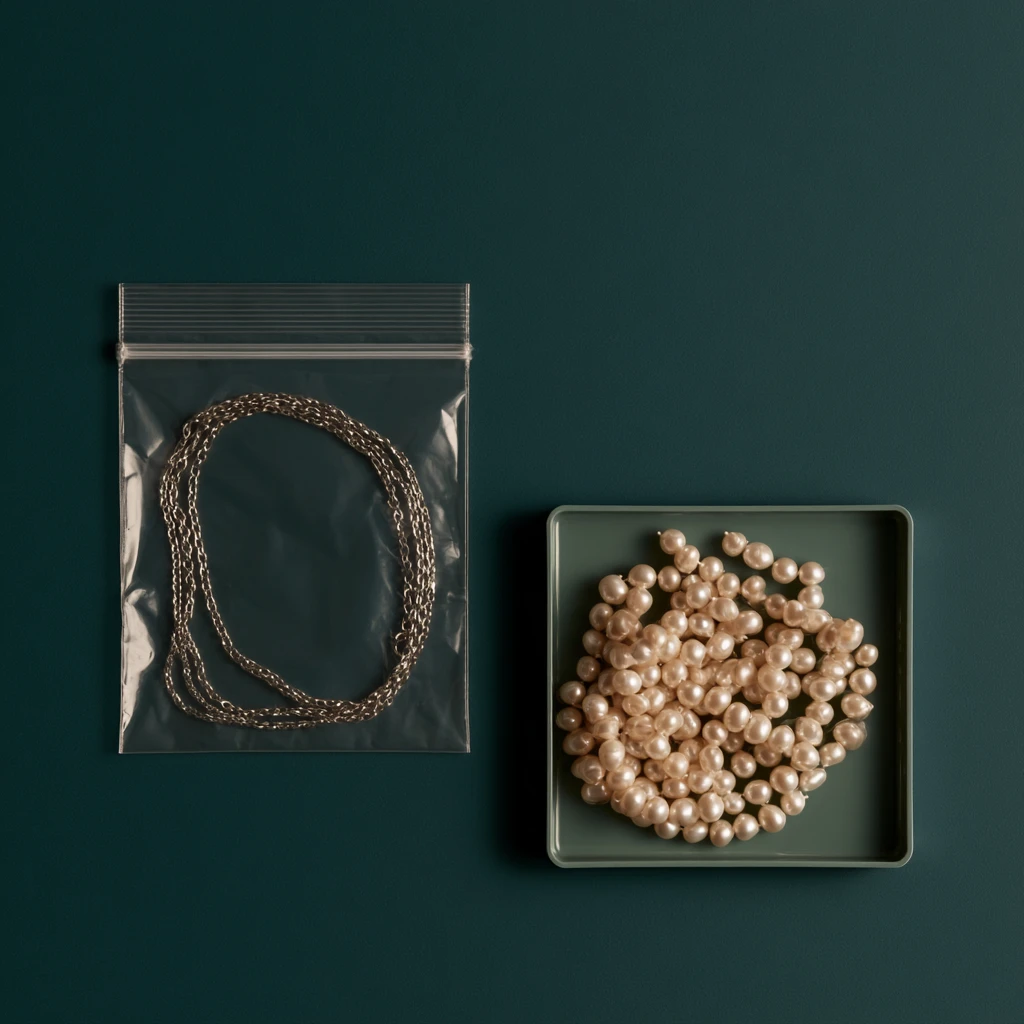
The cheapest version of this rule costs nothing. Put every stone above Mohs 7 in its own zip bag before it goes in the drawer, and leave the soft metals loose in their compartments. The bag stops the contact, and contact is the only way abrasion happens.
Costume pieces belong in the soft group, whatever they look like. Plated finishes sit on top of a base metal, and a single scratch goes straight through the plating.
Good jewelry organization separates by hardness before it separates by type, which is the reverse of how most organizers are sold.
Tarnish, the one problem movement does not cause
Silver darkens because of sulphur compounds in the air rather than because of anything it touches. Storage that solves tangling does nothing for this.
Air is the enemy for silver and the requirement for pearls, which need some humidity and dry out in a sealed bag.
That contradiction is the reason a single jewelry organization system rarely works for a whole collection. Two materials in the same box want opposite conditions.
Split them at the container rather than at the drawer. Bagged silver and open pearls can share a drawer without sharing an environment.
Store silver in a closed bag with the air pressed out, and keep pearls in open air.
What tarnish responds to
- A zip bag with the air pushed out, which is the cheapest fix there is
- Anti-tarnish strips inside the bag, replaced when they discolour
- A drawer rather than a windowsill, since light and heat speed it up
- Distance from a bathroom, where humidity and products both concentrate
- Wearing the piece, since skin contact slows the film forming
Humidity is a storage problem in its own right, and the same reasoning applies to any closed cupboard holding absorbent material. What damp does inside a closed cupboard is the longer version.
The drawer arithmetic
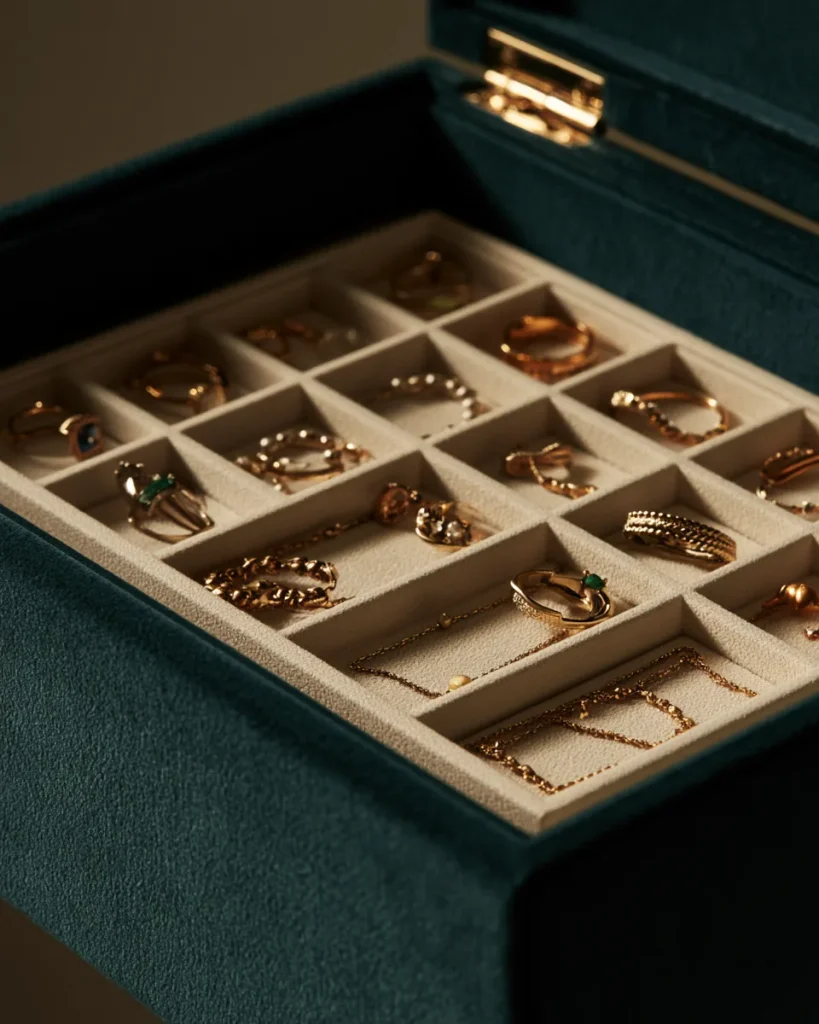
A shallow drawer beats a box, because a box stacks, and every stacked layer moves the one beneath it when you lift it out.
The number of pieces a drawer holds comes down to compartment size, and the compartment size comes down to what is going in it.
| Compartment size | Slots in a 14 by 18 in insert | Suits |
|---|---|---|
| 1.5 in | 108 | Studs and small rings |
| 2 in | 63 | Rings, short chains |
| 2.5 in | 35 | Bracelets, larger pendants |
| 3 in | 24 | Bangles and watch faces |
A mixed insert beats a uniform one. Half the drawer at 1.5 inches and half at 2.5 inches serves a normal collection better than 63 identical squares.
Depth is the figure people skip. A compartment deeper than two inches lets a piece sit below the rim where you cannot see it, which defeats the point of the tray.
Shallow and wide beats deep and narrow every time here. You are looking down into the drawer, so anything hidden by depth may as well be in a box.
A jewelry drawer organizer is worth measuring for rather than guessing at, since a tray that slides is a tray that tips its contents into each other.
Measure the drawer interior before ordering an insert, since a quarter inch of slack lets the whole tray slide.
If there is no drawer to spare, the same logic works inside a shallow box on a shelf, and the storage a small bedroom is not currently using usually turns one up.
Where two people share the room, two separate inserts beat one shared drawer for the same reason two chains should not share a hook. The conflicts a shared bedroom creates apply to small storage as much as to furniture.
Read more: how the same compartment logic sorts a makeup drawer
Travel, where every rule breaks at once
A suitcase is a box being agitated for hours. It is the experiment, run at length, with your chains inside it.
So travel storage is the one case where you immobilise everything, including the short pieces that are safe at home.
Jewelry storage ideas for travel are the only ones where over-engineering pays, because the failure happens out of sight and you find it on arrival.
What survives a suitcase
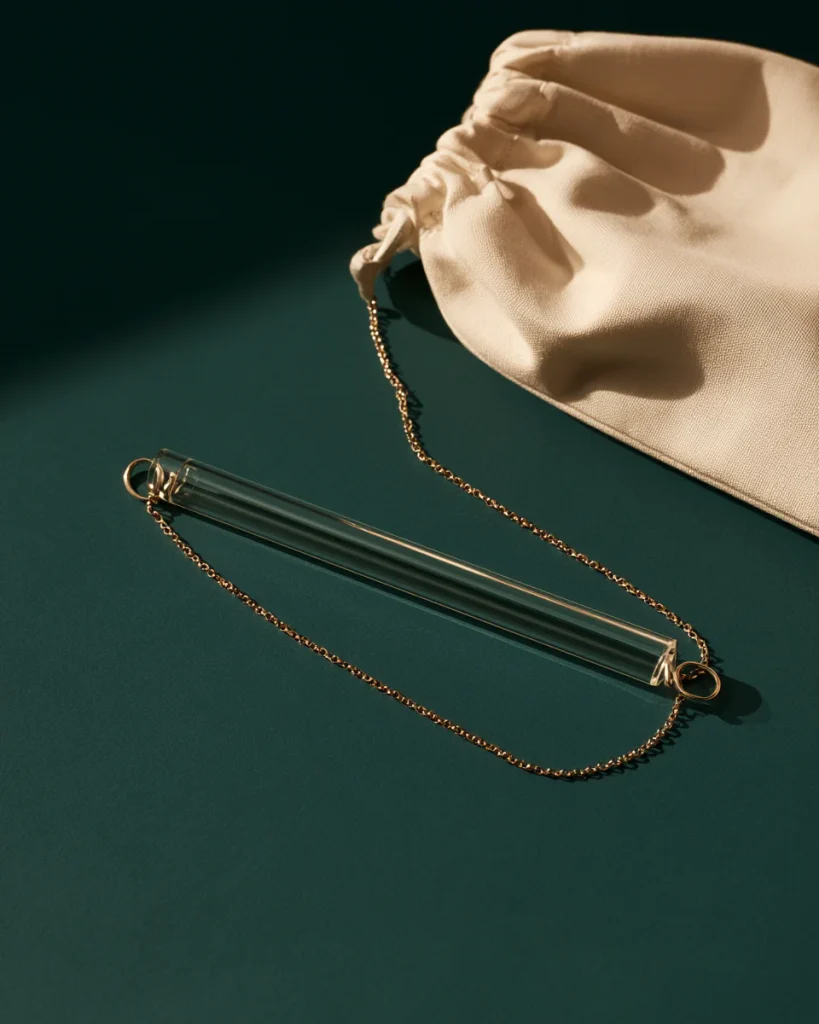
- A chain threaded through a drinking straw and clasped at both ends
- Studs pushed through a button or a strip of card
- Rings inside a small pill case, one per compartment
- Each piece in its own zip bag rather than a shared pouch
- The whole lot in hand luggage, since a hold bag gets thrown
Thread every chain through a drinking straw before it goes into a bag.
The straw removes the flexibility that the physics depends on. A chain that cannot bend past a certain radius cannot form the loop a knot needs.
The same trick works at home for the chains you wear least. A straw costs nothing, and it takes the piece out of the tangling category permanently.
The pieces holding a slot they do not earn
Storage improves fastest when the collection shrinks, and jewellery accumulates in a way few categories match. It takes almost no space, so nothing forces a decision.
A drawer of forty pieces where eight get worn is forty compartments bought to store eight. That is the arithmetic worth running before any purchase.
What is taking a compartment without earning it
- Single earrings whose pair went years ago
- Costume pieces that have gone green at the contact points
- Anything with a broken clasp you have not repaired in a year
- Gifts you have never worn and will not
- Chains so fine they have already knotted permanently
The last group is worth naming honestly. A chain with a knot pulled tight is usually finished, and keeping it is the same reasoning that keeps a wardrobe full of unworn clothes.
Replacement is where the count climbs back, since a single piece feels like a small purchase every time. The point in the buying loop where it is easiest to intervene applies here more than in most categories.
The order that saves you a purchase
The order matters because the measurement changes what you buy. Buying first is how a collection of thirty ends up on a stand built for four.
In this sequence
- Lay everything out and measure the longest chain
- Split the collection at 18 inches, hanging above and flat below
- Separate anything above Mohs 7 from anything below Mohs 4
- Count how many pieces need a compartment, then buy the insert
- Bag the silver and leave the pearls out of the bags
- Hang the long chains one per hook, with a gap between
Wall space for hanging is the constraint that bites first, and it is usually available where nobody looks. What a fixing will hold on which wall type decides whether a loaded board stays up.
In a room with no closet at all, the door and the back of the bedroom door become the whole system, and the options for a bedroom without one cover the mounting problem.
Jewelry organization stops being a recurring job at the point where nothing can move. Hang what is long, hold what is short, and keep the hard stones away from the soft metal.
None of that depends on buying the right stand. It depends on one measurement and one sort, and both take an afternoon once.
Jewelry organization for small spaces is easier than it looks for one reason. The whole collection fits in a drawer and a door, and neither of those was doing anything else.
Read more: what a bedroom looks like once the surfaces are genuinely clear