

Furnish a studio apartment by counting conversions, not square feet. Every piece either holds one shape all day or has to be folded, pulled, tipped, or wheeled into a second one.
That second state is not free. It costs seconds, and those seconds repeat every day for as long as you live in the place.
A sofa bed opened and closed twice a day is 730 conversions a year. At ninety seconds each, that comes to 18.3 hours. The same sleeping surface in a wall bed, at twenty seconds, costs 4.1.
Fourteen hours separate two pieces that look interchangeable in a catalogue. The floor area they release is real, and so is the bill.
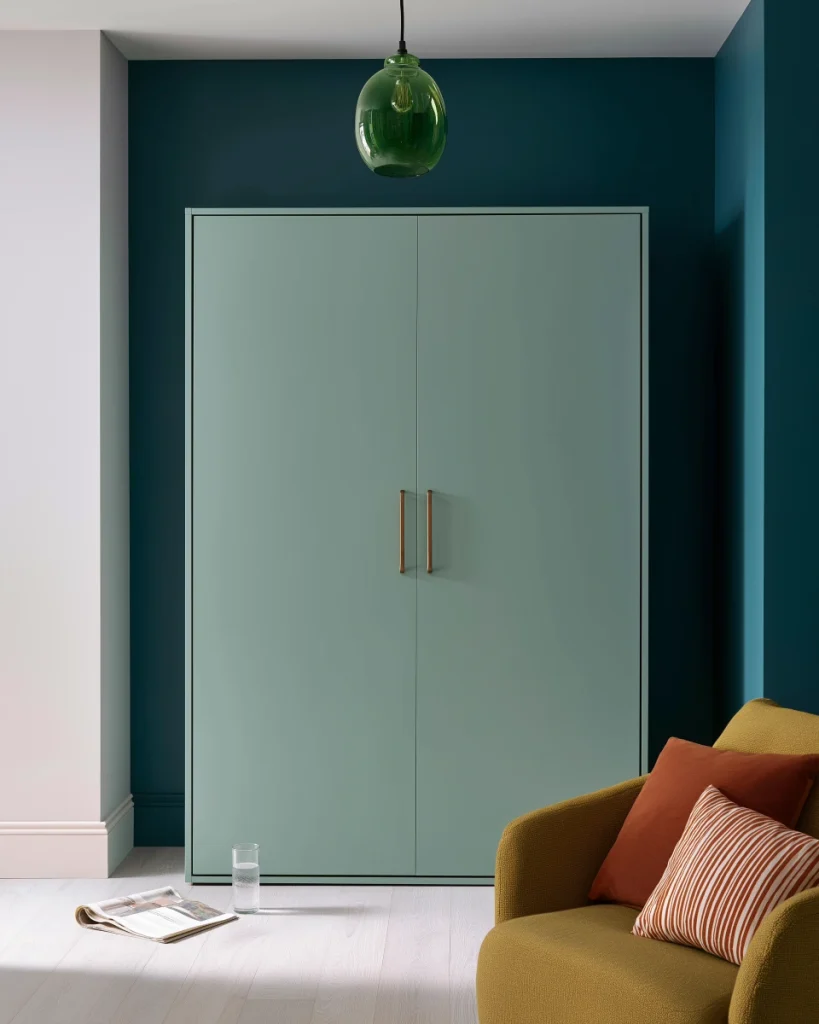
Furnish a studio apartment by conversion count, not floor area
Studio guides almost all open with floor area. That ground is covered elsewhere on this site, so take the shapes and clearances as given and start from the pieces themselves.
The four room shapes, the walkway widths, and the arithmetic behind them sit in the layout article, which is the right place to start if you have not decided where the bed goes.
Every convertible piece asks for the same trade. It gives back floor area while it is closed and charges you time whenever you change it.
Price the charge like this. Multiply the seconds one conversion takes by the number of times a day you do it, then by 365.
Ninety seconds twice a day is 18.3 hours a year. Twenty seconds twice a day is 4.1 hours. Sixty seconds once a week is 52 minutes.
| Piece | Seconds per conversion | Times per day | Hours per year |
|---|---|---|---|
| Sofa bed | 90 | 2 | 18.3 |
| Daybed with bolsters | 45 | 2 | 9.1 |
| Wall bed | 20 | 2 | 4.1 |
| Drop leaf table | 15 | 4 | 6.1 |
| Fold-down wall desk | 10 | 2 | 2.0 |
| Nesting side tables | 8 | 1 | 0.8 |
| Storage ottoman lid | 5 | 1 | 0.5 |
| Platform bed | 0 | 0 | 0 |
The second column comes from timing the actions rather than from any published figure. Time your own once and the totals shift, though the ranking rarely moves.
That ranking is the useful part. Two pieces that release the same floor area can differ by a factor of four in what they cost you to live with.
The break-even is simple to state. A convertible piece earns its tax when the floor it releases gets used during the hours the piece is closed.
A wall bed that frees 33 square feet of a walkway you cross all day pays for itself. A sofa bed folded away in a corner nobody walks through does not.
What the hours figure does not capture
- Whether you can convert the piece half asleep
- Whether the floor has to be cleared first
- Whether a second person has to help
- Whether the bedding comes off and needs somewhere to go
- Whether the mechanism carries noise through a shared wall
Twice a day: the bed decision
The bed is the only piece you convert twice every day, so it carries most of the tax. Choose it first when you furnish a studio apartment and fit the room around it.
The sofa bed
A sofa bed is the most expensive conversion sold for a home. Ninety seconds is optimistic once the back cushions have to come off and go somewhere.
It earns its place in one situation. A studio under 300 square feet where a bed and a sofa cannot both sit against a wall has no better answer.
Buy a sofa bed only after measuring and confirming that a separate bed and sofa will not both fit.
The wall bed
A wall bed converts in roughly twenty seconds because the bedding stays strapped to the frame. That one detail is why the annual cost drops by a factor of four.
The cost moves rather than disappears. Most models want anchoring into studs, which is a landlord conversation, and the free-standing versions run more expensive.
Measure the closed depth of a free-standing wall bed before ordering, because 4 to 6 inches of permanent wall depth is normal.
Where the wall bed cost moves to instead
- Stud anchoring, and the patching bill when you leave
- A closed depth of 4 to 6 inches you never get back
- Mattress depth limits, often 10 or 12 inches maximum
- Price, typically double a platform frame of the same size
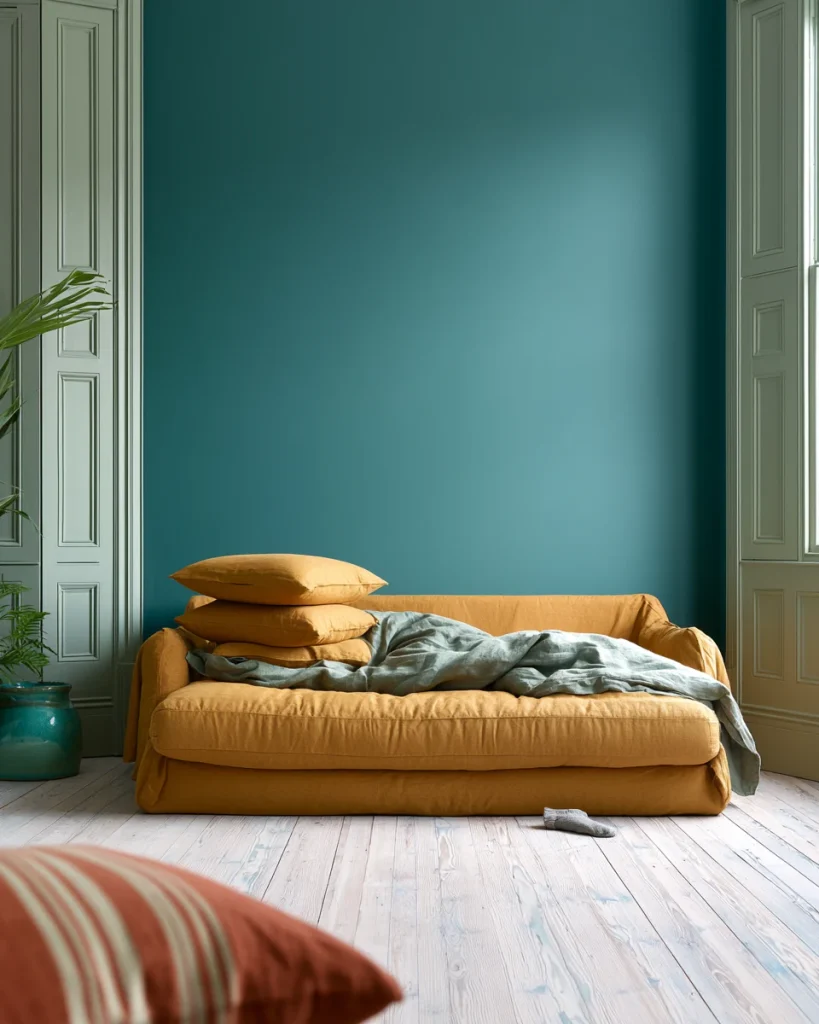
The daybed
A daybed is the compromise nobody markets properly. The mattress never moves, so you are only relocating bolsters and a throw, which is 45 seconds at worst.
It charges you full-time floor space instead. A twin daybed holds a 38 by 75 inch footprint, 19.8 square feet, whether anyone is sitting on it or not.
The platform bed
Zero conversions and a permanent floor cost. A full mattress at 54 by 75 inches takes 28.1 square feet. A queen at 60 by 80 takes 33.3 square feet.
In a 400 square foot studio, a queen platform bed is 8.3 percent of the floor, which still leaves the room workable. In a 250 square foot studio, the same bed takes 13.3 percent.
Around that 13 percent mark, the wall bed starts to pay for itself, because the floor it releases is floor you are short of during the day.
Time the conversion in the showroom with the bedding on, not empty, before you sign for any convertible bed.
How to pick a studio bed in one pass
- Under 300 square feet and you host guests, choose the wall bed
- Under 300 square feet and you do not host, choose the daybed
- 300 to 450 square feet, choose a platform bed with drawers
- Over 450 square feet, choose whatever you like and skip this section
- Any size where drilling is banned, choose a daybed or a free-standing wall bed
Read more: renter fixes for a small sleeping area that need no drilling
Once a day: eating and working
Eating and working both need a flat surface you do not want out permanently. Neither costs much to convert, which is why they get solved straight after the bed.
If the studio has a closet you can give up, moving the work surface inside it removes the problem from the room altogether and costs zero conversions.
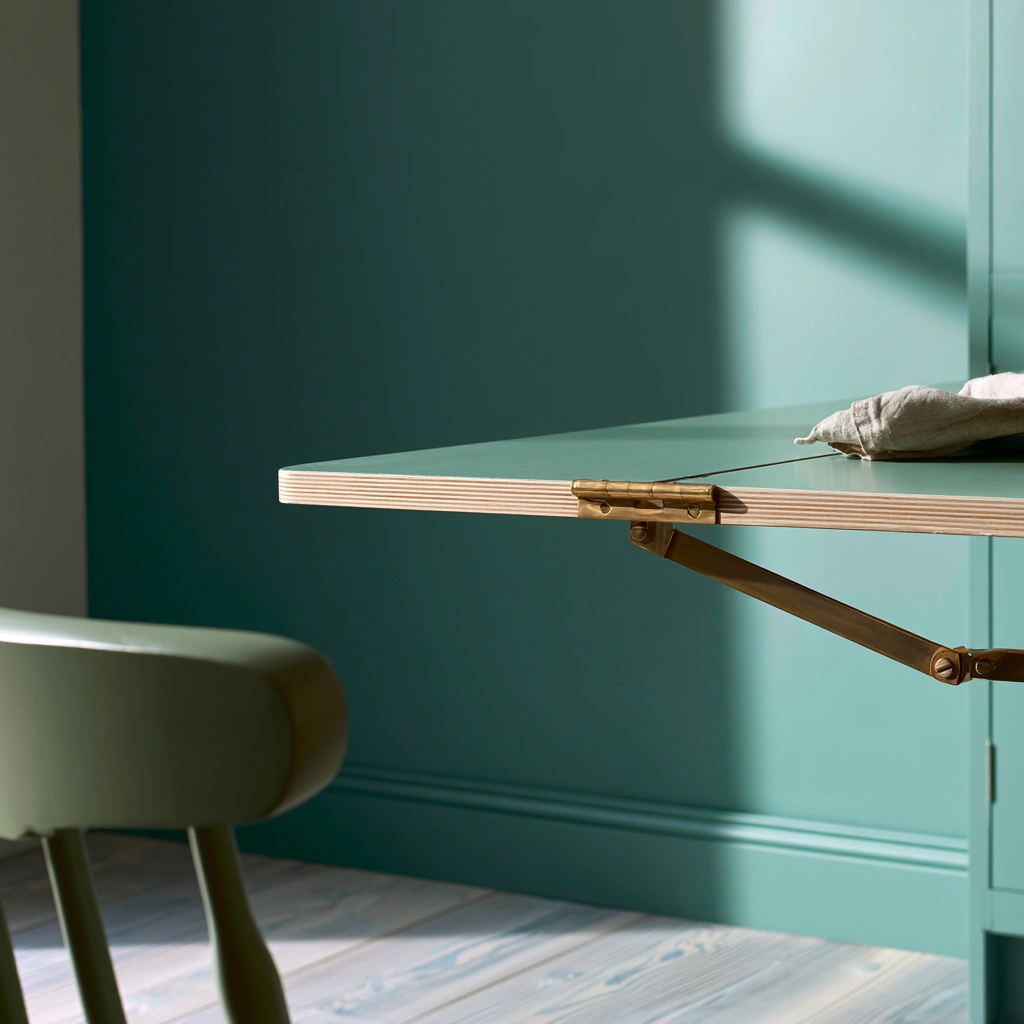
Drop leaf and gateleg tables
A drop leaf converts in about 15 second a leaf. Two leaves raised and lowered around a meal is four operations, landing near six hours a year.
A gateleg version costs more time because the legs swing as well as the leaf, closer to 25 seconds a side once you allow for the chairs moving.
The gain is measurable. A 36-inch round drop leaf collapses to roughly 36 by 15 inches against a wall, releasing about 3.3 square feet between meals.
Fold-down wall desks
A fold-down desk is ten seconds each way and needs nothing cleared first, which makes it one of the cheapest conversions in the room.
Depth is the constraint people get wrong. A 15-inch laptop is around 9 inches deep, and an open notebook beside it adds 11, so 20 inches is the floor.
Buy the fold-down desk at 24 inches deep, or accept that you will be working with the notebook on your lap.
The console that never converts
A narrow console at 30 to 36 inches wide and 16 inches deep works as a desk and changes state never. It costs 3.3 to 4 square feet permanently and nothing after that.
That trade is usually the right one in a studio, for the same reason it holds in a bedroom where a desk and a bed share the floor.
The conflicts a desk creates in that situation are the ones a studio raises too, only with the kitchen added.
Work and eating surfaces ranked by annual cost, cheapest first
- Fixed console desk, zero hours
- Storage ottoman used as a low table, half an hour
- Nesting side tables, under an hour
- Fold-down wall desk, two hours
- Drop leaf dining table, six hours
- Extending table with a leaf stored elsewhere, six hours plus a retrieval trip each time
Read more: the seated measurements that decide whether a desk is usable at all
Once a week: seating and guests
Seating is where studio budgets leak. It is easy to furnish a studio apartment with seating sized for a living room the apartment does not have.
Guest capacity you use four times a year should not charge you floor area on the other 361 days.
Storage ottomans
An 18-inch cube ottoman occupies 2.25 square feet and does three jobs. It is a seat, a footrest, and a low table, and the lid is a five-second conversion.
Interior volume works out to around 4,490 cubic inches once the walls are allowed for, which is 2.6 cubic feet, or roughly ten sweaters folded to 12 by 12 by 3 inches.
That figure matters because it changes what the piece competes with. At 2.25 square feet, an ottoman is cheaper per seat than any chair sold.
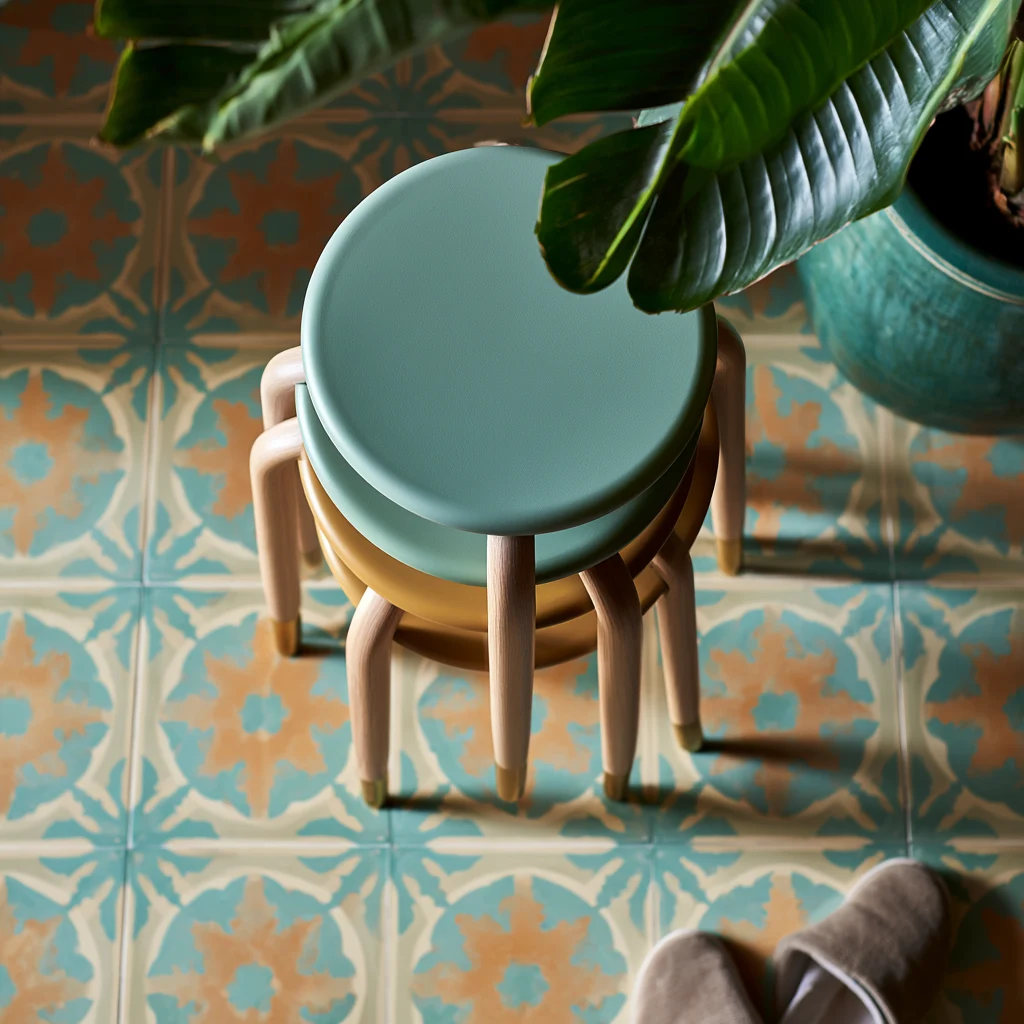
Stools that stack
A stacking stool at 13 inches square is 1.17 square feet, and four of them stack inside that same footprint. Four guest seats for the floor cost of one.
Why the second sofa never works
A loveseat at 58 by 33 inches is 13.3 square feet. Buying a second one takes that to 26.6, which is 80 percent of a queen bed footprint spent on evening seating.
An accent chair at roughly 30 by 32 inches costs 6.7 square feet for the same extra seat, and it moves when you need the floor.
Buy guest seating last, buy it stackable, and store it inside something you already own.
Guest capacity with no permanent floor cost
- Stacking stools, four seats in one footprint
- Floor cushions kept inside the storage ottoman
- A bench against the wall that pulls out when needed
- Folding chairs on a closet door hook
- The bed itself, when it is a daybed
Read more: how seating gets arranged when the room is a whole room
Never: the pieces that hold one shape
Pieces that never change state get cut from the budget first, and that is usually backwards when you furnish a studio apartment. They charge floor area once and then stop charging.
Wardrobes and tall storage
Height is the one dimension in a studio that costs nothing extra on the floor. A 24-inch-deep wardrobe at 72 inches tall holds twice what a 36-inch one holds on identical square footage.
That is the same height banding logic that works inside a closet, applied to a piece standing in the open.
If the unit is standing in the open because there is no closet at all, the renter solutions for a bedroom without one transfer to a studio wall with almost no change.
One large mirror
A wall-hung mirror never converts, occupies no floor and returns light to the darker half of the room. Opposite a window is the placement that does the most work.
The rug that marks the zones
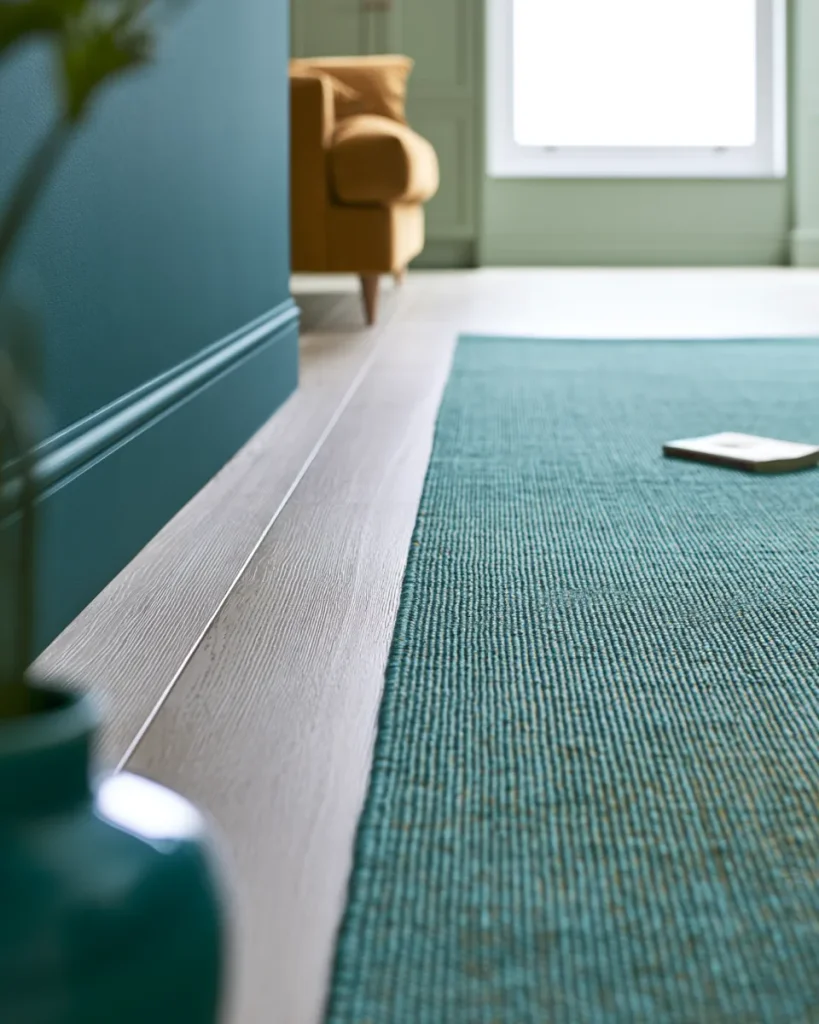
A rug does no work you can time with a stopwatch. It is still the cheapest divider in a studio, because it takes no vertical space and blocks no daylight.
Everything a taller divider costs you in daylight gets avoided by drawing the line on the floor instead.
What goes under the bed
Under-bed volume is zero-conversion storage you have already paid for. The clearance under the frame decides which bins fit, and the volumes each clearance band gives you are worth checking before buying containers.
Before you buy anything over 27 inches tall
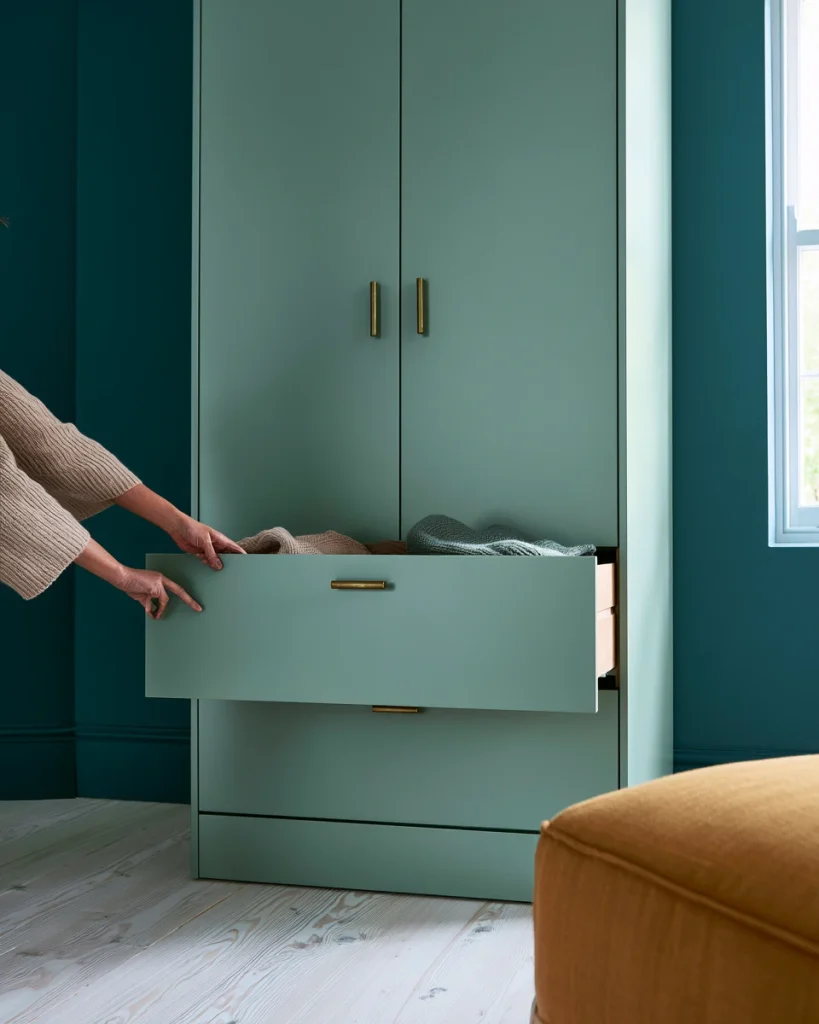
Tall storage in a studio is not a styling decision. It is the only way to get real capacity out of a small footprint, and it carries a federal safety standard.
Under 16 CFR Part 1261, the US Consumer Product Safety Commission requires freestanding clothing storage units to meet the ASTM F2057 stability specification when they stand at least 27 inches tall, weigh at least 30 pounds, and enclose at least 3.2 cubic feet.
The requirement applies to units manufactured after 1 September 2023. Anything older, which covers most secondhand and marketplace furniture, was never tested against it.
The 27-inch threshold is lower than it sounds. A three-drawer dresser clears it, and so does almost every flat-pack bedroom unit sold for a rental.
Check the manufacture date, not the listing date, before buying any tall dresser or wardrobe secondhand.
A studio gives you fewer walls to work with, so the tall unit often ends up somewhere without a stud behind it. If the only available wall fails the stud test, size down to a unit under 27 inches rather than trusting a drywall anchor with a loaded dresser.
Weight ratings are the same problem shelving has, and the numbers behind what a wall fixing will genuinely hold apply to anchor straps too.
Anchor tall storage into a stud rather than into drywall alone, and budget for patching the holes on move out.
Tall furniture checks for renters
- Confirm the manufacture date, not the date of the listing
- Anchor into framing, and keep the patch kit for move-out
- Load the heaviest items into the bottom drawer
- Open one drawer at a time on anything unanchored
- Keep the unit off a thick rug, which tips it forward
The order to buy in
Furnish a studio apartment in the order that locks the fewest later decisions. The bed sets the room, so it goes first, and zero conversion pieces go last because they fit around anything.
The buying order that costs the least to get wrong
- The bed, because it decides where everything else can go
- The one daily flat surface, desk or table, whichever you use more often
- Storage, sized to what you own after thinning it out
- Primary seating, once you know what floor is left
- Guest capacity, last and stackable
- Mirror and rug, which fit wherever there is room
Sizing storage before the edit is the common mistake. Buying a wardrobe for a wardrobe you have not yet gone through means thinning the room down first happens after the furniture arrives, which is the wrong way round.
Size storage after the edit, not before, and measure what is left rather than what you started with.
The same applies to the second version of anything. A studio punishes duplicate purchases harder than a house does, because there is nowhere to put the loser.
The point in the buying loop where it is easiest to stop comes before the second one is in the room.
Kitchen furniture follows different rules again, since a studio kitchen is usually a wall rather than a room. The vertical inches most small kitchens waste are the ones a studio can least afford.
To furnish a studio apartment well, you need one number per piece, and it is not the price. It is how many seconds you will spend on it, twice a day, for as long as you live there.
Time your own conversions for a week before committing to anything convertible. Under two hours a year is not worth thinking about. Over ten deserves a second look at whether the floor it releases is the floor you use.