

Shoe storage in a small space is a density problem with a hard ceiling on it. The same three square feet of hallway holds 4 pairs or 27, depending only on the method you pick.
That is a spread of almost six times, and it is settled before you buy anything. The ranking below is in pairs per square foot of floor given up.
Three of the nine methods cost no floor at all, because they hang on a door or a wall. Those are the ones to fill first.
The ceiling comes from drying. Shoes that came off your feet today need air, so the pairs in daily rotation cannot live in the densest storage on the list.
Most shoe storage for small spaces starts with a product. It should start with two measurements, because the product only matters once you know what the strip of floor can carry.
The two numbers that settle it
Every method below is scored the same way. Take the floor area it occupies, divide the pairs it holds by that area, and compare.
Measure one pair, not one shoe
A pair sitting side by side takes roughly 12 inches front to back and 8 inches across. That is 96 square inches, or 0.67 square feet.
Your own number will differ. A US men's 12 runs longer, a women's 6 runs shorter, and boots need depth rather than width.
Measure one of your own pairs on the floor before you measure anything else.
Measure the floor you are willing to lose
The second number is how much floor you will hand over permanently. In a narrow entry, that is usually a strip about 36 inches wide and 12 inches deep.
Three square feet is the working figure for the rest of this article. Scale it to whatever strip you have, and every number below moves with it.
Measure these five before ordering anything
- One pair front to back, and the same pair across at its widest
- The strip of floor you can hand over without blocking the walkway
- The clear depth from the wall to the swing of the open door
- The height of your tallest boot, standing up
- The thickness of the door, if an over-door hook is on your list
The tallest boot is the one people forget. It sets the shelf spacing for a whole unit, and a 16-inch shaft will not lie down inside a 12-inch-deep cabinet.
The nine shoe storage methods, ranked by density
The three at the top of this table are not better designs. They are methods that put the shoes somewhere the floor is not.
| Method | Floor used | Pairs held | Pairs per sq ft |
|---|---|---|---|
| Over-door organizer | None | 12 | No floor at all |
| Wall rack, 30-inch rail | None | 6 | No floor at all |
| Under-bed drawer | None extra | 8 | Floor already spent |
| Stacked boxes, six high | 0.68 sq ft | 6 | 8.9 |
| Four-tier rack, 24 by 12 in | 2.00 sq ft | 12 | 6.0 |
| Tilt-out cabinet, 24 by 10 in | 1.67 sq ft | 9 | 5.4 |
| Two-tier rack, 24 by 12 in | 2.00 sq ft | 6 | 3.0 |
| Bench with cubbies, 36 by 15 in | 3.75 sq ft | 8 | 2.1 |
| Loose on the floor, one layer | 2.00 sq ft | 3 | 1.5 |
The three that cost no floor
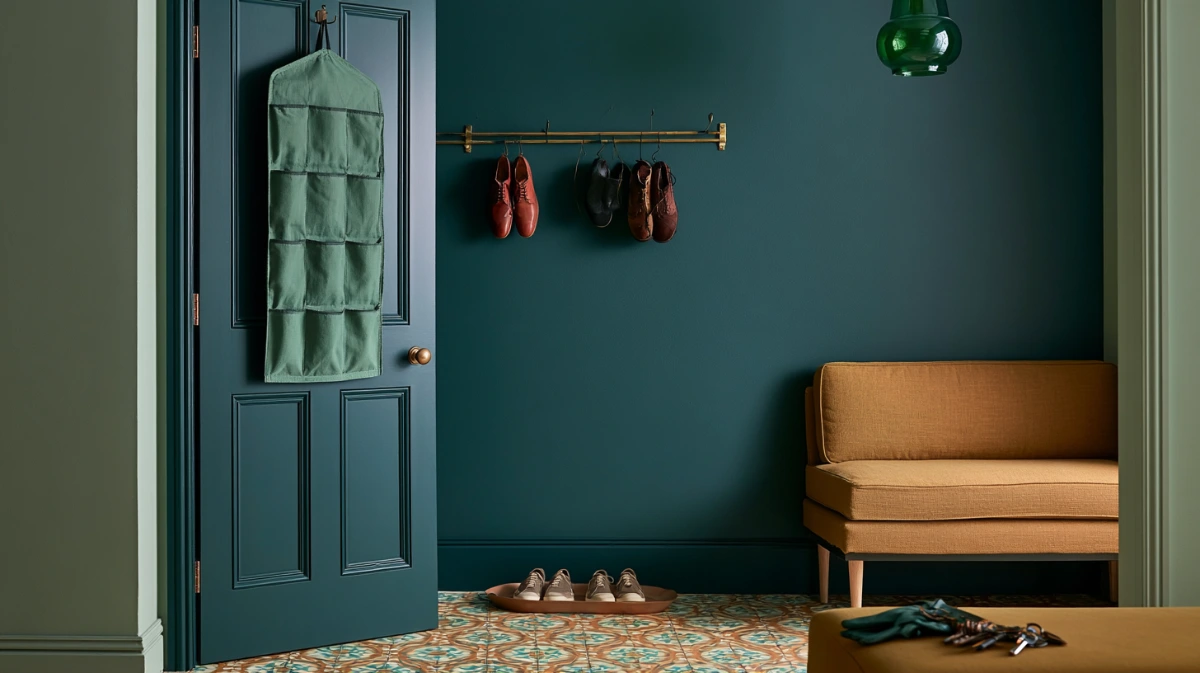
An over-door organizer holds twelve pairs on a door you already own and takes nothing from the room. As entryway shoe storage, it is the highest yield item on the list.
A wall rail does the same on a stretch of wall that was doing nothing. Six pairs per 30 inches, angled so the toes face out.
Under a bed, the floor is already spent, so anything you fit there is free. The container choice matters more than the method, and the six container types compared by clearance covers which ones survive down there.
Fill the door and the wall before you give up a single square foot of floor.
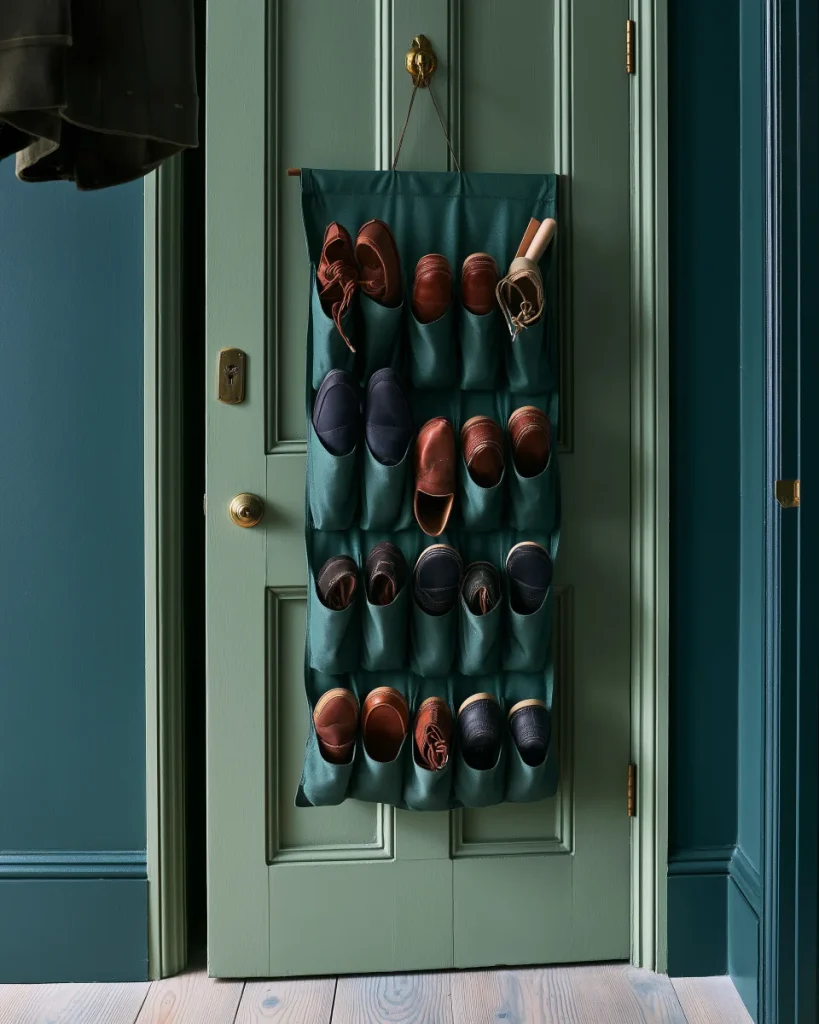
The densest floor method, and what it costs
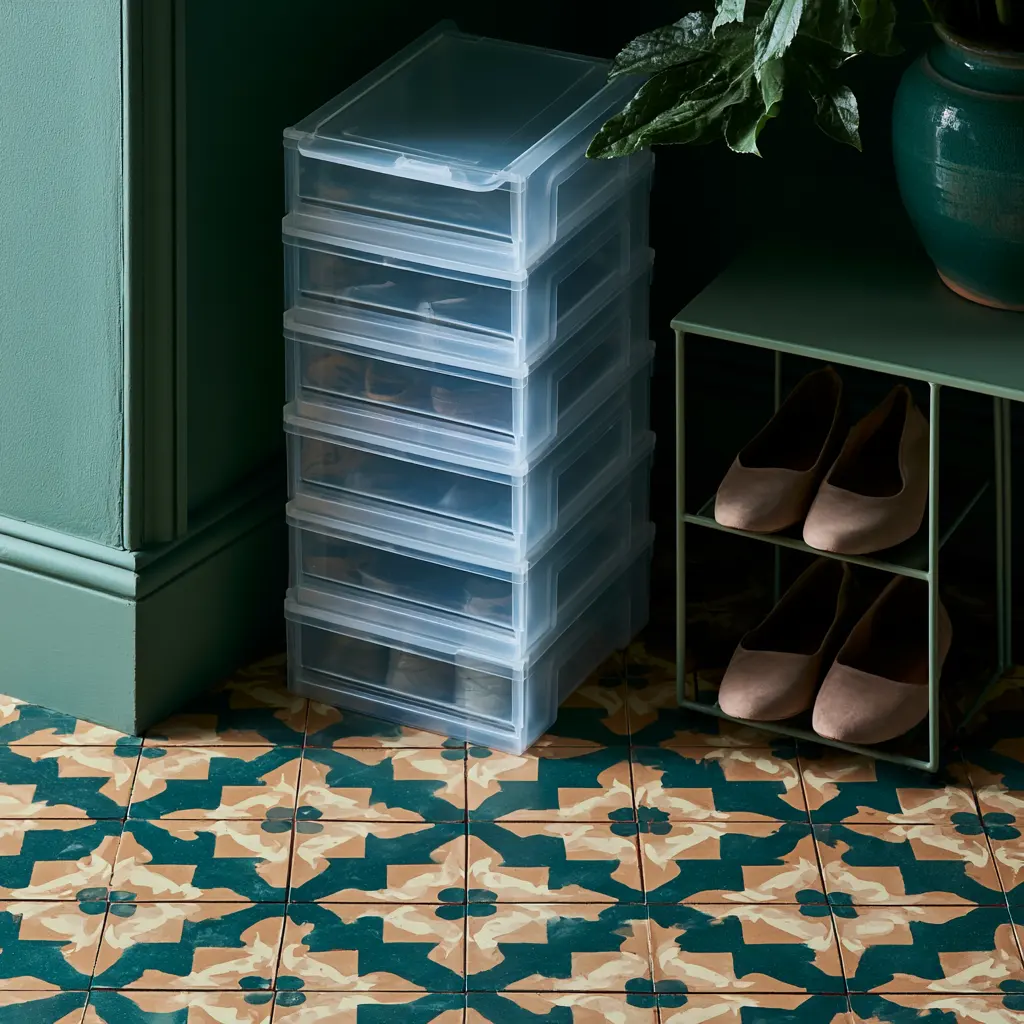
Stacked boxes win the floor ranking at 8.9 pairs per square foot. Six boxes at five inches each is a 30-inch tower on a footprint smaller than one pair laid out.
They also have the worst access on the list. Reaching the third box down means moving three, and that is a daily tax on any pair you wear often.
Clear fronts help and do not solve it. You still lift the stack, you just do it knowing which box you are lifting it for.
The one worth its poor density
A bench with cubbies is second worst on the table at 2.1 pairs per square foot. It survives the ranking anyway because it does a second job.
You sit on it to put the shoes on. In an entry with nowhere to sit, people balance against a wall and leave the pairs where they land, which is how the floor fills.
That is a furniture decision rather than a storage one, and it follows the same test as anything else competing for floor in a very small home.
Where boots break the table
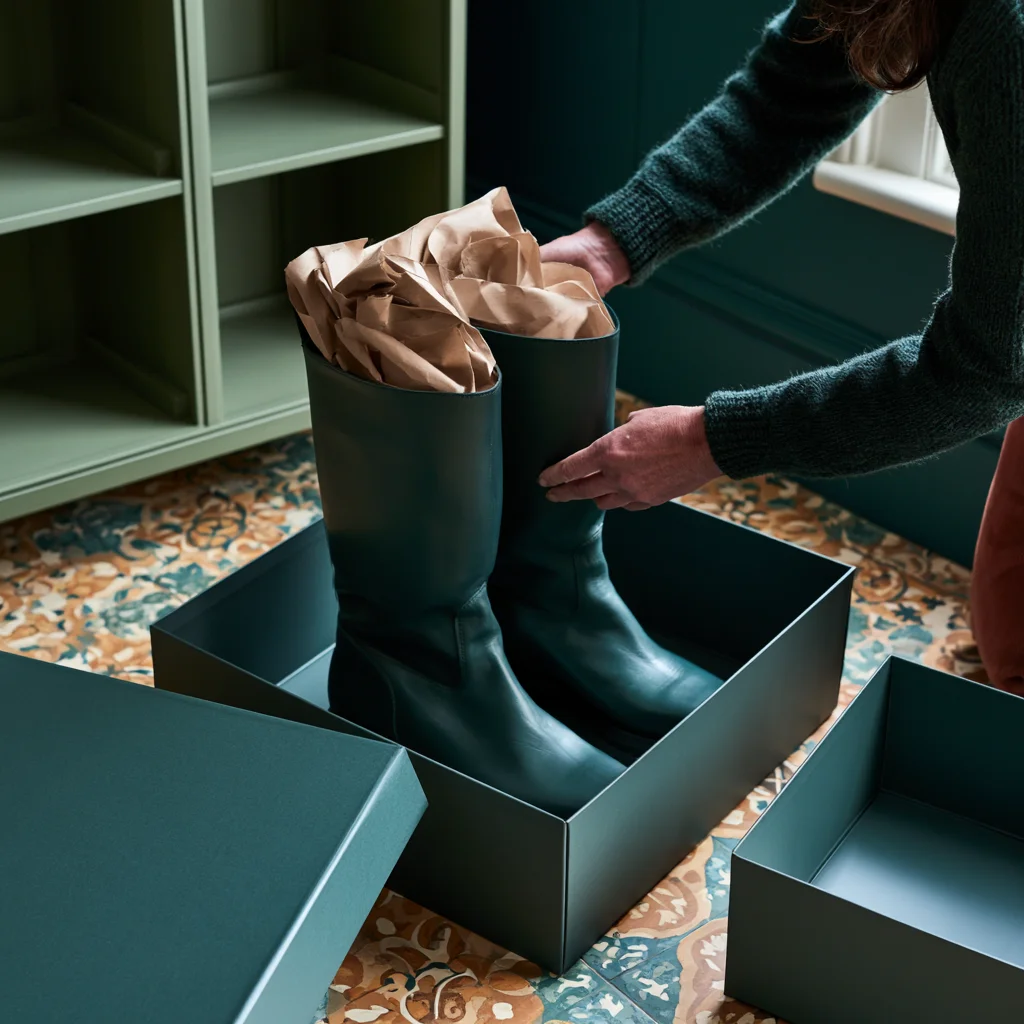
Boots take the same floor as a shoe and four times the height, so they score badly on every method built around shelves.
They do better standing in a tall narrow gap than lying in a rack. The best shoe storage for boots is usually the space beside a wardrobe rather than any product sold for the job.
What three square feet of hallway holds
Run the same strip of floor through each method, and the spread stops being abstract.
| Method | Pairs in 3 sq ft |
|---|---|
| Stacked boxes | 27 |
| Four-tier rack | 18 |
| Tilt-out cabinet | 16 |
| Two-tier rack | 9 |
| Bench with cubbies | 6 |
| Loose on the floor | 4 |
Four pairs against 27, on identical floor. Nothing about the room changed, and nothing was thrown away.
Small space shoe storage lives or dies on that comparison. The room is rarely the constraint, and the method almost always is.
This is why counting pairs first is worth the 10 minutes. If you own 18 pairs and the strip only takes four loose, the method was the problem, not the quantity.
Read more: how the same height banding works across a whole closet
Access runs the opposite way to density
The table has an inverse buried in it. The denser the method, the longer it takes to get a pair out and put it back.
Loose on the floor is one second and worst on density. Stacked boxes are densest and take 15 seconds each way once you count the lifting.
So the two rankings cancel unless you split the collection. Daily pairs go in the fast, low-density places, and everything else goes in the dense, slow ones.
Every shoe storage decision after that point is a trade between how many pairs fit and how long each one takes to reach.
Split the collection this way
- Pairs worn this week, on the open rack or the wall, no lid and no lifting
- Pairs worn this month, in the tilt cabinet or the second tier
- Pairs worn this season, in the over-door pockets
- Off-season pairs, in stacked boxes at the back or under the bed
- Pairs not worn in a year, out of the house
Keep the pairs you wear this week out of the stacked boxes, whatever the density table says.
Drying, which puts a ceiling on all of it
There is a reason not to seal shoes away the day they come off. The American Podiatric Medical Association points out that shoes give fungus everything it needs: being dark, damp, and held at body temperature.
A closed box makes all three of those worse. The moisture that went into the lining during the day has nowhere to go and stays there until the next wear.
Standard podiatric advice is to leave 24 hours between wears for the same pair. That is a storage requirement as much as a foot care one.
Give every pair 24 hours in open air before it goes back on your feet.
Never put a damp pair into a sealed box, however good the density looks.
The practical consequence is a small open landing area near the door for whatever came off today. One tray or one open shelf, holding two or three pairs, permanently reserved for shoes that are still drying. It is the least efficient square foot in the system and the one that keeps the rest of it working.
What the drying rule changes
- You need at least two everyday pairs to rotate, not one
- Today's pairs stay out, so the open landing spot is never wasted
- Boxes and zipped bags are for pairs that have been dry for days
- Boots need longer than 24 hours, since the shaft holds moisture
- A wet pair gets stuffed with paper and left out, not put away
What knocks a method off your list
The ranking assumes every method is available to you. Four things routinely remove one, and all four are worth checking before you order anything.
The four disqualifiers
- Door swing, which rules out anything deep in a narrow hall
- A hollow or plasterboard wall with no stud where the rail needs to go
- A tenancy that bans drilling, which removes the wall rack outright
- A door too thin or too thick for an over-door hook to seat properly
Check the door swing before buying anything more than 10 inches deep.
The wall question is the same one every mounted thing raises, and what a fixing will hold on which wall type decides whether a loaded rail stays up.
Shoe storage for a small apartment on a tenancy that bans drilling loses the wall rack and keeps everything else on the table, which is a smaller loss than it sounds.
That trade shows up across a whole flat rather than just the entry, and the no-drill options that carry the same load apply here without much change.
Buy the rack on depth rather than width, then measure what walkway is left.
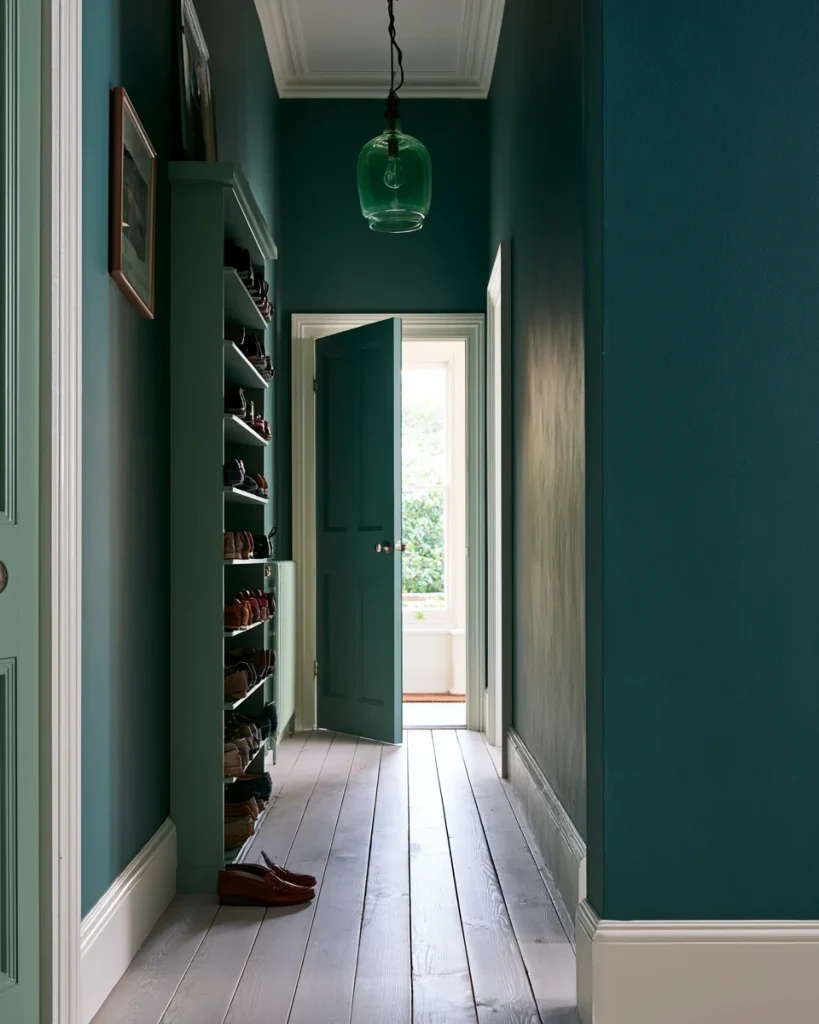
The pairs that should not be in the system
Density has a limit and so does patience. Some of the collection is taking premium space for no return.
Pull these out before you buy any storage
- Pairs that hurt, which never get picked no matter where they sit
- Pairs kept for an event that has already happened
- Worn-out soles you meant to get resoled more than a year ago
- Duplicates in the same colour and use case
- Anything that has been in a box unopened since the last move
The reasoning here is the same as any wardrobe pass, and sorting by why you kept it rather than whether you like it works on shoes without modification.
Every pair removed is worth roughly a fifth of a square foot at loose density, or a slot in the over-door organizer. The second is the more useful currency.
Buying is the other half of it. Shoes accumulate faster than most categories because each purchase feels small, and the point in the buying loop where it is easiest to intervene applies here in particular.
Read more: why the entry sets the tone for the whole room behind it
The seasonal move
Half the collection is wrong for the weather at any given time, and it is sitting in the best storage in the house.
Twice a year, swap the entry contents with the box contents. It takes 20 minutes, and it roughly doubles the useful capacity of the fast storage.
Do it on a date you already have, the clock change or the first cold week, rather than on a reminder. A swap tied to weather you can feel gets done.
Move the off-season pairs out of the entry entirely, not to the bottom shelf of it.
Boots are the awkward case, since they need height rather than footprint. A tall narrow gap suits them better than any rack, which is the same logic behind converting an awkward alcove into dedicated storage.
If the swap has nowhere to go, the bedroom usually has the spare volume, and the storage a small bedroom is not using is where to look first.
What to do first
Order matters here because each step changes the number for the next one.
In this order
- Count the pairs and pull out the ones that should leave
- Measure one pair and the strip of floor you can give up
- Hang an over-door organizer, which costs no floor and takes ten minutes
- Add a wall rail if the wall and the tenancy allow it
- Fill the remaining floor with the densest method that still opens
- Reserve one open tray for whatever came off today
Shoe storage stops being a problem at the point where the daily pairs have a fast home, and everything else is dense and out of the way.
That split is the whole trick. The table tells you which method goes where, and the drying rule tells you which pairs are not allowed in the efficient half.
Read more: what a small bedroom looks like once the floor is genuinely clear