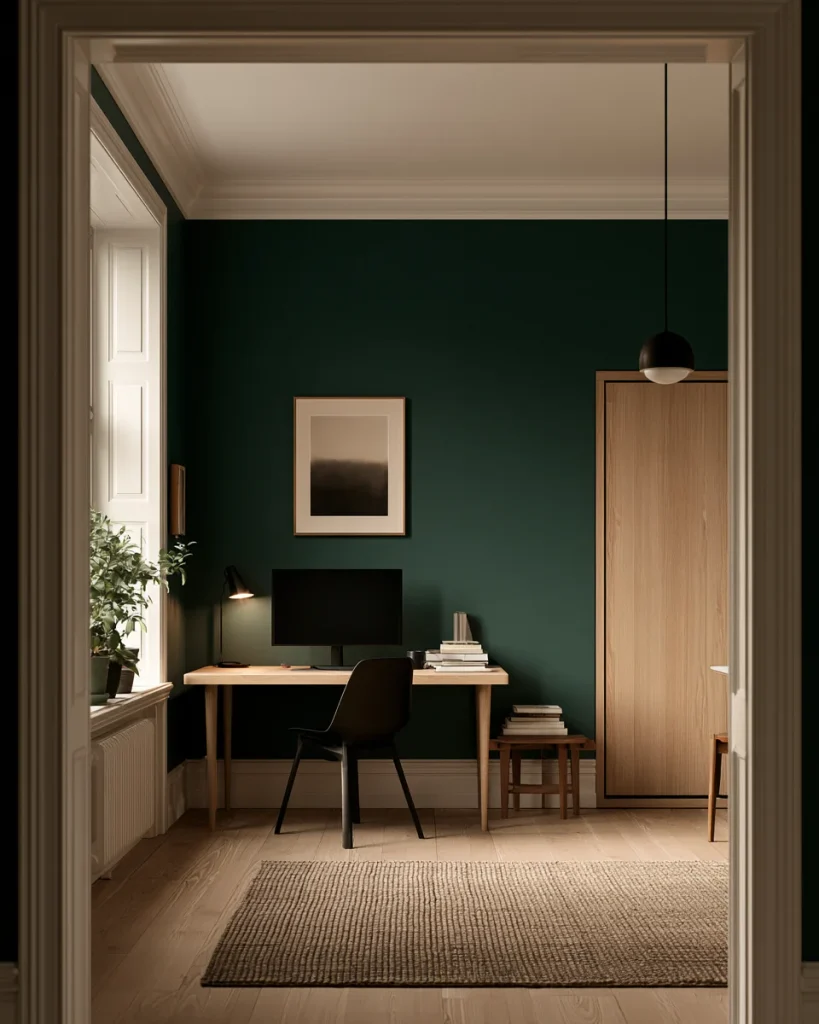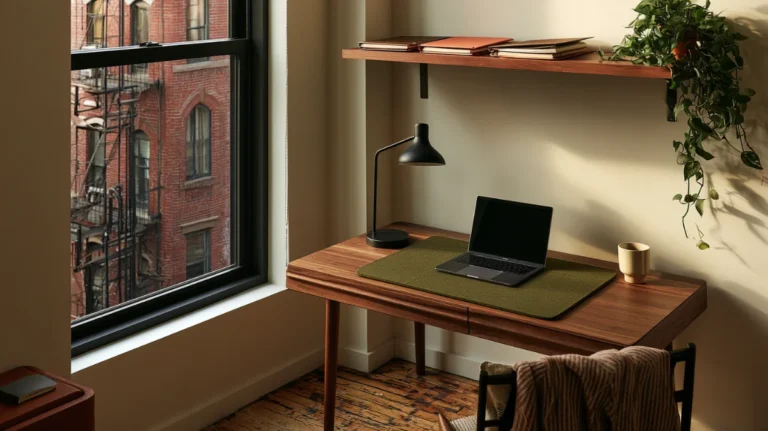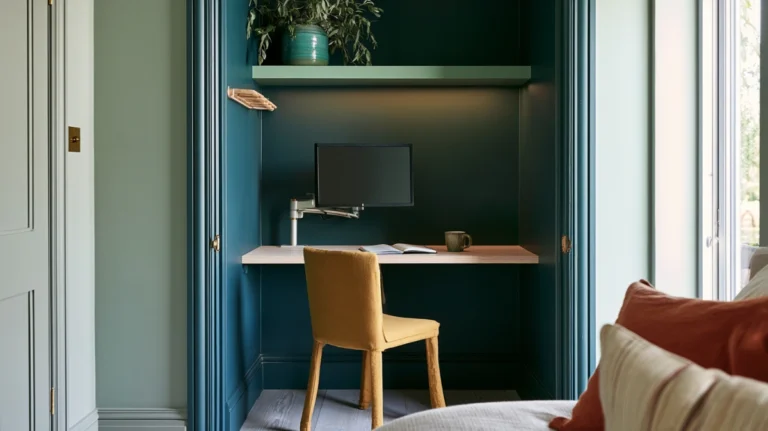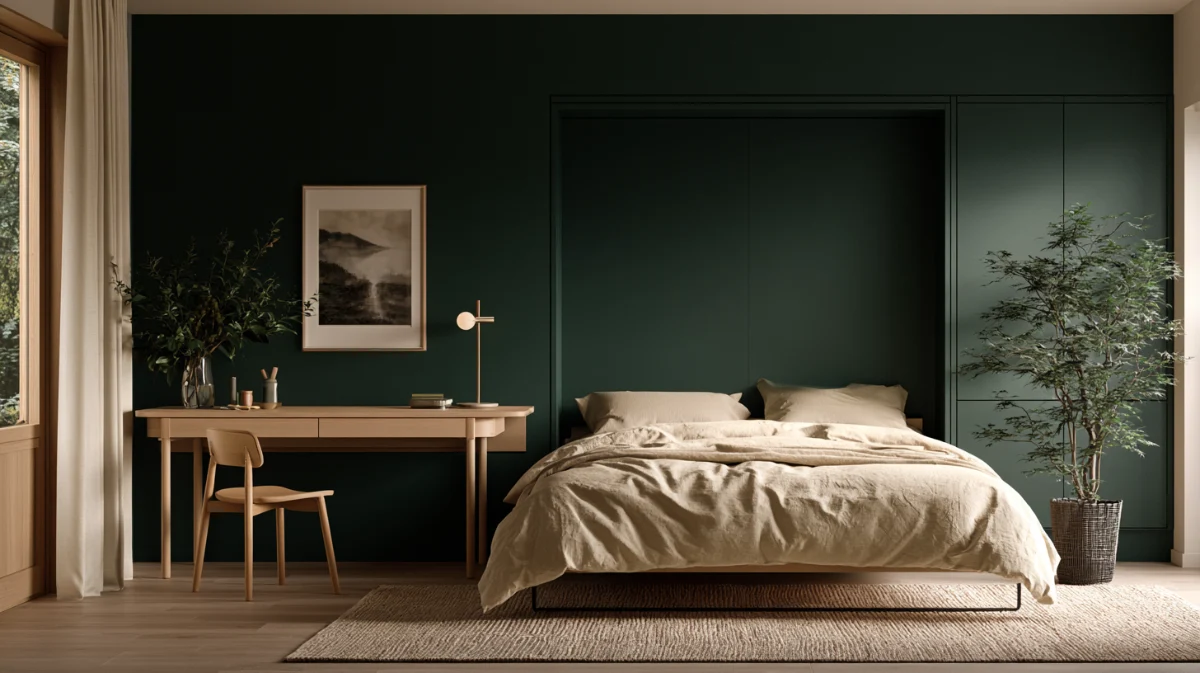


A guest bedroom office is one room paying rent to two functions, and the two are wildly unequal. Count the nights before you buy anything.
A permanent queen takes 33.3 square feet. In a 10 by 10 room, that is a third of the floor, held all year, to serve about six nights.
Priced per night of use, that is 2,026 square foot-days. A wall bed closed against the wall costs 365 for the same six nights.
The desk in that room gets used around 250 days a year and costs 12 square foot-days per use. It is 173 times cheaper per use, and it usually gets the worst wall.
Price the bed in floor-days
Multiply the footprint by 365, then divide by the nights the bed is genuinely slept in. That single number sorts every option on the market.
| Bed type | Footprint held | Cost per night at 6 nights a year |
|---|---|---|
| Permanent queen | 33.3 sq ft | 2,026 sq ft-days |
| Permanent full | 28.1 sq ft | 1,709 sq ft-days |
| Daybed, twin | 19.8 sq ft | 1,204 sq ft-days |
| Sofa bed, closed | 13.3 sq ft | 809 sq ft-days |
| Wall bed, closed | 6.0 sq ft | 365 sq ft-days |
| Air bed, stored flat | 0 sq ft | 0 |
The air bed row looks like a joke, and it is the honest baseline. It costs nothing until the night it is needed, and it is genuinely uncomfortable.
Everything above it is money and floor space spent buying comfort back. The question is how many nights of comfort you are buying.
Run your own footprint rather than mine. A double at 54 by 75 inches is 28.1 square feet, and a twin at 38 by 75 is 19.8, so the band you land in shifts with the mattress.
Count last year's real guest nights before choosing anything, using a calendar rather than an impression.
What the number says at your frequency
Guest frequency falls into four bands, and the answer changes completely across them. Most households guess a band higher than the calendar supports.
The four bands
- Under 5 nights a year: an air bed and a full-time office
- 5 to 15 nights: a daybed that works as office seating the rest of the year
- 15 to 40 nights: a wall bed, where the price finally makes sense
- Over 40 nights: it is a bedroom with a desk in it, so stop pretending
- Any frequency with a guest who cannot climb: a fixed bed, and the arithmetic stops applying
Buy the wall bed only above about 15 guest nights a year, since below that the daybed costs less and does more.
The mechanics of each bed type, including how long each one takes to convert, are covered separately. What every convertible piece charges you in seconds per year handles the comparison this article deliberately skips.
What the calendar usually shows
- Two visits a year of two nights each, which is four nights
- One longer stay at Christmas, which is three or four more
- One unplanned overnight, which is one
- A total near eight, against a remembered impression of twenty
- Nights when the guest could have taken a sofa anyway, which is most of them
Eight nights is the figure most calendars produce once you look rather than estimate. It puts almost every household in the second band.
The desk is used 40 times more and gets the worst wall
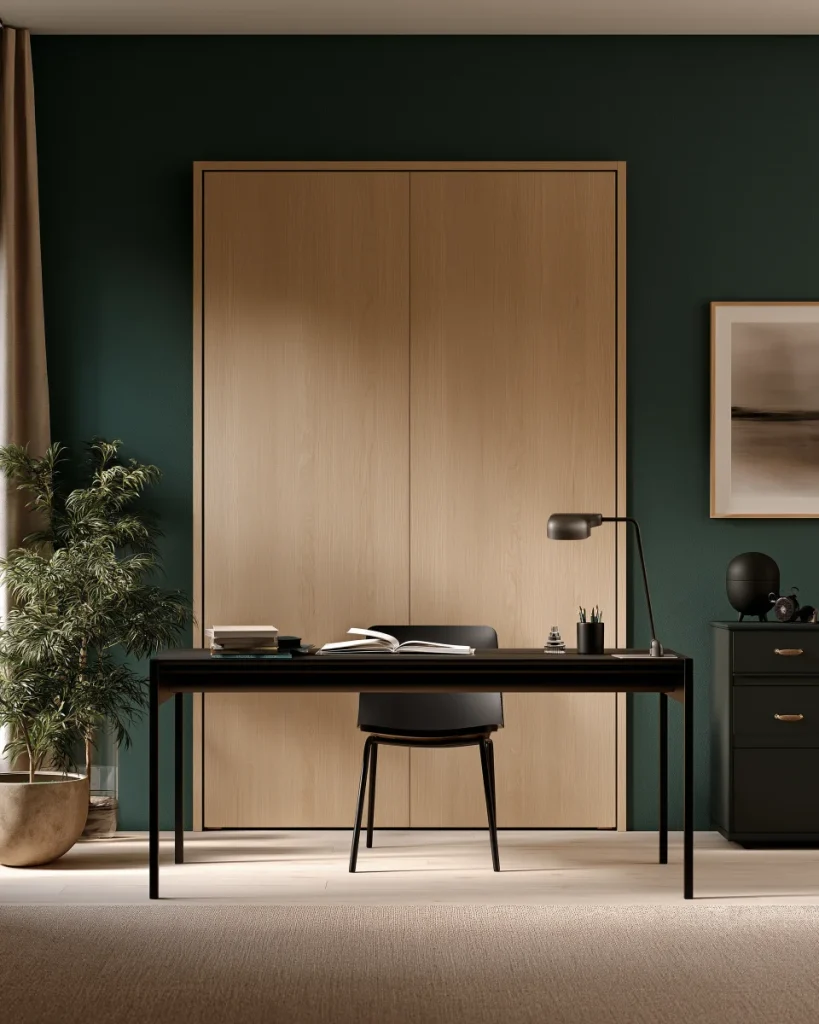
Walk into most guest bedroom office rooms, and the bed has the window wall while the desk faces a corner. The usage numbers say the reverse.
A desk is used 250 days a year, against a bed used six. The desk earns the daylight, the view, and the wall with the socket behind it.
Give the desk the better wall, and put the bed against the wall nobody looks at.
Guests do not notice either. They arrive at night and leave in the morning, so the room is being decorated for an audience that is asleep for most of the visit.
The socket wall matters more than the window wall for the desk anyway. A desk on the wrong wall means a cord across the floor, which is the thing a guest trips on at two in the morning.
Where the desk goes is the first decision rather than the last, and the placement question that comes before any purchase settles it properly.
Read more: the reach arithmetic that decides what stays on a work surface
Storage that serves whichever mode is running
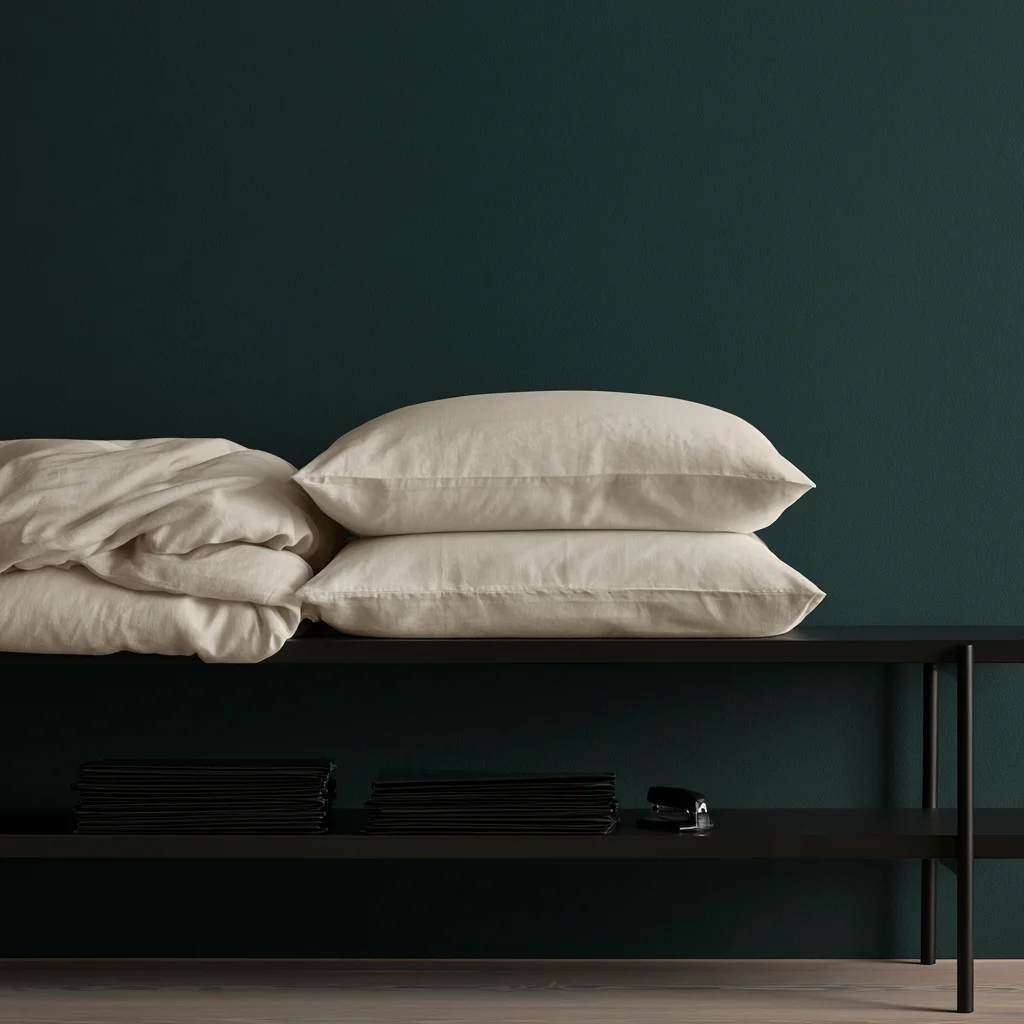
The room has two inventories and one cupboard. Office supplies live there 365 days, and guest bedding lives there for six.
So the bedding goes in the harder-to-reach place and the office supplies get the shelf you open daily. That is the reverse of how these rooms are usually loaded.
The reason it happens backwards is that guest bedding feels like the important thing in the room. It is important twice a year, and the stapler is important on Tuesday.
What goes where
- Office supplies at hand height, since they move every working day
- Guest bedding on the top shelf or under the bed, since it moves twice a year
- Towels for guests with the bedding rather than in the family linen cupboard
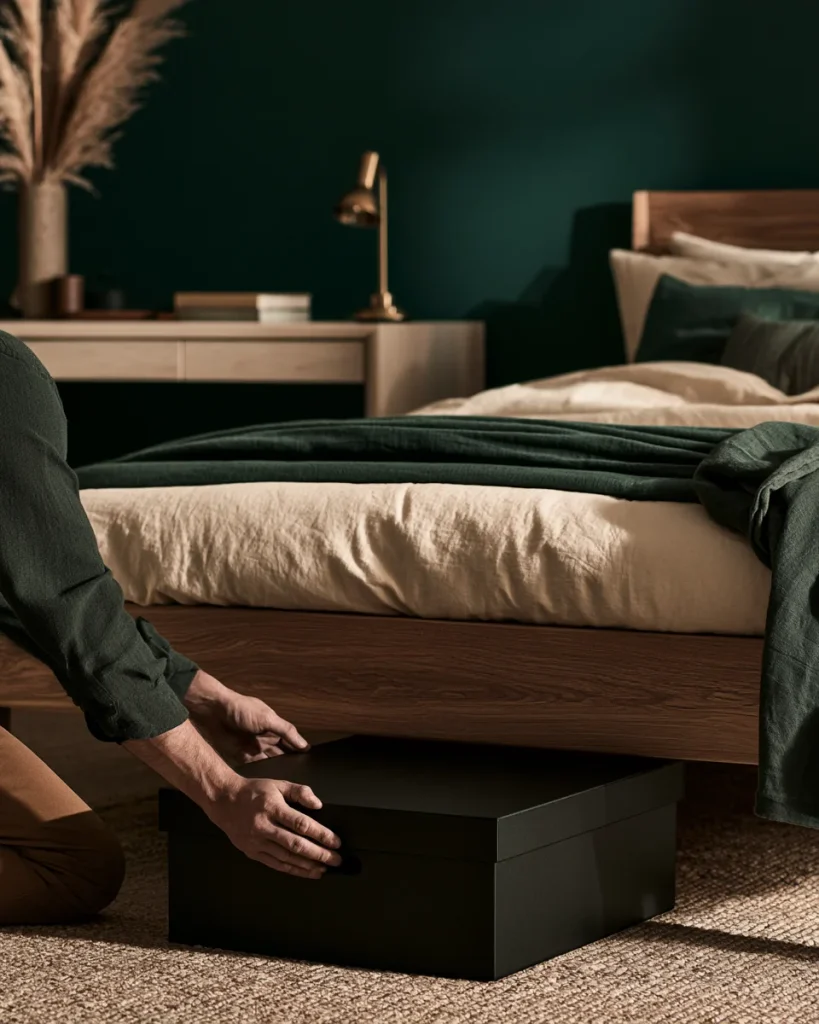
- A single lidded box for the office equipment that gets cleared on guest nights
- Nothing in the wardrobe that a guest would need to move to hang a coat
Keep the guest bedding in the room it serves rather than in a central cupboard, so the changeover is one trip.
Two sets per bed is the buffer that matters, and above three the surplus is stock rather than rotation. The laundry cycle arithmetic behind that number applies to a guest bed with fewer sets rather than more.
Under the bed is the obvious home for the office box, and the clearance decides the container. What each clearance band will hold is worth checking before buying anything flat.
The moment it becomes a sleeping room
Putting a bed in an office changes what the room is, and building codes treat sleeping rooms differently from studies.
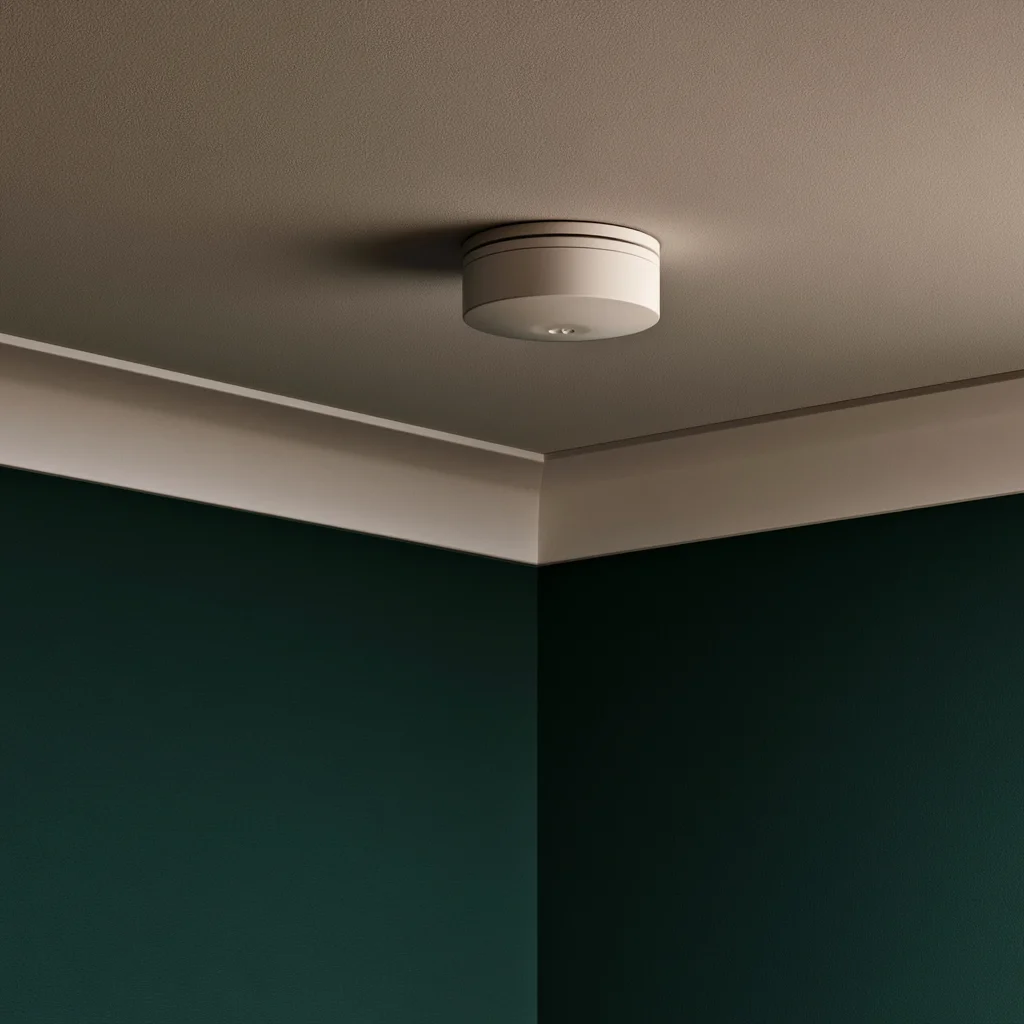
Under IRC section R314.3, smoke alarms are required inside each sleeping room as well as outside it. A room that was an office may have neither.
The related requirement is an emergency escape and rescue opening. A sleeping room needs a second way out, which in practice is a window large enough to climb through.
The dimensions are specific rather than a matter of judgement, and a window that opens but only tilts will not qualify. Check that it opens fully rather than that it opens.
Put a smoke alarm inside the room before the first guest sleeps in it, which is a twenty-dollar job.
Check that the window opens wide enough to climb through, and that nothing is stored in front of it.
This matters most in the rooms people are quickest to convert. A basement study or an interior room with no window is the easiest place to put a desk and the worst place to put a guest, because the thing it lacks is the way out rather than the daylight.
A carbon monoxide alarm is the third item worth checking, and requirements vary by jurisdiction rather than being universal. Ask the local building department rather than guessing.
None of this is expensive. A smoke alarm, a clear window and a working handle come to under fifty dollars and half an hour.
Read more: why a room without a closet changes every other decision in it
The transition, and why ten minutes is a design failure
Every guide to these rooms ends with a changeover routine, usually ten minutes long. A 10-minute routine is a symptom rather than a solution.
If it takes 10 minutes, the room is holding too much that has to move. The fix is fewer movable objects rather than a faster routine.
Ten minutes also means it will not happen. A guest arriving in an hour gets a room that was half converted, which is worse than either mode.
What a 3-minute changeover looks like
- One lidded box takes the desk contents and slides under the bed
- The monitor gets a cloth cover or the arm swings to the wall
- The chair moves to another room rather than being tidied
- The bedding comes from a shelf in the same room
- Nothing else in the room needs to move at all
Time it once with a stopwatch rather than estimating. The number is usually worse than the memory of it, and it is the number that predicts whether the room ever gets converted.
Design the changeover down to three minutes, and treat anything longer as a storage problem.
Getting the desk down to a handful of objects is what makes three minutes possible. A desk holding four things clears in one movement, and one holding forty does not.
What comes out of the room
Several things are usually taking up floor space in a guest bedroom office without serving either function, and they survive because the room has no single owner to object.
What is paying rent for nothing
- A second chair kept for a guest who never sits in it
- A full wardrobe of clothes that belong in another bedroom
- A permanent nightstand on both sides of a bed used six nights
- Boxes stored here because the room is not really anyone's room
- A printer used four times a year, which belongs in a cupboard
Store the office equipment you rarely use in one lidded box rather than on a permanent surface.
The overflow storage problem is the one that takes over the room without anyone noticing, since a room with two owners has none. The storage a small bedroom is not currently using usually reveals where the boxes should have gone.
If the room has no closet at all, the wardrobe question comes before the bed question, and the options for a bedroom without one decide how much floor is left to allocate.
Read more: the six services a closet was never built to supply for work
The order to decide in
Each step below removes options from the next one, which is why the bed is not the first decision even though it is the largest object.
Decide in this sequence
- Count last year's guest nights from the calendar
- Fit a smoke alarm and check the window opening
- Give the desk the better wall and place it first
- Choose the bed from the band the night count puts you in
- Move the guest bedding into this room
- Time the changeover and cut it until it is under three minutes
If the count comes out over forty nights, the honest answer is a bedroom that happens to contain a desk, and the five conflicts a desk creates in a bedroom become the more useful article.
If it comes out under five, the office should take the whole room, and guests get the sofa. What a room looks like when one function owns it outright is the version worth aiming at.
A guest bedroom office works when the arithmetic decides the split rather than the furniture catalogue. Count the nights, then spend the floor.
The room will still be a compromise. It will be one you chose deliberately rather than one the bed chose for you the day it arrived.