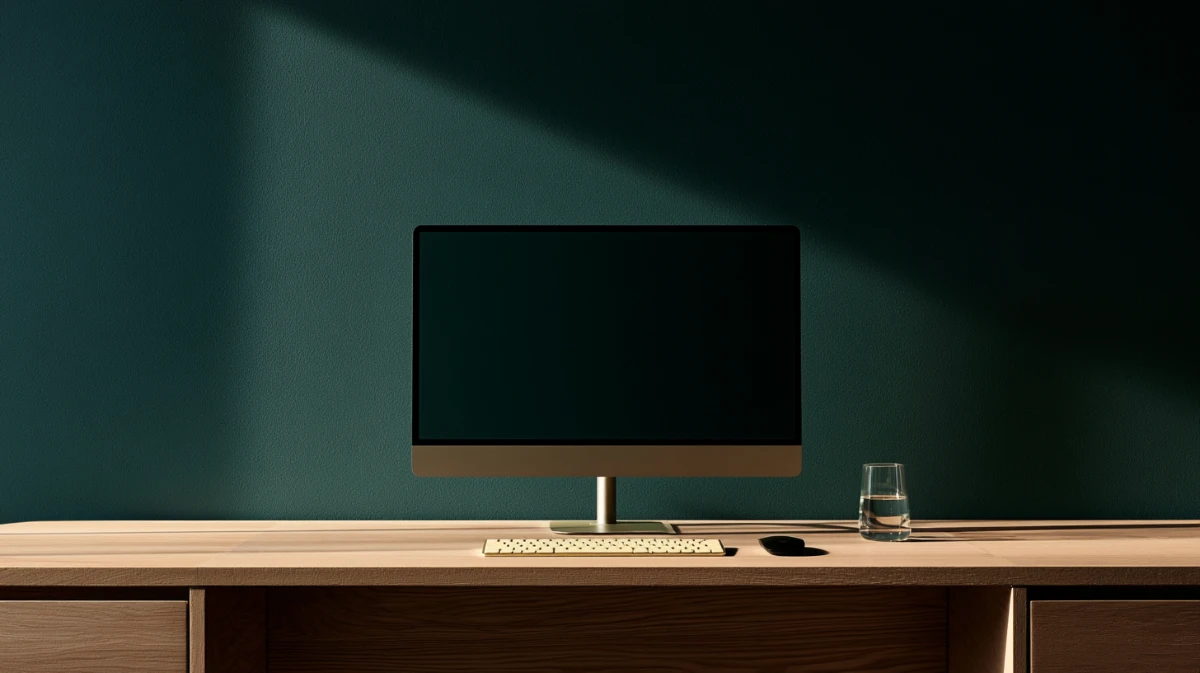


A minimalist desk is easier to reach than to describe. Empty the surface completely, then let each item earn its way back by proving something breaks without it.
That test works because of a measurement. On a 48 by 24 inch desk, the area your hands sweep without leaning is about 353 square inches.
The desk is 1,152 square inches. So 69 percent of it sits outside the zone you work in, and everything parked out there is storage pretending to be a workspace.
Nothing you remove from that 69 percent changes how you work. That is why subtraction is the method rather than a better tray.
Start from an empty desk
Tidying rearranges. Emptying decides. Take every object off the surface and out of the drawer, and put it all on the floor or the bed.
Then work for one day on a bare desk. Each time you stop because something is missing, fetch that one item and put it back.
Work a full day on the empty desk before you return a single object to it.
By the end of the day, the desk holds what the work needs. Everything still on the floor was there for a reason that did not survive contact with an actual working day.
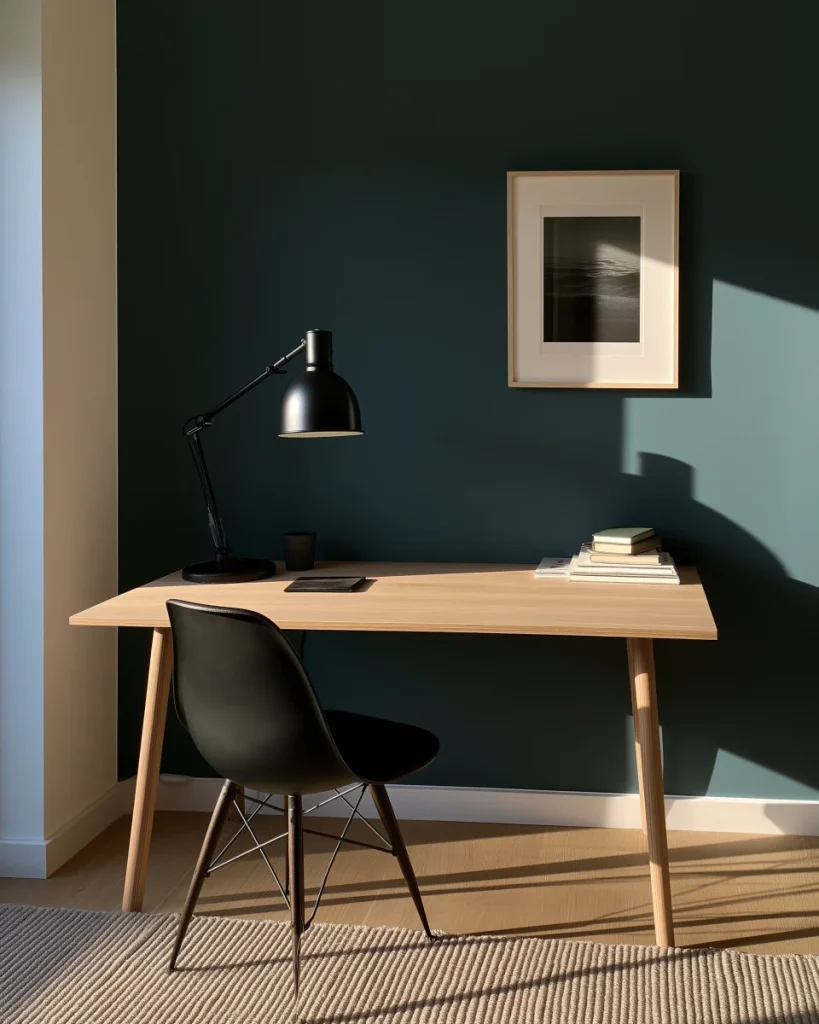
The zone your hands reach
The reason the test works is that a desk is not one surface. It is a small working area with a large shelf attached to it.
Sit with your upper arms hanging and your elbows at your sides. Sweep your forearms across the desk. That semicircle, roughly 15 inches deep, is the working area.
| Zone | Area | Share of a 48 by 24 desk |
|---|---|---|
| Forearm sweep, 15 in radius | 353 sq in | 31 percent |
| Everything beyond it | 799 sq in | 69 percent |
| A laptop, keyboard & mouse together | 282 sq in | 24 percent |
| Free space left inside the sweep | 71 sq in | 6 percent |
That neutral posture is the point rather than the tidiness.
The Cornell University ergonomics guidelines state that the keyboard and mouse should be reachable with the arms close to the body and the upper arm hanging relaxed. Needing a forearm support is usually a sign the arrangement is wrong.
Read that alongside the arithmetic and the conclusion is blunt. The sweep holds a laptop, a keyboard and a mouse with 71 square inches spare, which is smaller than an open notebook.
Put nothing inside the forearm sweep except what your hands touch while working.
What the 69% gets used for instead
- A landing spot for things arriving, which then never leave
- Storage for objects that belong in another room
- A second screen used twice a week
- Paper waiting for a decision nobody is going to make
- Decoration, which is the only honest use on this list
Treat anything beyond the sweep as storage and give it a real home, rather than defending it as desk space.
What earns its way back
Across a normal working day, the list that survives is short, and it is the same list for most desk work.
What comes back on day one
- The screen, at arm length and roughly at eye height
- The keyboard and mouse, inside the sweep and nothing else in there
- One water container, outside the sweep and off to the weak-hand side
- One light, if the room light throws your own shadow onto the desk
- One notebook and one pen, if you write by hand at all
Four or five objects. Anything a photograph of a minimalist desk shows beyond that is styling rather than function.
The water container is the item people question most. It goes back because dehydration ends a working session faster than any missing stationery.
Put the drink on your weak-hand side, away from the keyboard, so a knock costs you a cloth rather than a laptop.
The light only comes back if the room light is behind you. A lamp added to a well-lit room is one more object casting one more shadow.
The screen height and distance are settled elsewhere and do not change here. The five measurements behind any desk setup cover the seated numbers this article assumes.
What does not come back, and where it goes
The items that fail the test are not useless. They are in the wrong place, which is a different problem with a different fix.
What fails the day test and where it belongs
- The pen pot of fourteen pens, reduced to one pen in the drawer
- Reference books, on a shelf behind you rather than beside you
- The second monitor you use twice a week, on an arm and swung away
- Chargers for devices not currently charging, in a box off the desk
- Anything decorative, on the wall or on a shelf where it costs nothing
- Paper of any kind, which needs a system rather than a surface
Paper is the one category that keeps arriving no matter what you remove, and it needs handling separately. Why paper is the only thing that refills a desk on its own covers the flow rather than the pile.
Give every item that failed the test a home somewhere else on the same day, or it comes back within a week.
Read more: the room by room order that stops a clear out stalling
The drawer fails the same test
A drawer is a desk you cannot see, and it fills faster for exactly that reason. Nothing in it is ever confronted.
Run the same-day test on the drawer and the survivors are usually four items. A pen, a charging cable, a notebook, and a pair of scissors.
Everything else in there is duplicate stationery, dead cables, and paperwork nobody has read since it arrived.
Throw away every cable you cannot identify within five seconds, since an unidentified cable has been useless for years already.
Empty the drawer onto the desk and refill it only from what you reached for that week.
The drawer has one job a minimalist desk genuinely needs. It holds the things that would otherwise sit on the surface between uses. Give it a hard ceiling of one shallow layer, and refuse anything that would need a second layer on top.
A single shallow layer is the same principle that makes a spice drawer work, and it fails for the same reason when broken. Why one visible layer beats any stacked system applies to stationery without modification.
Up is the only free direction
The wall above the desk costs no surface and no floor. It is the only place an object can go without taking anything from the working area.
It is also where a minimalist desk usually goes wrong in the other direction, by turning into a pegboard holding forty small objects at eye level.
Keep the wall above the desk to two objects at most, and put them above the top of the screen.
What the wall carries well
- A single shelf for the reference books that left the surface
- A clip-on or wall-mounted light, which returns the desk lamp footprint
- A monitor arm, which returns the whole monitor stand footprint
- One calendar or one board, not both
- A cable channel, which is the only fitting worth screwing in
A monitor arm is the single highest return object on that list. A stand takes 160 square inches of surface and an arm takes almost none.
Anything screwed to the wall needs the load checked first, and what a fixing will genuinely hold decides whether the shelf above a desk is available to you.
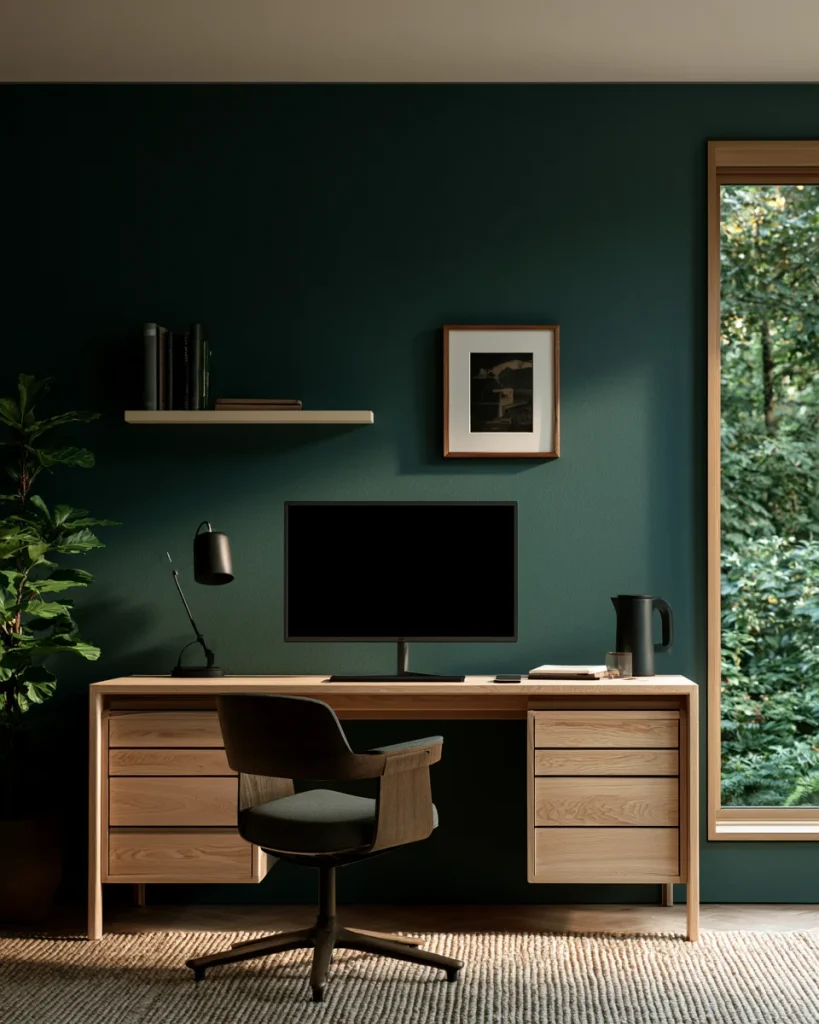
What refills it
A desk refills from three directions, and none of them is untidiness. Things arrive, things get set down in transit, and things get bought.
The three inflows and the one rule that stops each
- Post and paperwork, opened somewhere other than the desk
- Objects set down in passing, given a landing spot by the door instead
- New stationery, bought only to replace something finished
- Devices and cables, stored with the device rather than on the desk
- Anything brought in to work on, taken out again the same day
Clear the desk to its surviving items at the end of each working day, which takes under two minutes.
The buying inflow is the slowest to notice and the hardest to reverse, since stationery is cheap and each purchase feels reasonable. The point in the buying loop where that stops is the relevant part.
The screen has the same problem in software form, and a cluttered desktop undoes a cleared desk. A proper pass through files, tabs and notifications is the other half of this job.
When the desk shares a room
A desk in a bedroom or a living room has a second requirement. It has to stop looking like a desk at the end of the day.
The subtraction test does most of that on its own. Four objects clear off in seconds, and forty do not.
That is the practical case for subtraction in a shared room. A desk you can reset in thirty seconds gets reset, and one that takes ten minutes stays as it is.
Read more: the six services a converted closet was never built to supply
The rest of that trade is a layout question rather than a surface one, and the five conflicts a desk creates in a bedroom settles it in order.
A room that hosts guests adds a third requirement again, since the desk has to disappear for someone else rather than for you. The dual-mode setup for a spare room handles that case.
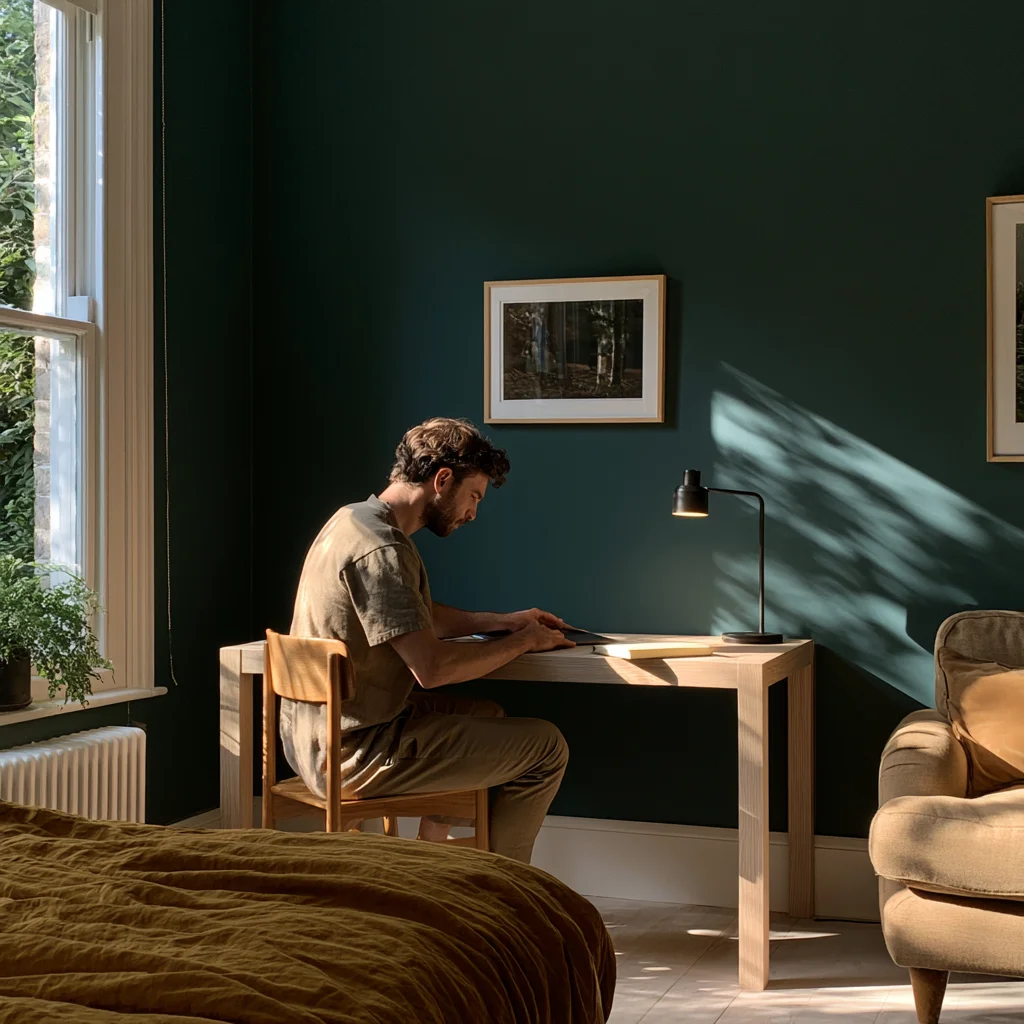
Read more: what a small bedroom looks like once the surfaces are genuinely clear
The test, in twenty minutes
The full version takes a working day. Twenty minutes gets you most of the same result if you cannot spare one.
The short version
- Clear the surface and the drawer onto the floor
- Measure 15 inches out from the front edge and mark the arc
- Return the screen, keyboard, and mouse, and nothing else inside the arc
- Return one drink, one light, and one notebook outside it
- Give everything else a home in another room before you sit down
- Work one day, and fetch only the items you genuinely stop for
Doing this as a fixed short run rather than an open-ended project is what makes it finish. A fixed daily count over a fortnight is the format that works for the rest of the room too.
A minimalist desk is not a style. It is the set of objects that survived a day of being genuinely needed, which is usually four or five.
Whether that is worth doing at all comes down to what you get back, and the honest accounting for that sits in the returns and costs of owning less.