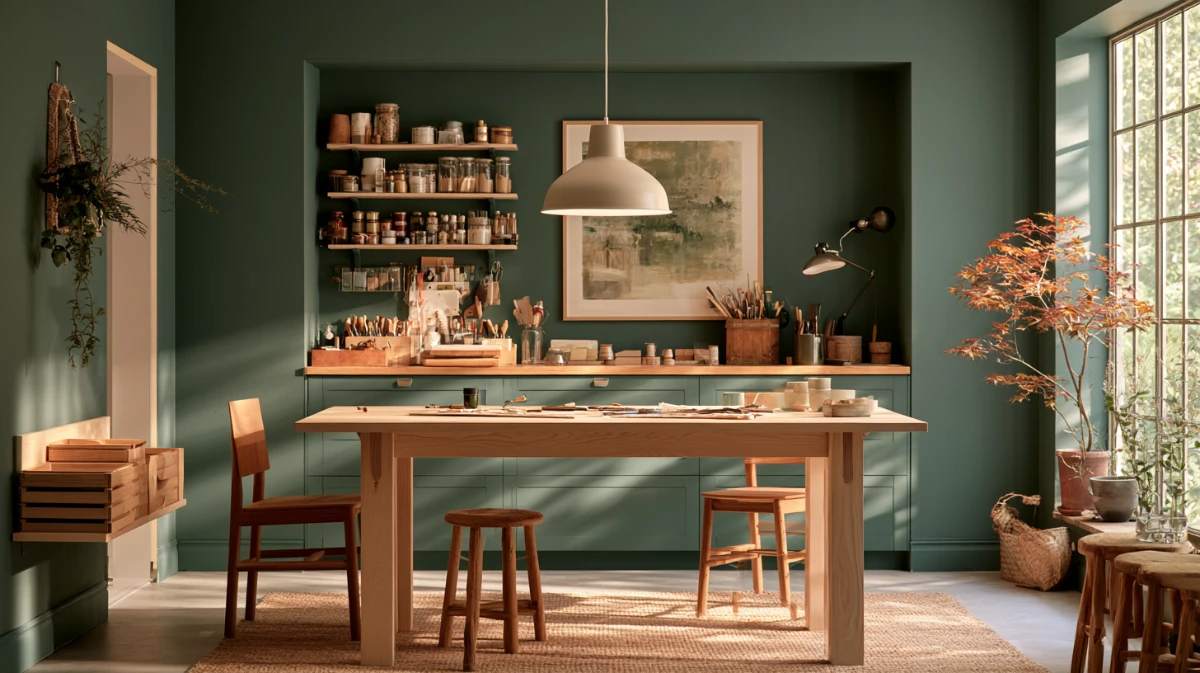


A craft room holds three separate inventories, and almost every guide addresses one of them. Supplies get the shelves, the racks, and the labels, while the other two get nothing at all.
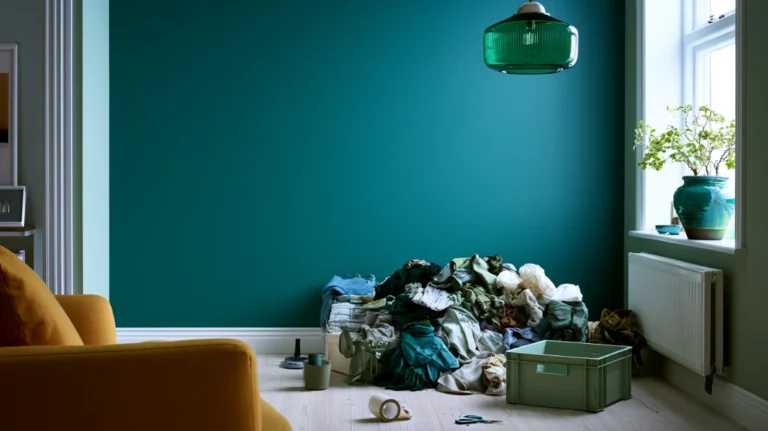
The second is work in progress. Six open projects on 12-by-18-inch trays hold 9 square feet of surface permanently, which is more than a whole 48-by-24-inch desk.
The third is finished output. Finish twelve things a year, give four away, and you are storing forty objects after five years with no plan for any of them.
Supplies are the visible problem and the easiest to solve. The other two are what fill the room while you are busy sorting the first one.
Three inventories, one plan
Name them separately before buying any storage, because each one moves at a different speed and fails in a different way.
| Inventory | How it arrives | How it fails |
|---|---|---|
| Supplies | Bought ahead, in anticipation | Duplicates, and stock that dries out |
| Work in progress | One project at a time | Stalls and holds a surface indefinitely |
| Finished output | At the end of every project | Accumulates with nowhere to go |
Supplies come in, and output goes out, so the room only stays level if the two rates match. They rarely do, because buying is faster than finishing.
A single afternoon of shopping can add more volume than a month of making removes. That gap is the whole reason craft storage keeps needing more shelves.
Count all three inventories separately before you buy a single container.

Supplies, which need a ceiling rather than a system
Craft supplies are the only category on this site that people buy without a use in mind. That is the mechanism, and no shelving fixes it.
What shelving does fix is the shape problem. Craft stock comes in formats that refuse to share a shelf, and each one has a width that decides the count.
| Format | Width each | Fits across a 30 inch shelf |
|---|---|---|
| Paper pad, on edge | 0.6 in | 50 |
| Paint tube | 1.25 in | 24 |
| Thread spool | 1.5 in | 20 |
| Yarn skein | 3.5 in | 8 |
| Fabric bolt | 4.0 in | 7 |
That table is the argument for sorting by format rather than by craft. Fifty paper pads and seven fabric bolts need entirely different shelves, and neither is a compromise.
Depth follows the same logic. Paper wants a shallow shelf and fabric wants a deep one, so a single unit of uniform shelves suits neither.
Shelf spacing is the figure people set once and regret. Paper on edge needs 14 inches of height, and a yarn skein needs 8, so a fixed 12-inch gap wastes space in both directions.
Group supplies by shape rather than by which project or craft they belong to.
Set the ceiling as one shelf per format, and stop buying that format when the shelf is full.
Small loose items are the exception, and they want a drawer instead of a shelf. Why a single visible layer beats any stacked system applies to beads, findings, and buttons without change.
Containers themselves become a category if you let them. Counting footprints rather than containers is the discipline that stops a supply wall turning into a container wall.
The supply ceiling, set once
- One shelf per format, and when it is full, nothing else in that format comes in
- Wet media on a separate shelf from paper and fabric, in every case
- Glue, paint, and adhesive checked once a year and thrown out when dried
- Nothing bought without a project it is for
- Offcuts kept only if they fit inside one labelled box
Fabric is where the ceiling gets broken most often, and the reasoning is the same one that keeps a wardrobe full. Sorting by the reason each piece is still there works on a fabric stash without modification.

Work in progress, which holds the surface hostage
An open project is a claim on a surface with no end date. It sits there until it is finished, and craft projects stall for reasons that have nothing to do with storage.
Each open project on a tray takes about 1.5 square feet. Three take 4.5, six take 9, and ten take 15.
A 48-by-24-inch work surface is 8 square feet. So six open projects have already taken more room than the table you work on.
Cap open projects at three, and finish or abandon one before starting a fourth.
What to do with a project that has stalled
- Set a date, and if it passes twice, the project is finished by decision
- Photograph it and keep the photo rather than the pieces
- Break it back down and return the materials to the supply shelves
- Give it to someone who will finish it, whole and in one bag
- Keep exactly one long-term project, and give it a shelf rather than a surface
The tray matters more than it sounds. A project on a tray moves to a shelf in one motion, and a project spread across a table does not move at all.
Trays also make the count visible. Six trays on a shelf is an obvious number, and six half-finished things scattered across a room is not.
Size them to the shelf rather than to the project. A tray that will not slide into the shelf it is meant to live on becomes another thing on the table.
Put every open project on its own tray on the day it starts.
The work surface itself has the same reach constraint as any desk. The area your hands sweep without leaning is far smaller than the table you bought.
Read more: the room by room order that stops a clear out stalling
Read more: the reach arithmetic that decides what a work surface can hold
Finished output, which nobody plans for
This is the inventory no craft room guide mentions. You make things, and the things exist afterwards.
At twelve finished projects a year with four given away, eight stay. That is forty objects after five years, in a room that was designed to hold supplies.
The output is also the hardest to remove, because it is the thing you made. That is a real feeling, and it is still forty objects.
Gifts are the usual release valve, and they are unreliable, since giving happens when an occasion arrives rather than when the shelf is full.
A schedule fixes that. Four pieces released every quarter clear sixteen a year, which matches a normal production rate without waiting for a birthday.
Where finished work can go
- Into use, which is the only outcome that costs no storage
- Given away on a schedule rather than when someone asks
- Sold, which forces a decision about which pieces are good
- Photographed and released, keeping the record rather than the object
- One display shelf with a fixed count, where a new piece pushes an old one out
Give output a fixed display count, so finishing something forces a decision about something older.
A fixed count is what turns output from an accumulation into a rotation. Without one, the room fills at the rate you produce, which is the rate you were hoping to increase.
The hazard a craft room has, and an office does not
Craft rooms hold solvents, oil-based finishes, and the rags used with them. That combination behaves differently from anything in a home office.
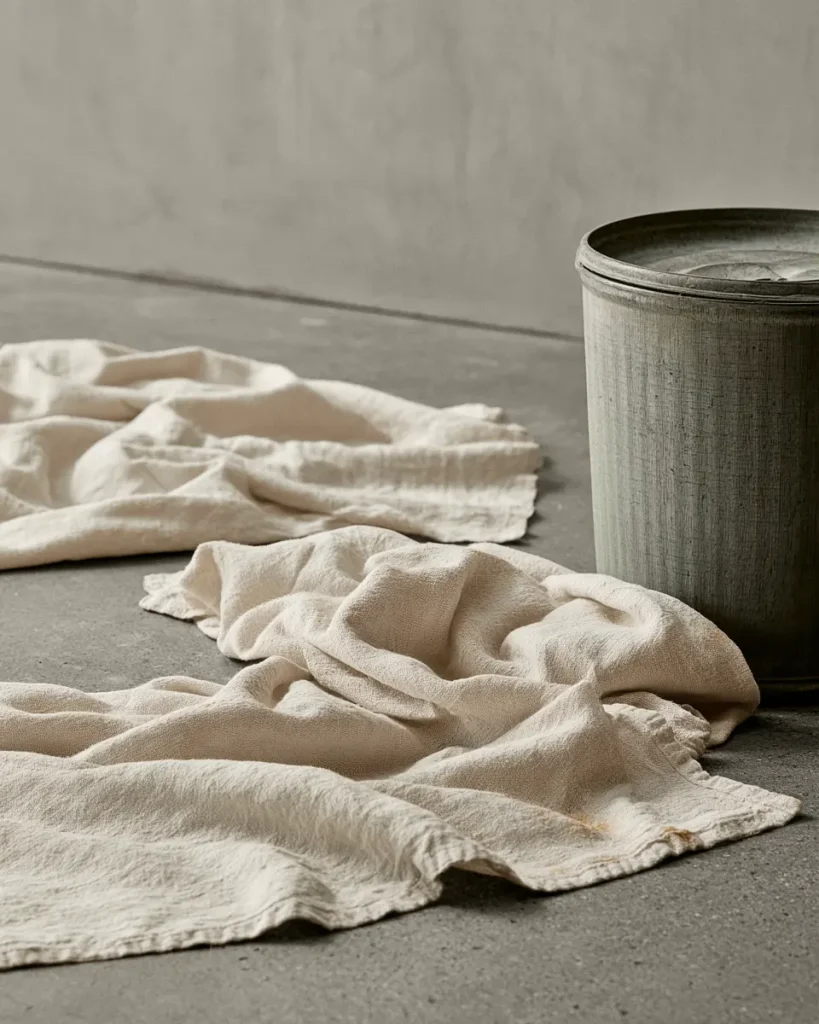
The US National Park Service documents a crew whose linseed oil rag ignited after being laid out to dry, setting a workbench and a shed wall alight. Rags soaked with oils, and laundry left hot in a pile, can self-heat until they catch.
The mechanism is that the oil cures by reacting with oxygen, and that reaction gives off heat. Spread thin, the heat escapes, and wadded in a pile, it does not.
Boiled linseed oil, tung oil, and most oil-based stains all behave this way. Water-based paints and PVA glue do not, which is why the rule applies to a category rather than to everything.
Never leave oil or solvent rags balled up, in a bin or in a closed container.
Fit a smoke alarm inside the room itself if you use solvents or oil-based finishes in it.
The disposal method is specific rather than a matter of care. Spread the rags out flat in a single layer until they are fully dry and stiff, or put them straight into a metal container filled with water and closed with a tight lid. Both work. A bin liner in a craft room does not.
What else belongs to this category
- Aerosol sprays, stored away from any heat source
- Solvent-based glues, used with the door or window open
- Resin, which is exothermic while it cures
- A working smoke alarm in the room, not just in the hallway
- A metal bin with a lid for anything that has touched oil
When it is a cart, not a room
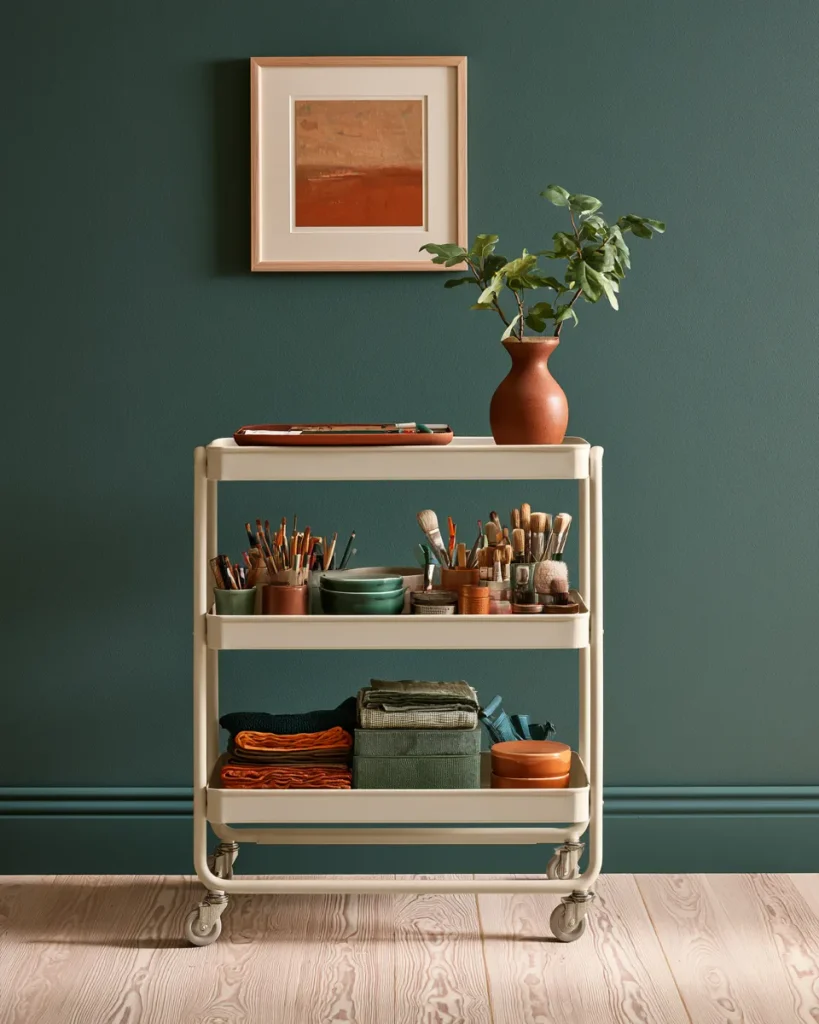
A dedicated room is the exception rather than the starting point. A corner, a cupboard, or a cart is the normal case, and the three inventories still apply.
The difference is that output and work in progress have no slack at all. A cart holds supplies and one open project, and nothing else.
That constraint is useful rather than a limitation. One open project at a time is the version of this that finishes things, and a dedicated room is what makes ten possible.
Scaling the three inventories down
- A rolling cart for supplies, one shelf per format
- One project tray that lives on top of the cart between sessions
- A single output shelf elsewhere in the house, with a fixed count
- A fold-down surface, since a permanent table is what a corner cannot spare
- Nothing solvent-based, since a shared room has no ventilation plan
A closet conversion is the other common answer, and it comes with constraints a room does not have. The six services a closet was never built to supply apply to a craft nook as much as to a desk.
Where a whole room is genuinely available, the conversion question is a different one again, and what a room conversion costs against a wall of storage is worth running first.
Children complicate every version of this, since their materials arrive faster than any ceiling holds. Storage sized to be reachable by the people using it should be a separate zone rather than a shared shelf.
The two piles that should leave first
Two categories are almost always present and almost never useful, and both are kept for the same reason.
Out on the first pass
- Supplies for a craft you stopped doing more than two years ago
- Dried glue, hardened paint and tape that no longer sticks
- Offcuts too small to use but too large to feel disposable
- Kits bought on offer and never opened
- Duplicate tools bought because the first one was buried
The last item names the mechanism. A tool you cannot find gets bought again, which is the point in the buying loop worth interrupting.
If the room feels immovable rather than merely full, the order matters more than the method. Starting when the whole job feels stuck is the more useful place to begin.
Read more: why supplies need a ceiling rather than a bigger container
Where to start
Each step changes the number for the next one, and the output step is the one that keeps getting skipped.
In this sequence
- Separate everything into supplies, open projects, and finished work
- Count each pile, because the three numbers are usually a surprise
- Set a display count for output and clear the surplus first
- Cap open projects at three and tray the survivors
- Set one shelf per supply format and hold the ceiling
- Deal with solvents and rags before you sit down to work again
Vertical storage is the last decision rather than the first, and the load it will carry needs checking. What a wall fixing genuinely holds decides whether the shelves you planned are available.
A craft room stays clear when all three inventories have a ceiling. Supplies have one because you set it, and output has one because you made a rule.
Work in progress is the one that needs the most honesty, since three open projects is a working room and ten is a storage unit you occasionally craft in.
None of this requires new furniture. Three trays, one display shelf with a count, and a metal bin with a lid cover almost all of it.
The shelves you already own will do the rest once the ceiling is set, because a ceiling is the only thing that makes a shelf enough.