

The best toy storage ideas for small spaces use furniture that already earns its place in the room: a storage ottoman instead of a coffee table, rolling bins under the bed, and fabric boxes filling the empty shelves of a TV console. A playroom is not required. Neither is a drill, which matters if you rent. Nothing on this list runs past $60, and most of it sits under $20.
Two rules shape everything below. Small bins beat one large bin, because a deep toy box turns every search into a dig and every cleanup into a dump. And the collection itself has to shrink before storage can fix anything, since no arrangement of containers makes 400 toys fit into 600 square feet.
Toy Storage Ideas for Small Spaces Start With an Audit
Count the toys before buying a single bin. Most small space toy problems are volume problems wearing an organization costume, and adding containers to an oversized collection just gives the pile a nicer shape.
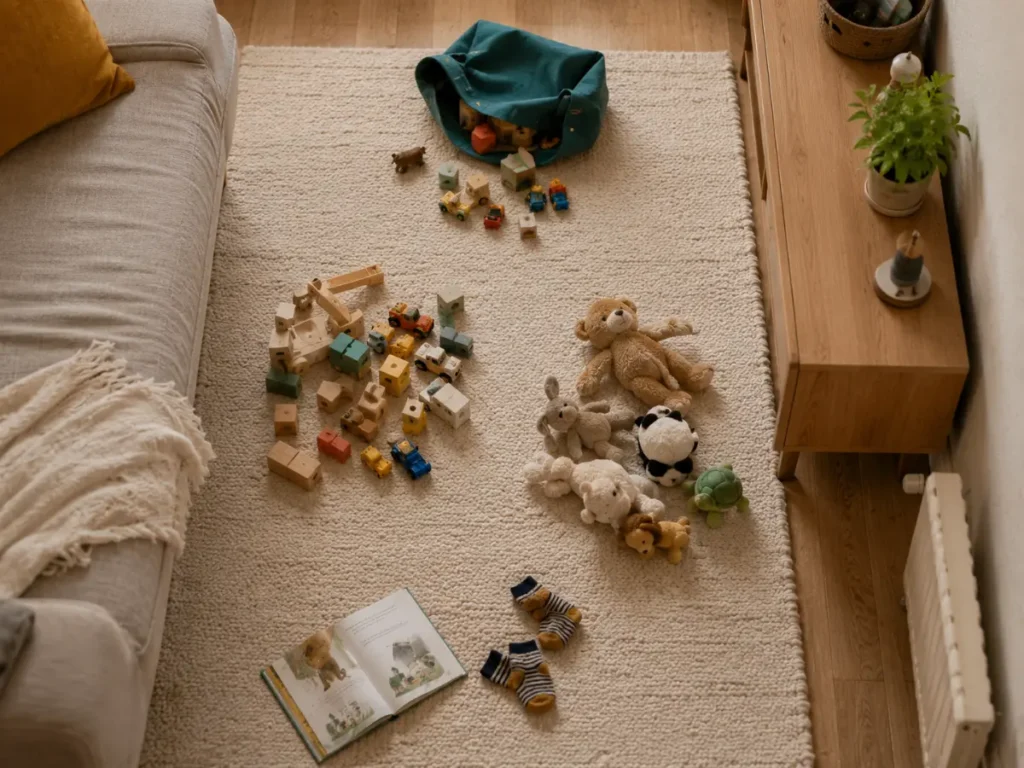
1. Pull everything into one pile first
Empty every bin, basket, and under-bed bag into the middle of the floor before deciding anything. The pile is the honest number, and it is almost always larger than expected. Do this on a weekday morning when the kids are out, because a visible pile invites a two-hour negotiation over a plastic dinosaur nobody has touched since spring.
2. Split the pile into daily, weekly, and rarely
Sort into three groups by how often each toy actually gets used, not by how much it cost or who gave it. Daily toys earn open, reachable storage. Weekly toys go into closed bins in the same room. Rarely touched toys go to the rotation bin or the donation bag, and that third pile is usually the biggest one.
3. Buy small bins, not one big box
Several small containers hold the same volume as one large toy chest and work far better. A set of four Sterilite 6-quart clear latch boxes runs about $24 at Target and lets a child find the cars without emptying the blocks. Deep single boxes fail because retrieving anything at the bottom means dumping everything above it.
Living Room Toy Storage That Reads as Furniture
Toy storage in a small living room works when the container looks like something an adult chose. Bright plastic cubbies and cartoon-printed toy chests announce themselves in a room that also has to host guests, and in an apartment where the living room is the only common space, that trade is not worth making.
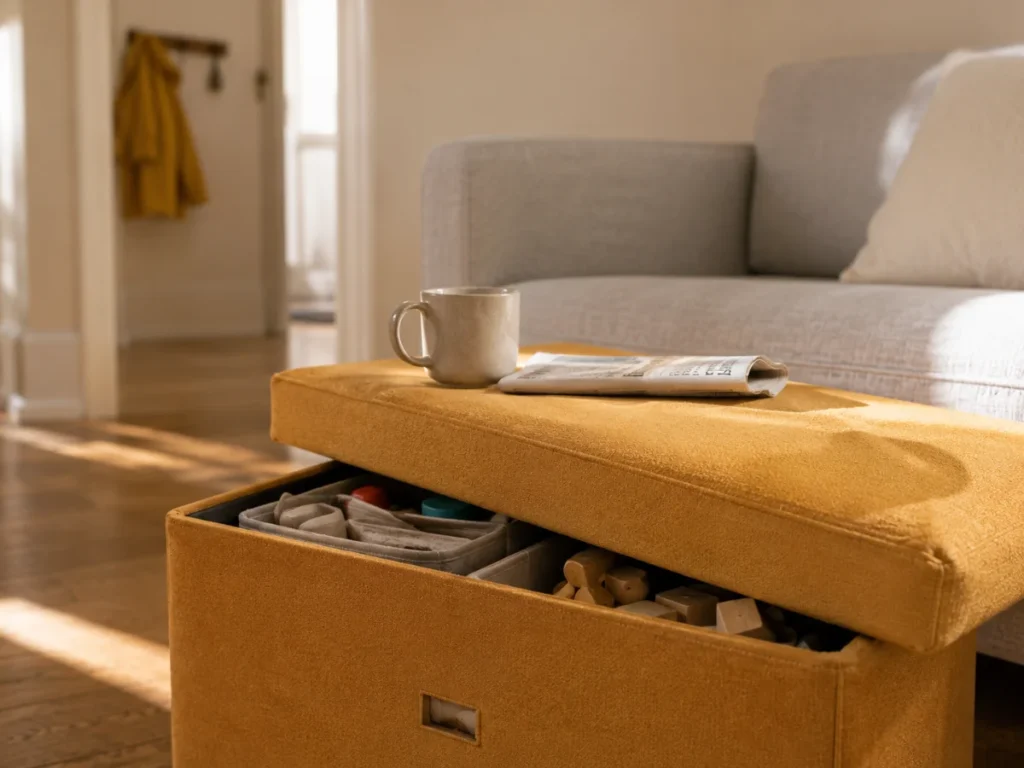
4. Swap the coffee table for a storage ottoman
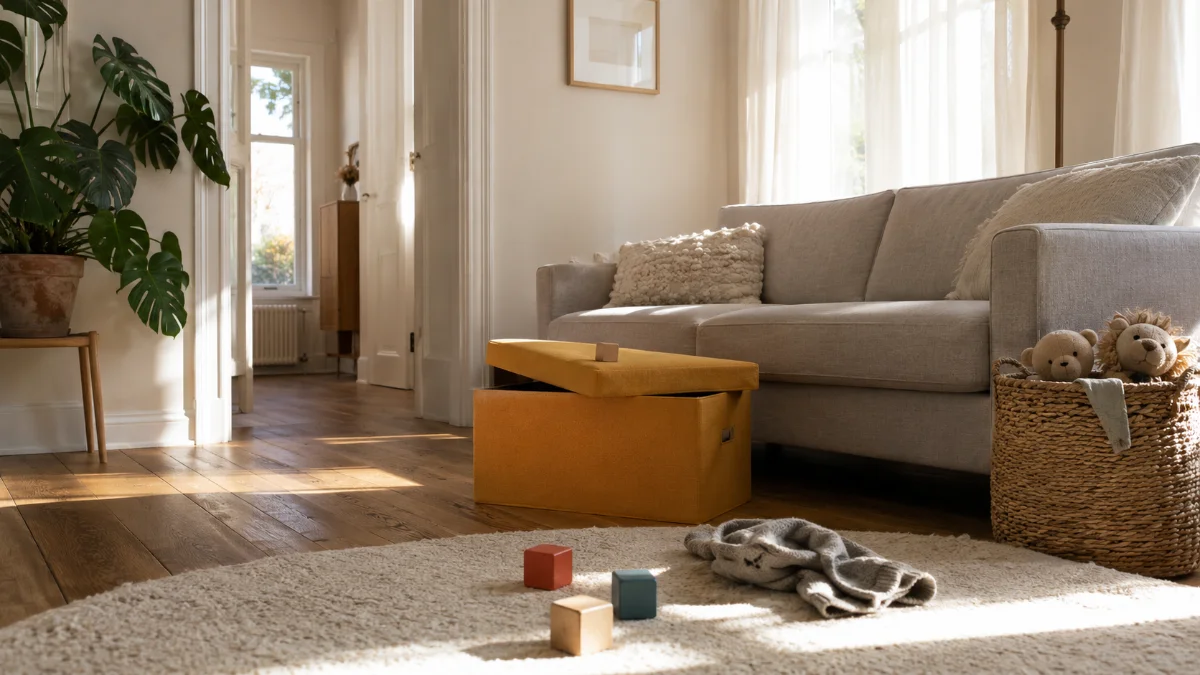
A lidded storage ottoman holds more toys than any other single piece in a small living room while still working as a table and extra seating. The Simplify 3-in-1 folding storage cube ottoman runs about $45 to $60 and collapses flat if the room ever gets rearranged. If only one thing on this list gets bought, buy this one.
5. Fill the TV console's open shelving with fabric bins
Most TV consoles have open bays beside the component shelf that collect remotes and dust. Two or three collapsible fabric cubes sized to the opening, around $10 each, convert that dead space into closed toy storage without adding a single new piece of furniture to the room.
6. Keep one lidded basket beside the sofa for the evening sweep
A lidded seagrass basket, roughly $30 at Target, sits beside the sofa and catches whatever is on the floor at the end of the day. The lid matters more than the basket does. An open basket full of toys still reads as clutter from across a small room, while a closed one reads as furniture.
7. Slide slim bins under the sofa
Most sofas sit four to seven inches off the floor, which fits a slim under-bed style bin. An IRIS USA slim underbed box, about $15, holds flat items like puzzles, board games, and art supplies in space that is currently holding nothing but dust.
8. Turn the gap under a console table into a play nook
A floor cushion and one basket under a console or entryway table gives a small child a defined place to play that is not the middle of the living room floor. Defining the zone does more for how cluttered the room feels than any single container, because toys spread to fill whatever area has no edges.
Toy Storage Ideas for a Small or Shared Bedroom
Bedroom toy storage has to survive nightly use and, in a shared room, split cleanly between two kids. Systems that depend on an adult resetting them every evening do not last past the second week.
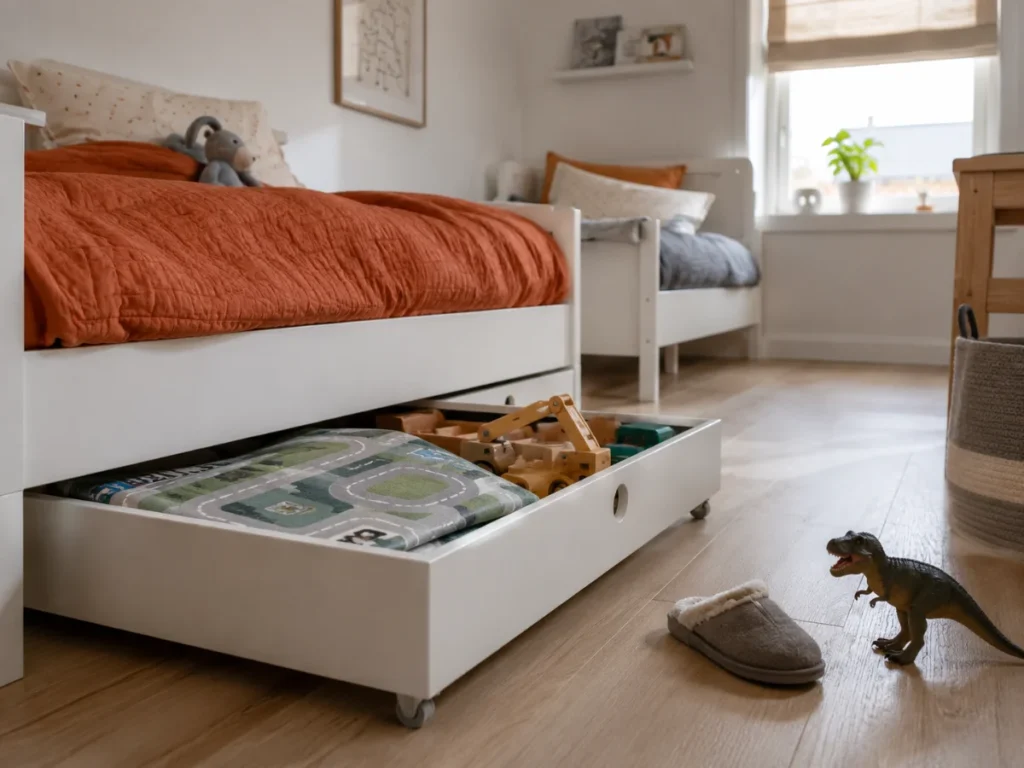
9. Use under-bed bins with wheels, not without
A rolling under-bed bin adds serious capacity in a room with no spare floor space. The IRIS USA 66 quart underbed box with casters runs about $20. Wheels are the whole point: a bin that sticks on carpet gets pulled out once and then ignored, no matter how much it holds.
10. Color code one bin set per child
In a shared room, two matching bin sets in different colors settle ownership without a physical divider or a written rule. A four pack of fabric cubes runs about $25 and covers both children. Color does the work that labels cannot for kids who are not reading yet.
11. Hang an over-the-door shoe organizer for small toys
A clear-pocket over-the-door shoe organizer, $12 to $18, is the single best storage piece for action figures, cars, doll accessories, and hair clips. Each pocket holds one category, everything stays visible, and it hangs on any standard door with no hardware and no wall damage.
12. Use a cube shelf as a divider that also stores
A ClosetMaid 6-cube organizer, around $60, stands perpendicular to the wall between two beds and works as a soft divider while holding bins that face each side. One piece of furniture solving two problems is the whole game in a shared bedroom under 120 square feet.
No-Drill Vertical Toy Storage for Renters
Vertical storage is where small spaces gain the most room, and it is exactly where renters get stuck. Every idea in this section mounts without a drill and comes off a wall at move-out without patching or repainting.
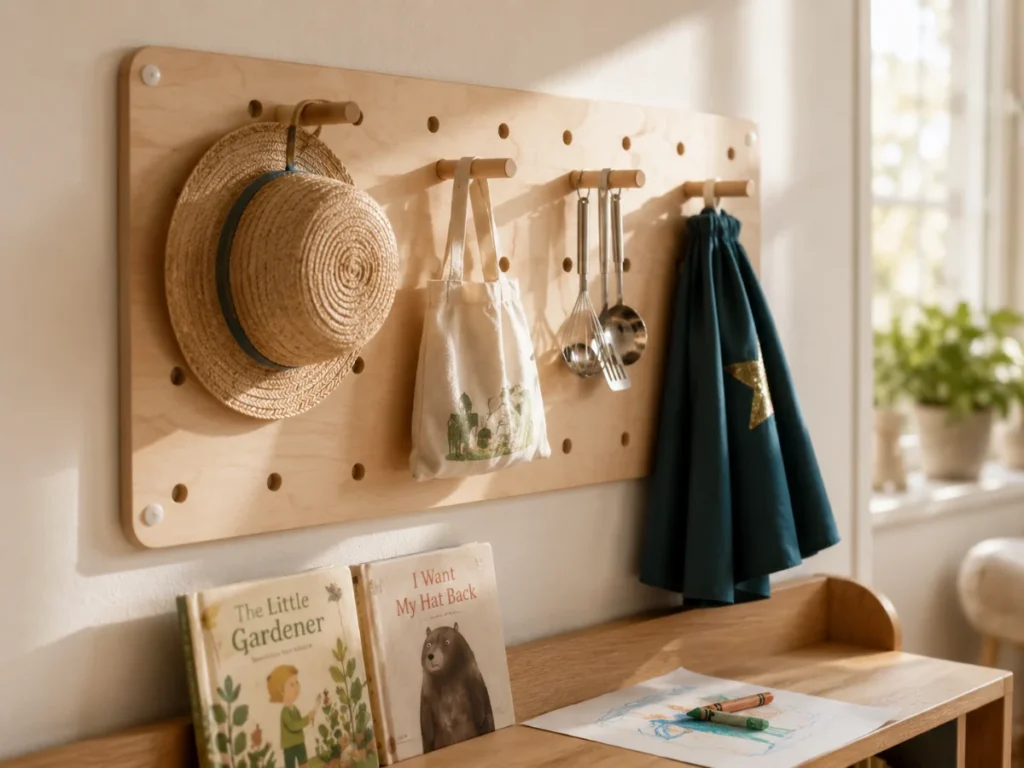
13. Mount a pegboard with Command Strips
A craft store pegboard panel, about $10, mounted with heavy-duty Command Strips instead of screws, holds dress-up clothes, hats, bags, and instruments on a wall. Buy strips rated for at least double the loaded weight, roughly $6 a pack, and let them cure for an hour before hanging anything.
14. Hang a canvas wall organizer for books and small toys
A multi-pocket hanging canvas organizer, $15 to $20, stores picture books, art supplies, and soft toys on the wall instead of the floor. Front-facing pockets also make books visible by cover, which gets young children reading them more often than a spine-out shelf does.
15. Run a tension rod across a closet for hanging baskets
A spring tension rod, about $8, wedged across the width of a closet, holds S-hooks and lightweight hanging baskets in the empty vertical space above the clothes rail. Nothing is fastened to anything, and the whole setup comes down in under a minute.
16. Add over-the-door hooks for dress-up and bags
A five-hook over-the-door rack, roughly $12, handles costumes, backpacks, and tote bags that never fit properly in a bin. Hanging soft items frees the floor bins for the hard toys that actually need a container.
Toy Storage Ideas for Small Parts, Books, and Stuffed Animals
Three toy categories break normal bin systems: small parts scatter, books get buried spine-down, and stuffed animals expand to fill whatever they are given. Each needs its own answer.
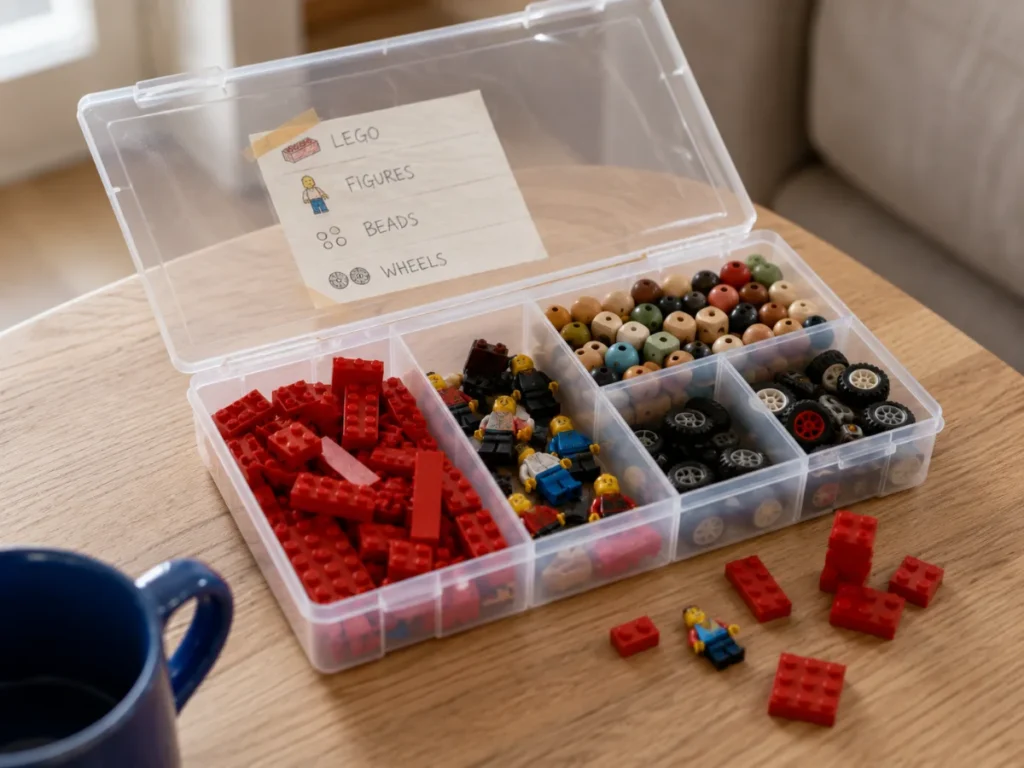
17. Store LEGO and small parts in a craft or tackle organizer
A compartment craft organizer or fishing tackle box, $10 to $15, keeps LEGO, beads, and small figures sorted by type in a case that closes and stacks. It also stops the single worst small-space toy problem, which is small parts migrating under furniture that has to be moved to retrieve them.
18. Give stuffed animals a mesh hammock or a bean bag shell
A corner mesh hammock, about $12, or a zippered bean bag shell that stores stuffed animals as its filling, around $30, both solve the pile that no bin ever contains. The bean bag version turns the collection into seating, which is the better trade in a room with no spare corner.
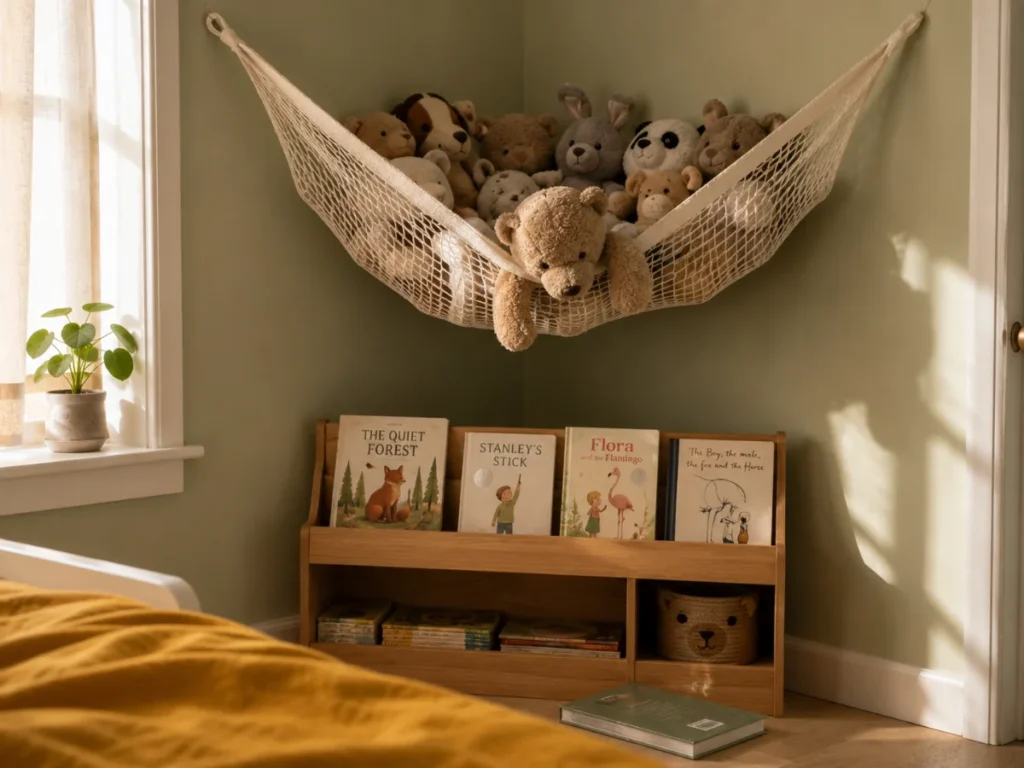
19. Use a front-facing book ledge instead of a bookshelf
Picture books stored spine-out get ignored. A narrow front-facing ledge, or a spice rack mounted with Command Strips for about $8, displays four or five covers at a time and gets rotated with the toys. Cover-out storage takes less depth than a bookshelf, which matters on a narrow wall.
20. Bag puzzles and games in zip pouches
Puzzle and board game boxes are mostly air, and they crush. Moving pieces into labeled zip pouches, about $10 for a pack, with the box lid photo cut out and slipped inside, cuts the shelf space a game collection needs by more than half.
DIY Toy Storage Ideas for Small Spaces on a Budget
These DIY toy storage ideas for small spaces use furniture already in the apartment and cost under $15 each. None require tools, cutting, or anything a landlord would notice.
21. Rebuild an existing bookshelf with fabric bins
A bookshelf already in the apartment becomes a toy unit for the price of the bins alone, about $8 to $12 each. Measure the shelf opening before buying, since bins sized for cube units are 11 or 13 inches square and standard bookshelves rarely match either.
22. Repurpose a collapsible laundry hamper
A fabric pop-up laundry hamper, $10 to $15, holds stuffed animals better than most purpose-built toy bins because the opening is wide and the sides give when it is overstuffed. It also folds flat during the weeks that category is out of rotation.
23. Label with picture stickers or a paint marker
A paint marker on painter's tape does the job of a $30 label maker for under $5. Draw the item rather than writing it. Children sort by picture years before they sort by word, and a rough sketch of a car works as well as a printed label for anyone under six.
Toy Rotation Does What More Storage Cannot
Toy rotation is the one change that makes a small space feel larger without buying anything. Keeping roughly a third of the collection in circulation and the rest boxed away cuts visible clutter immediately and makes old toys feel new when they cycle back.
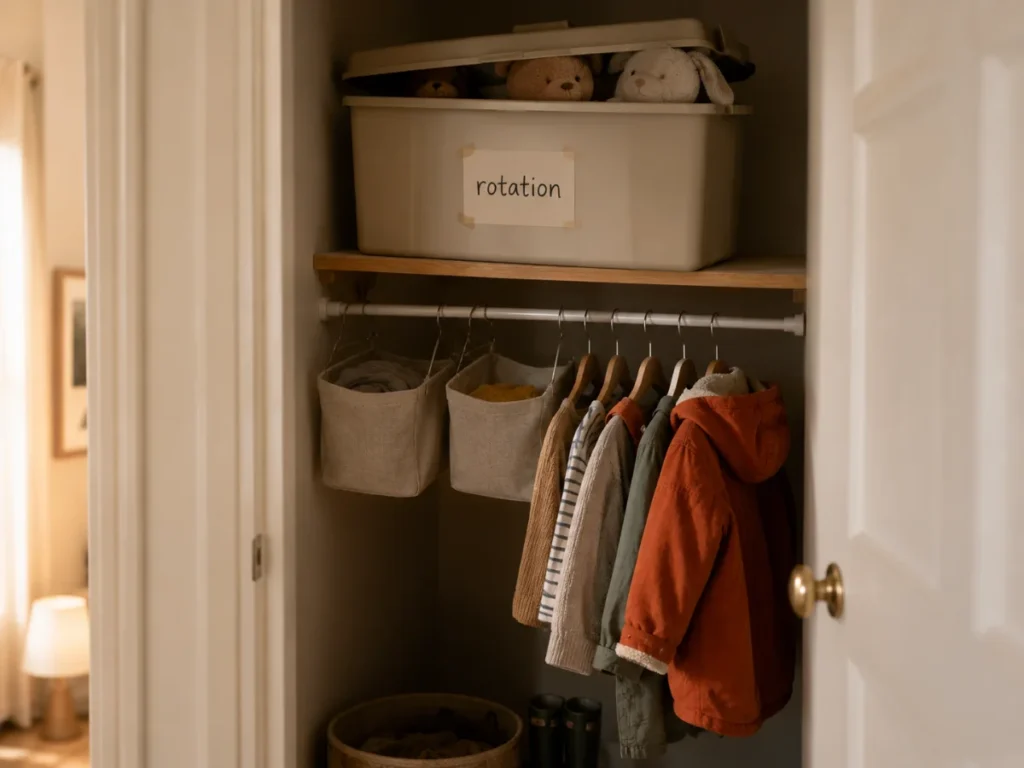
24. Keep the rotation bin in a closet and swap every two weeks
One large tote, about $15 for a 30-gallon Sterilite, holds everything out of circulation and lives in a closet where nobody sees it. Swap about a third of the visible toys every two weeks. Shorter cycles feel like nothing changed, longer ones lose the novelty effect entirely. Let the child choose what comes back out, and donate any group that goes two full cycles without a single request.
Toy Storage Safety Rules for Small Spaces
Small spaces push storage upward, and taller furniture holding heavier bins is exactly the setup behind most furniture tip-over injuries. Three rules cover almost all of the risk.
Anchor anything above waist height
The U.S. Consumer Product Safety Commission's Anchor It! campaign recommends securing top-heavy furniture with anti-tip brackets, which cost about $10 to $15 for a two-pack. A cube shelf or bookcase used for toys counts, and it gets more top-heavy as the lower bins empty out during play. Most rental agreements permit two small anchor screws, and the patch at move-out costs less than a deposit dispute.
Put weight low and lightness high
Books, wooden toys, and anything dense belong on the floor or the lowest shelf. Stuffed animals and empty-ish fabric bins can sit high. This single arrangement removes most of the tipping force from a unit a child might climb.
Avoid toy chests without a lid support
A hinged lid with no slow-close stay can fall on hands and heads. If reusing an old chest, a lid support kit costs $8 to $10 and installs in ten minutes. If buying new, check the listing for a lid support or soft-close hinge before checking the price.
Frequently Asked Questions
What is the best toy storage idea for an apartment with no playroom?
A lidded storage ottoman in the living room paired with one rotation tote in a closet replaces most of what a playroom does. The ottoman handles daily toys in the main room, and the tote keeps the rest out of sight until it cycles back in. Together they cost about $60 and take up no floor area that was not already occupied by a coffee table.
How many toys should be out at once in a small space?
About a third of the full collection. That ratio keeps a room from reading as a toy store while still giving a child enough variety day to day, and it is far easier to maintain than trying to hold an exact toy count.
Is under-bed storage safe for toys?
Yes, with two conditions. The bin needs a lid to keep dust off, and nothing with sharp edges should sit directly under where a child's feet land when climbing out of bed. A rolling bin that pulls out fully is safer than a fixed one, because it removes the awkward reaching that causes most bumped heads.
How do you store toys in a studio apartment?
Use closed storage exclusively, since there is no second room to absorb visual clutter. A storage ottoman, an under-sofa bin, and a lidded basket cover a studio's needs, and every one of them stays shut when the toys are not in use.
Do toy bins need labels?
Not written ones. A picture on the front works faster for pre-readers and holds up just as well for sorting. A quick sketch with a paint marker costs nothing and gets used more than a printed label ever does.
Where to Start With Toy Storage Ideas for Small Spaces
Start with the audit and one room, not the whole apartment. Pull the pile, cut what nobody plays with, then set up a single zone in whichever room the toys pile up worst, usually the living room. Run it for two weeks before adding anything else. Layering a rotation system on top of a half-built zone system just creates another bin to manage and another decision to make every evening. Get one room holding, then repeat the pattern in the bedroom.