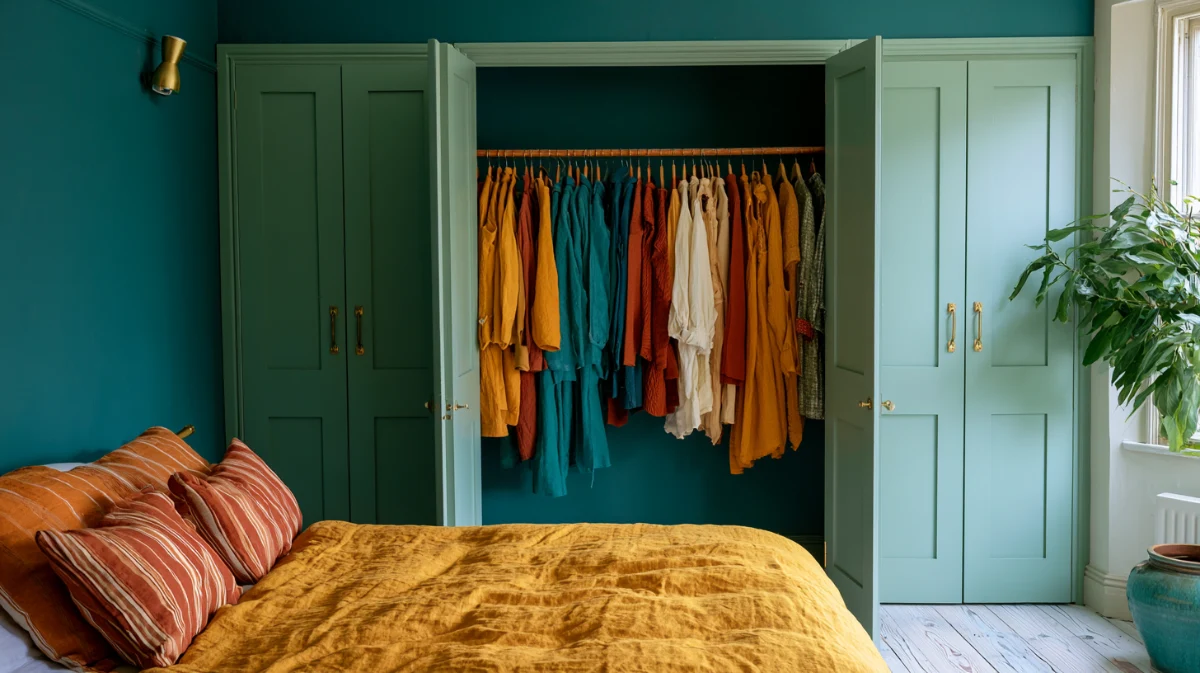


To declutter clothes, you have to deal with the reason each garment is still there, because sorting is easy and deciding is not. Five reasons hold almost everything in a wardrobe, and each one needs a different answer.
Work out which reason is holding a garment, and the decision usually makes itself within a few seconds.
The physical part takes an afternoon. What follows is about the part that stops people halfway through it.
The pile is not the problem
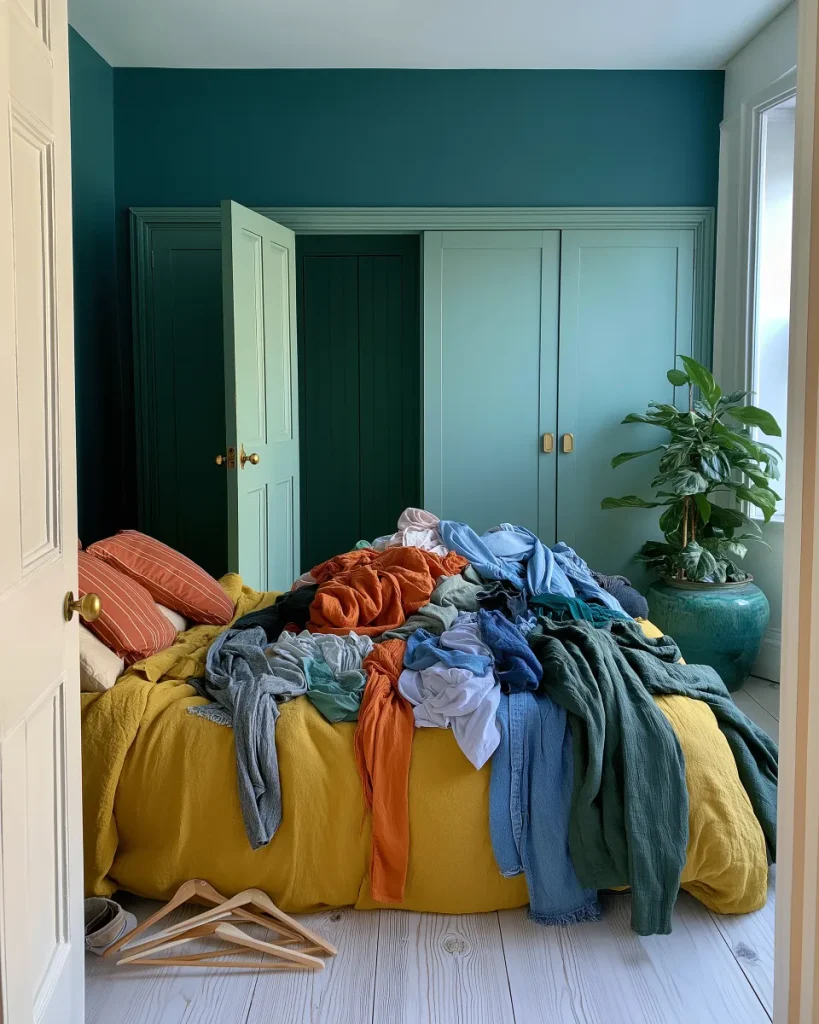
Anyone can empty a wardrobe onto a bed. What stops the session is the third or fourth garment picked up, the one carried between three flats and never worn.
Every attempt to declutter clothes runs into that garment eventually, and the sorting stops there rather than at the folding.
That garment is not being kept because you like it. It stays because letting go of it means admitting something, and the admission is the part you are avoiding.
This is why advice about folding methods and matching hangers does so little when you actually declutter clothes. The obstacle was never the storage.
How the five break down
| The reason | What it sounds like | What it actually is |
|---|---|---|
| Money | It cost too much to give away | A sunk cost that is already spent |
| Size | It will fit again | A deadline you never set |
| Memory | It reminds me of something | A memory stored in the wrong place |
| Just in case | I might need it one day | A risk you have not priced |
| Guilt | I never even wore it | A purchase you are still paying for |
Nothing on that list responds to a folding method or a better hanger. The counter for each one is different, which is why generic decluttering advice stalls on a wardrobe.
Money, and the cost you already paid
This reason is the easiest to argue with, because the argument is arithmetic rather than feeling.
It is also the one people raise first when they declutter clothes, which makes it a good place to build momentum.
The money left the account the day you bought it. Keeping the garment in a wardrobe does not bring any of it back, and giving it away costs you nothing you still hold.
What the garment costs you now is the rail space and the few seconds you spend moving past it every morning.
Questions that settle the money category quickly:
- Would I buy this again today at full price?
- Is there a resale market for this brand and size?
- Have I listed anything for sale in the last year?
- Is the space worth more to me than the resale value?
What to do with it
Sell it if it is genuinely worth selling, which usually means a recognised brand, good condition, and a size that moves.
Everything else is worth more as space than as a listing you will not get round to. Give yourself a fortnight to list it, and let it go if the fortnight passes.
The real lesson lands at the till rather than the wardrobe, and the cost per wear arithmetic is easier to apply before you buy.
Size, and the deadline nobody sets
Clothes kept for a body you do not currently have are the hardest category to declutter clothes from, and they do quiet damage every time the wardrobe opens.
A rail you cannot shop from stops being a wardrobe and becomes a reminder, and you see it every morning while you are getting dressed.
Anyone who has tried to declutter clothes after a change in size knows this is the category that ends the session early.
A rule that is kinder than it sounds
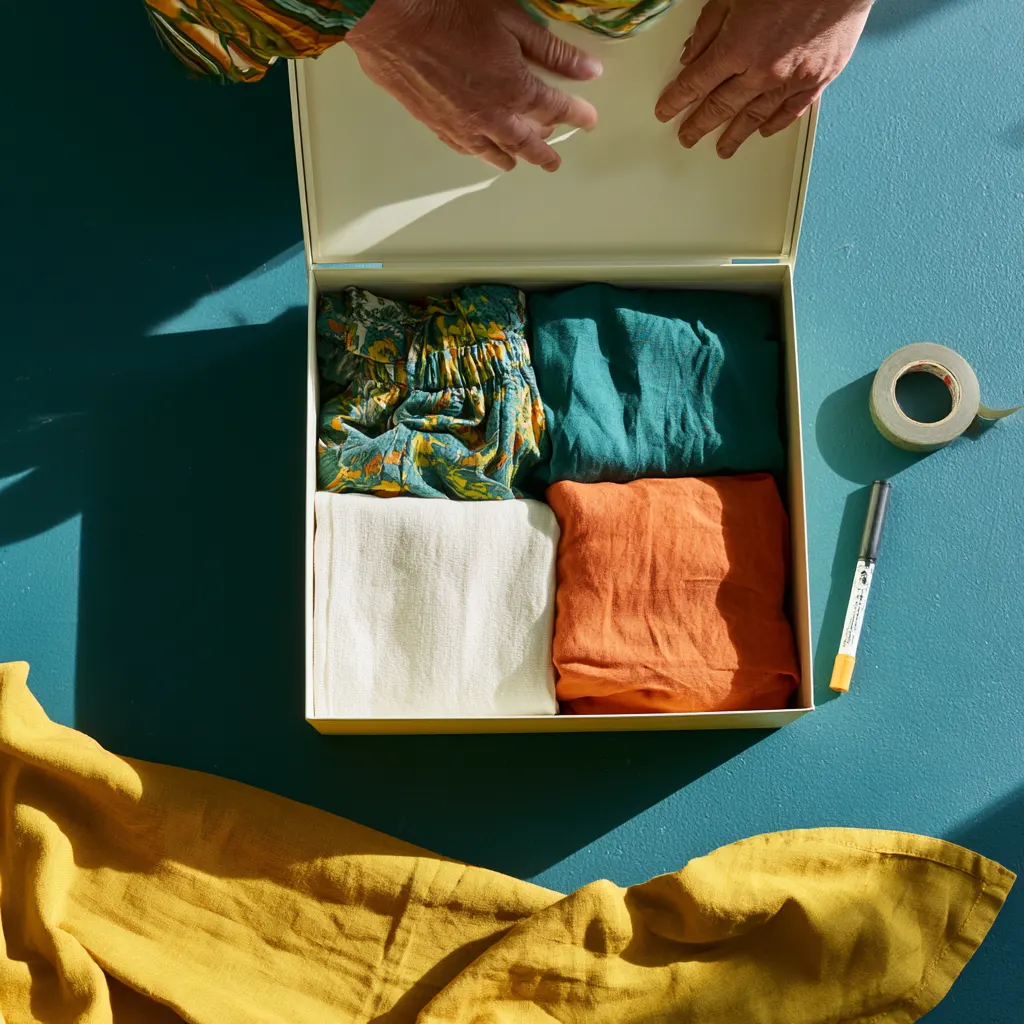
Keep the pieces you genuinely love and would buy again tomorrow. Box them, date the box, and put it out of the bedroom.
Let the rest go now, because sizes change in both directions and a garment kept for three years rarely gets worn even when it does fit again.
Set the box a real date rather than an open-ended one. A year is long enough to be fair to yourself and short enough to mean something.
One box is a plan. Half a wardrobe is a rebuke you have to look at daily.
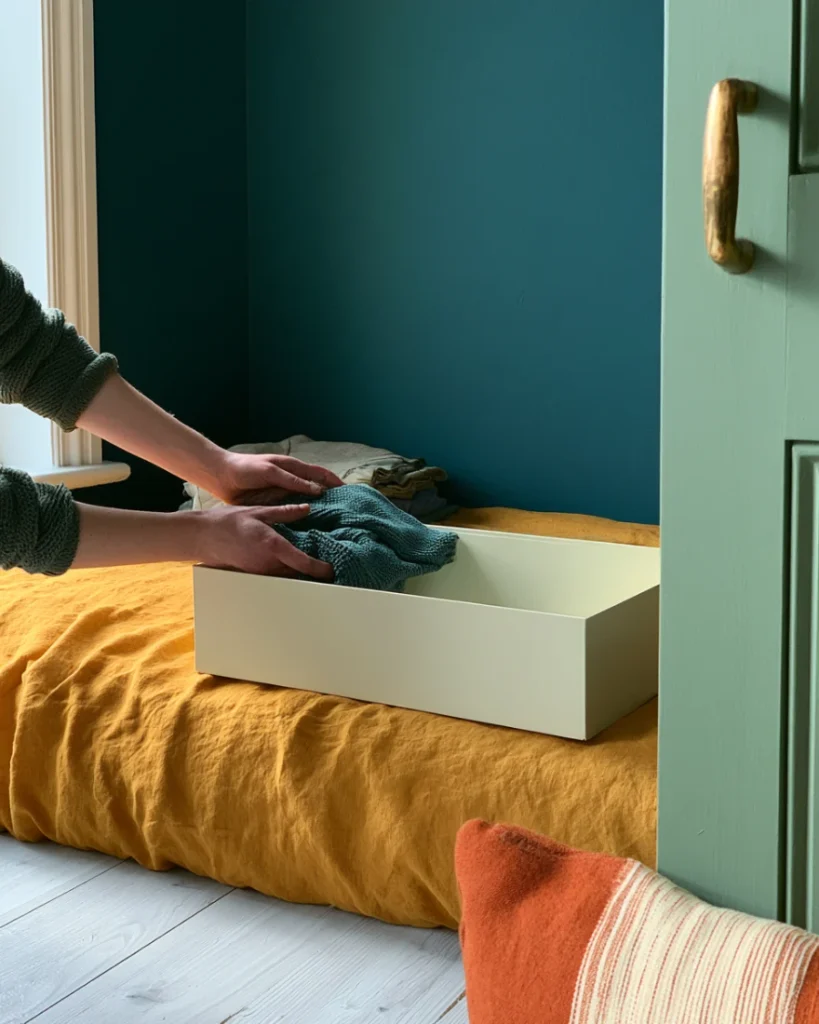
Storing that box away from the rail matters, and under the bed is usually the right place for anything seasonal or deferred.
Read more: what a wardrobe can physically hold before it stops working
Memory, and where it actually lives
Some garments carry a person, a place or a period, and no amount of practical argument touches that.
The useful question is not whether the memory matters. It is whether hanging the garment in a wardrobe is doing anything to protect it.
Better places for a memory
- Photograph the garment, worn if possible, and keep the photo
- Keep one piece rather than the whole category, chosen deliberately
- Cut a square from something worn out and keep that instead
- Give it to the person it reminds you of, if they would want it
A memory box out of the room holds more than a wardrobe does, and it does not compete with the clothes you actually wear.
Things that belong in it rather than on the rail:
- A garment from an event that mattered
- Something inherited that you will not wear
- A childhood item kept deliberately
- Anything you would grab in a fire
Keeping five things from a period is keeping a period. Keeping thirty is keeping a wardrobe you cannot use.
Sentimental items are the one category where a deferral box is the right answer rather than a dodge, and a dated box handles them better than a decision made at 10 pm.
Just in case, and what the odds really are
The just-in-case garment covers an event that has not happened yet, such as a formal dinner, an interview, or a cold snap.
This category grows quietly, because nothing in it ever feels like the wrong thing to keep on any given day.
Some of those are worth covering, and most are not, and the difference is whether you could replace the item quickly if the event arrived.
The replacement test
Ask what it would cost in money and time to get another one within a week of needing it.
A black jumper is easy to replace and not worth storing three of. A suit that fits well or a proper winter coat is genuinely hard to find at short notice, so those earn their space.
Occasion wear sits in the middle. One outfit that works for a funeral or an interview is worth keeping, and the second one rarely is.
Write down what you kept and why, once, on a note in the wardrobe. Next year you will not have to reason it out again.
Keep one of each thing you might plausibly need. Two is a hedge, and four is a collection.
Read more: starting when the whole job feels like too much
Guilt, and the purchase you keep paying for
The unworn garment with the tag still on is the one people find hardest, because getting rid of it feels like wasting money twice.
It helps to know how normal this is. The Ellen MacArthur Foundation notes that some garments are discarded after only seven to ten wears, and that clothes in the US are worn for around a quarter of the global average.
A wardrobe full of barely worn clothes is closer to the normal condition than to a personal failing, which makes the decision easier to take.
The garment is not going to earn its purchase price back by hanging there for another two years.
Where unworn clothes usually come from:
- A sale, bought because it was cheap rather than wanted
- A size bought hopefully rather than measured
- An occasion that changed or never happened
- Something ordered online that never quite fitted
What to do with the tagged ones
Return it if the window is open, and check, because some retailers run longer than you think.
Sell it if it is worth listing. Give it away if it is not, and give it away while it is still in fashion and still worth having.
Keeping it out of guilt costs you the space and changes nothing about the money.
Somebody wearing it is a better outcome than nobody wearing it, and at this point it is the only outcome still available.
Do it while the garment still has a season left in it, because a coat given away in March helps somebody next winter and a coat given away in July may not.
Read more: owning less across the whole flat rather than one rail
What the wardrobe looks like afterwards
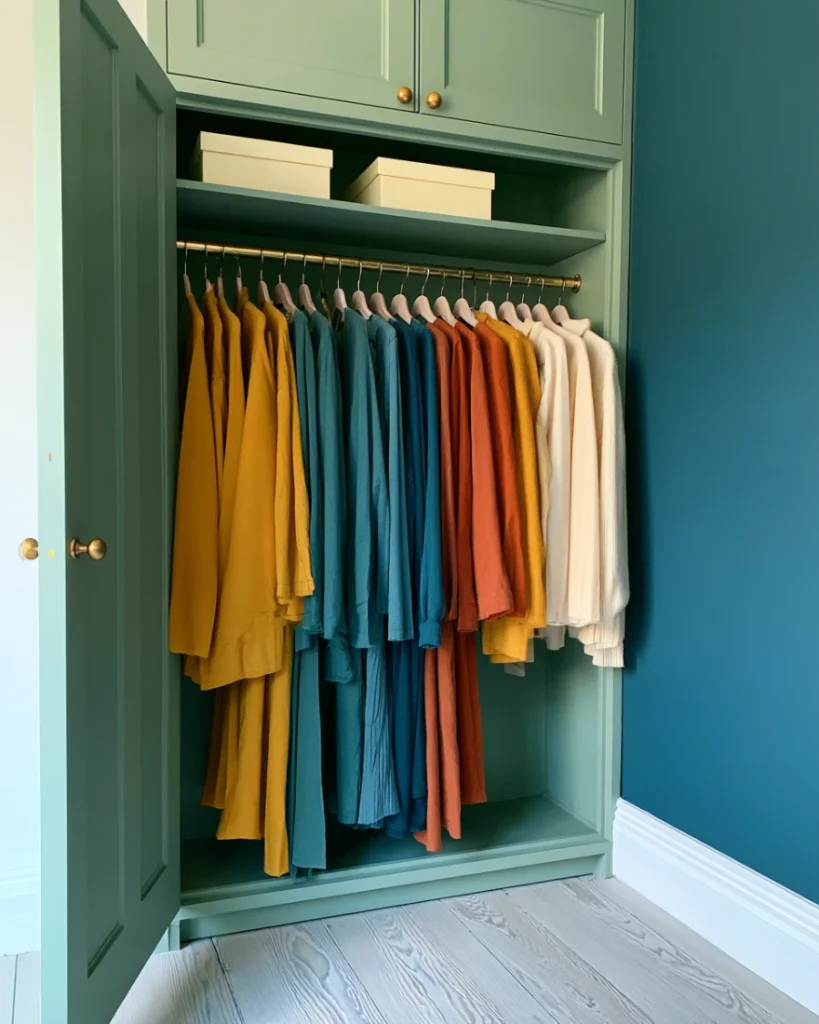
The point of all this is a rail you can shop from, where every hanger holds something that fits and that you would choose today.
Expect the rail to look sparse at first, and expect that to feel wrong for about a week before it starts feeling like relief.
Resist filling the gap. A rail with room in it is the whole return on the afternoon you just spent.
Signs it worked
- You can see a gap between hangers when you look along the rail
- Nothing on it needs a different body or a repair you have not booked
- Getting dressed takes less time than it did
- You stop moving the same three garments from one end to the other
Space between hangers is the measurable version of all of this, and roughly an inch per garment is the point where you can see what you own.
Keeping it that way
Hang a bag on the inside of the wardrobe door. Anything you try on and reject goes straight into it, and the bag leaves the house once it is full.
That bag means you never have to declutter clothes as a project again, because the sorting happens a garment at a time.
A rejected garment is easiest to part with in the ten seconds after you have taken it off, and that window closes fast.
Where the bag goes matters more than people think, since different categories have genuinely different destinations.
Work through it in this order
- Empty the rail completely rather than sorting in place
- Pick up each garment once and name which of the five reasons is holding it
- Money, size, and guilt go today
- Memory gets one box, dated, stored outside the bedroom
- Just in case keeps one of each, and only what is hard to replace quickly
The whole pass takes an afternoon the first time, and about an hour when you repeat it a year later.
Doing it once a year is enough, and doing it in spring saves handling everything twice because the seasonal swap is happening anyway.
Anything that survives two consecutive passes without being worn has told you what it is, whatever reason you gave it the first time.
If the rail refills within a few months, the sorting was never the problem, and the buying pattern sits upstream of the wardrobe.
A wardrobe this size also needs somewhere sensible to live, and a small closet works best sorted into height bands.