

Tupperware takes up four times more room than it needs to, and the cause is one habit. Storing every container with its lid clipped on.
Ten identical 7-by-5-inch containers stored lidded and side by side occupy about 1,278 cubic inches of cabinet.
The same ten with bases nested and lids filed upright take 332 cubic inches. That is a factor of 3.8 on the same shelf.
The number that decides this is not how many containers you own. It is how many different footprints you own, because only matching bases nest.
Most Tupperware organization ideas start with a bin or a rack. The bin comes last, after you've counted the family.
Count footprints, not containers
A nesting family is a group of containers that share a footprint and slide inside one another. Two families never nest together, however similar they look.
So the cabinet does not care about your total. It cares about how many separate stacks that total breaks into.
| How the same 10 containers are split | Cabinet space used |
|---|---|
| 1 nesting family of 10 | 332 cu in |
| 2 families of 5 | 438 cu in |
| 4 families of 2 or 3 | 612 cu in |
| 10 orphans that nest with nothing | 1,278 cu in |
Every extra family costs you roughly the height of a full container all over again, because each new stack starts from the shelf.
That is why a cabinet can look reasonable at ten containers and unusable at fifteen. The extra five arrived as five new families rather than as five more of something.
Count the distinct footprints in your cabinet rather than the containers, and write the number down.
Kitchens commonly run six to ten families for around fifteen containers, which is why the cabinet feels full at a total that sounds modest.
Getting that to two families is the whole job, and it is a counting exercise rather than a shopping one.
How to count your families in five minutes
- Empty the cabinet onto the counter, bases and lids separate
- Push every base that nests into another into one pile
- Repeat until nothing else nests, and count the piles
- Set aside any base with no lid and any lid with no base
- Write down the pile count, because that is the number the cabinet responds to
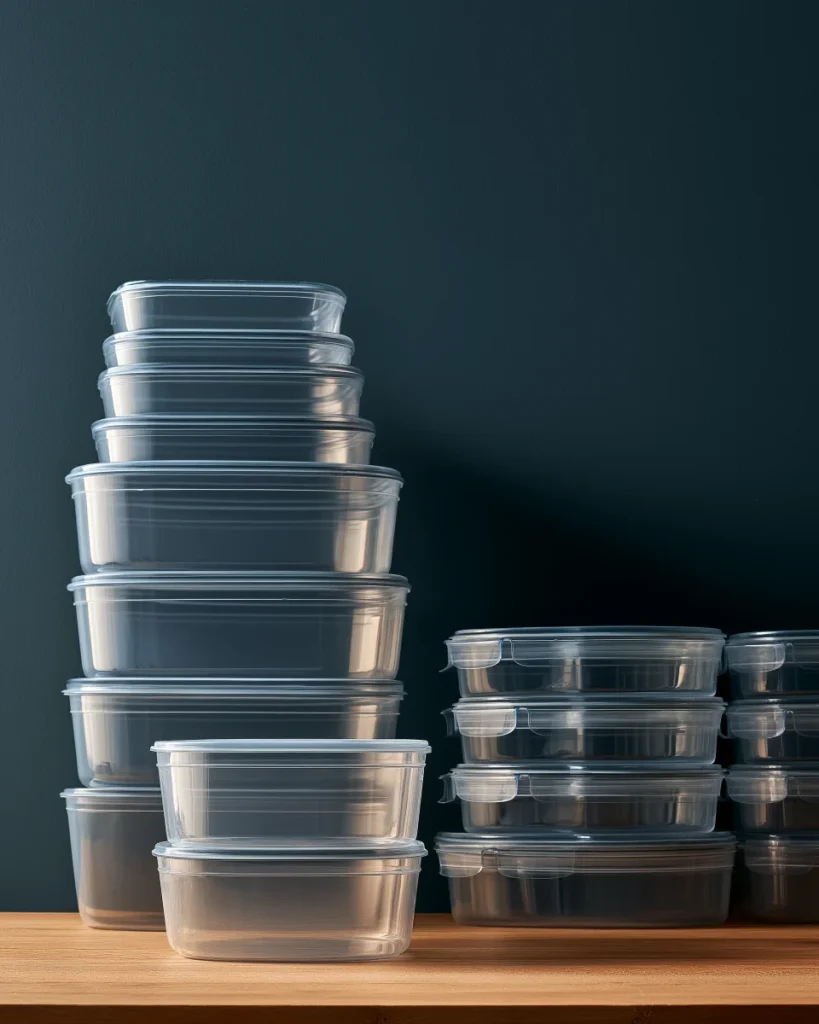
What one nesting family costs
Take a common rectangular container at 7 by 5 by 3.5 inches. Lidded, it needs 122 cubic inches of shelf including the lid.
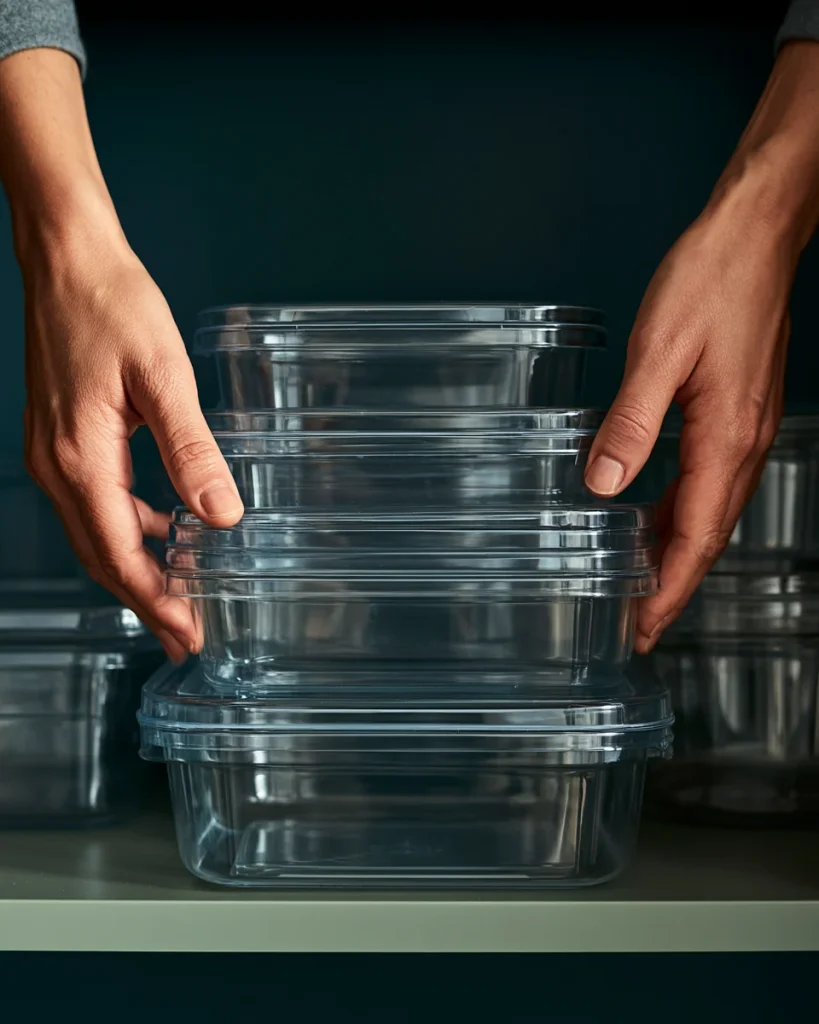
Nested, each additional base adds only its rim, around half an inch. Ten of them stand 8 inches tall on a single 35-square-inch footprint.
| Method | Height or width | Space used |
|---|---|---|
| 10 lidded, side by side | 3.65 in tall | 1,278 cu in |
| 10 bases nested | 8.0 in tall | 280 cu in |
| 10 lids filed upright | 1.5 in of width | 52 cu in |
| Nested plus filed, total | 332 cu in |
Store bases nested and lids filed upright, never lidded and side by side.
The trade is real and small. You add one action when putting food away, which is fitting a lid, and you get three-quarters of the shelf back.
People resist this because a lidded container feels ready to use. It is ready, and it is also charging you four times the rent for that convenience.
Tupperware stored nested is still ready. The lid is two inches away in a rack, facing you, in a size you can identify without lifting anything.
That shelf is worth more than it looks in a small kitchen, since the cabinet run is fixed and every other category is competing for it. The dead depth in a standard base cabinet is the other half of the same problem.
Lids are a different storage problem
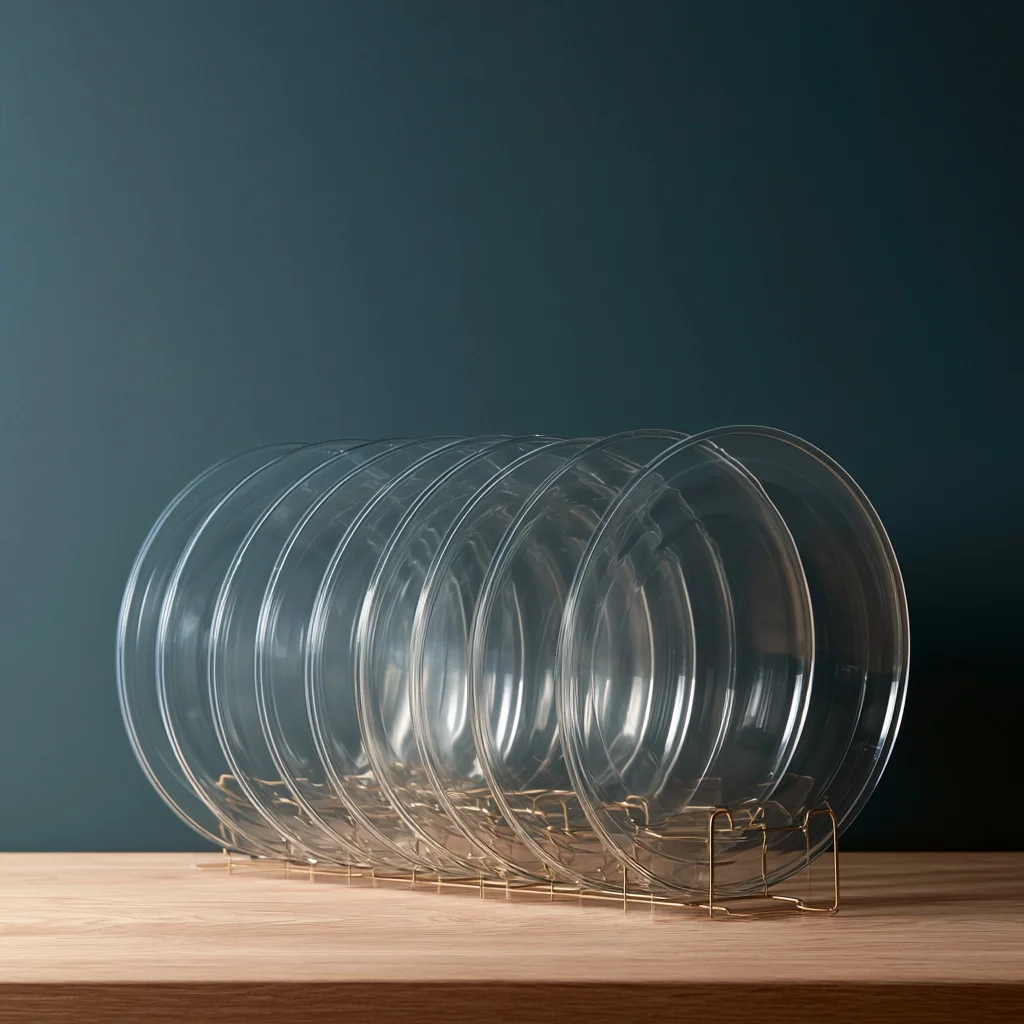
A lid is flat, thin, and rigid. Stacked horizontally, it slides, and the stack fans out the moment you take one from the middle.
Filed on edge, it behaves like a plate. Ten lids stand in an inch and a half of width, and every one of them is visible from the front.
File lids on edge in a rack, the same way you would file plates or baking trays.
What works for filing lids, cheapest first
- A wire letter rack, which costs under ten dollars and needs no fitting
- A tension rod across the cabinet with lids leaned against it
- An expandable drawer divider set on edge in a shallow drawer
- A dish rack repurposed inside a deep cabinet
- An over-door rack, for flat lids only and nothing heavier
Sort the file by shape rather than by size. Round lids in one section and rectangular in another finds a match faster than any size order.
Size order sounds tidier and performs worse, because you match a lid by outline first and only then by dimension.
A Tupperware lid rack fails in a way you will not notice if it is too deep. Lids slide flat at the back, and a rack under four inches deep keeps every one upright.
Round containers throw away a fifth of the shelf
A round container sits in a square hole. A 7-inch round base occupies a 49-square-inch bounding box on the shelf and uses 38.5 of it.
Nobody stores containers in a hexagonal grid, so those corners are dead. Round is the single worst decision available in food container organization for a cabinet.
That is 21.5 percent of the footprint lost to the corners, on every round container, every time.
On a 24 by 12 inch shelf, the difference is stark. Six rectangular 7-by-5 containers fit in the same area that takes three 7-inch round ones.
Buy square or rectangular for anything that lives in a cabinet, and keep round for what goes in the fridge door.
Round earns its place inside a fridge, where the shelves are shallow, and the door bins are curved anyway. What the fridge should be holding and where settles which containers belong in there.
Read more: the vertical inches a small kitchen usually leaves empty
Culling to two families
The arithmetic says one family is best and two is realistic. One for meal-sized portions and one for small amounts.
Anything outside those two is an orphan, and each orphan costs its own stack. That is the test, not whether the container still works.
This is the part that feels wasteful and is not. A working container that nests with nothing is charging a full stack of rent to hold one portion.
What counts as an orphan
- A base whose lid is missing
- A lid whose base is missing
- A single container in a size nothing else matches
- A shape that nests with nothing you own
- Anything warped enough that the lid no longer seals
Cull to two families and no more, whatever the total count says.
This is a short pass rather than a project. A fixed count over a fortnight, run the way a removal challenge works best, clears a container cabinet without turning into a whole day.
The refill problem is the one to watch afterwards, since containers are cheap and each new set arrives as a new family. The point in the buying loop where that stops matters more here than in most categories.
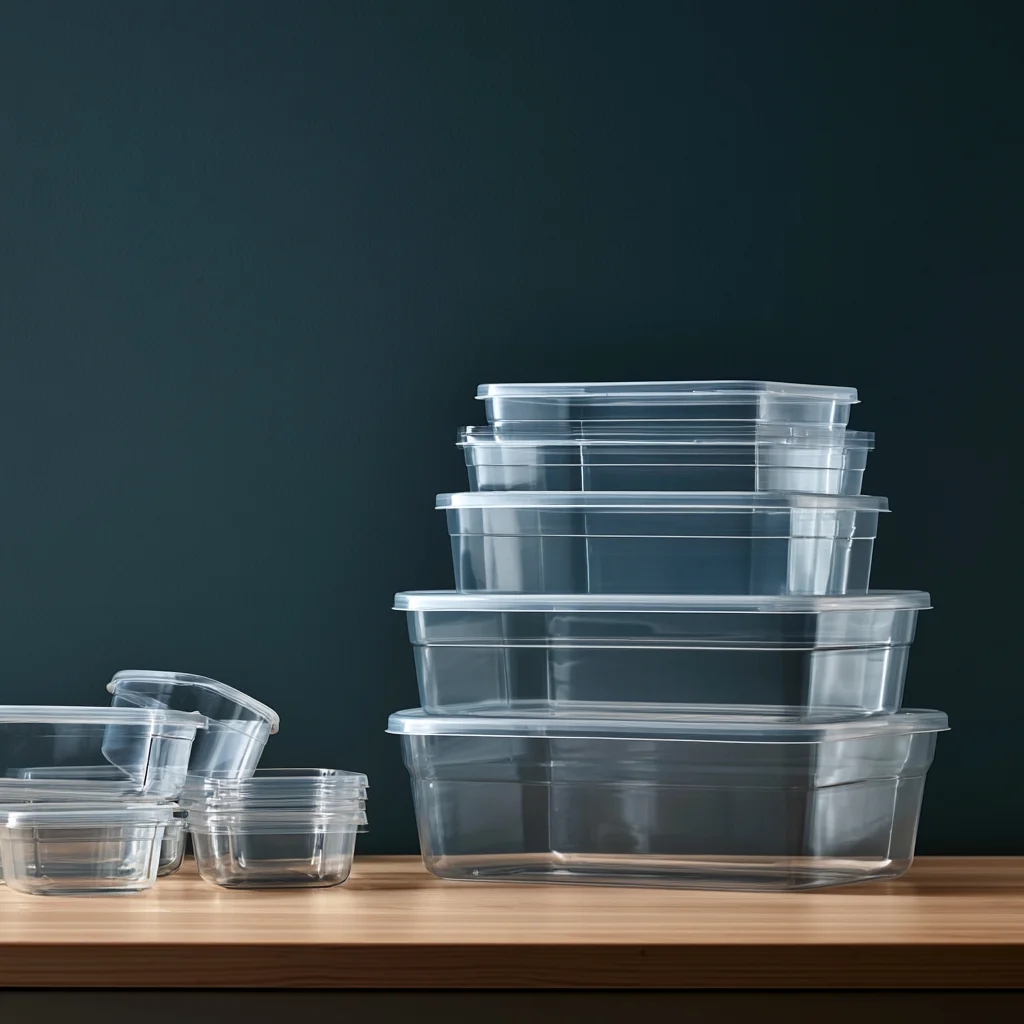
What comes out entirely
Two groups should leave regardless of the nesting arithmetic, and one of them is a safety question rather than a storage one.
Both are groups people keep on the grounds that they are free. Free is the wrong measure when the cost is a stack of cabinets.
Takeout tubs, butter tubs, and deli pots are designed for cold storage and not for heat. The FDA notes that most microwave injuries are heat-related, coming from hot containers, overheated food, or liquids that boil over.
A tub that was never made for reheating softens, warps, and can fail while you are lifting it. It also nests with nothing, so it fails the storage test too.
Take the takeout tubs and butter tubs out of the rotation, and keep only containers labelled for microwave use.
The second group is anything scratched, clouded, or cracked. A container that has gone cloudy has a roughened surface that holds food residue in places a sponge does not reach, and the seal on a cracked lid stopped working before the crack was visible.
Out on the first pass, no exceptions
- Takeout and deli tubs kept as spare containers
- Butter and margarine tubs
- Anything cloudy, scratched, or stained through
- Lids that no longer click on both sides
- Containers with a smell that survives washing
The cabinet layout that follows
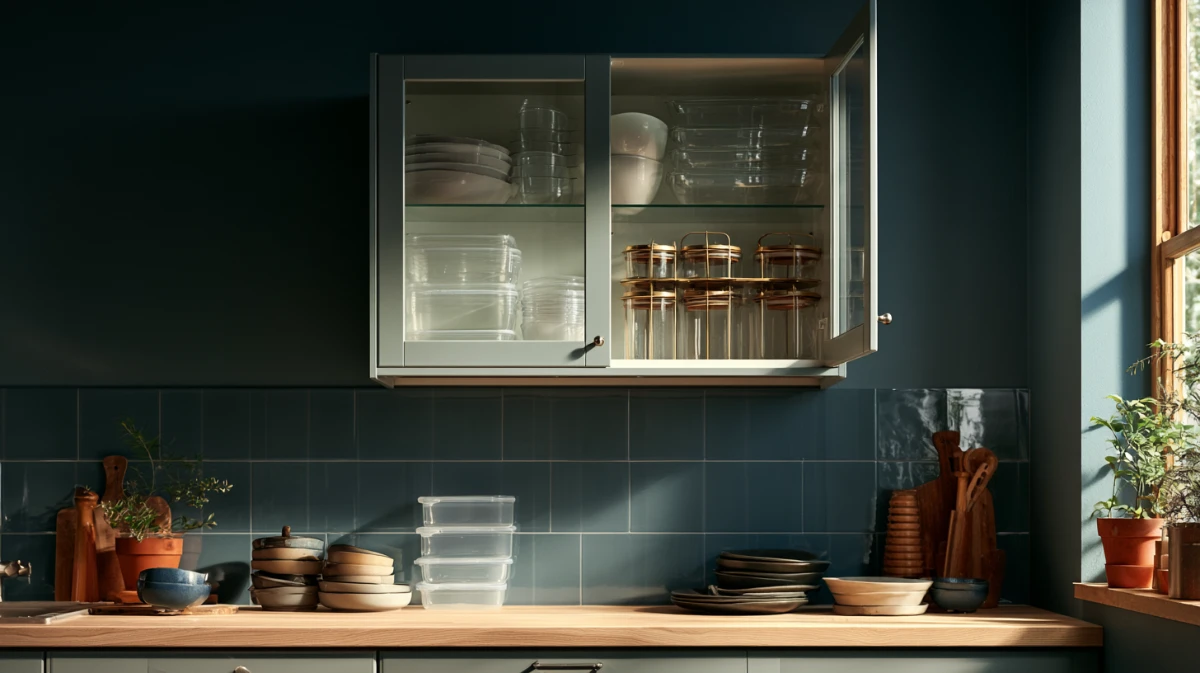
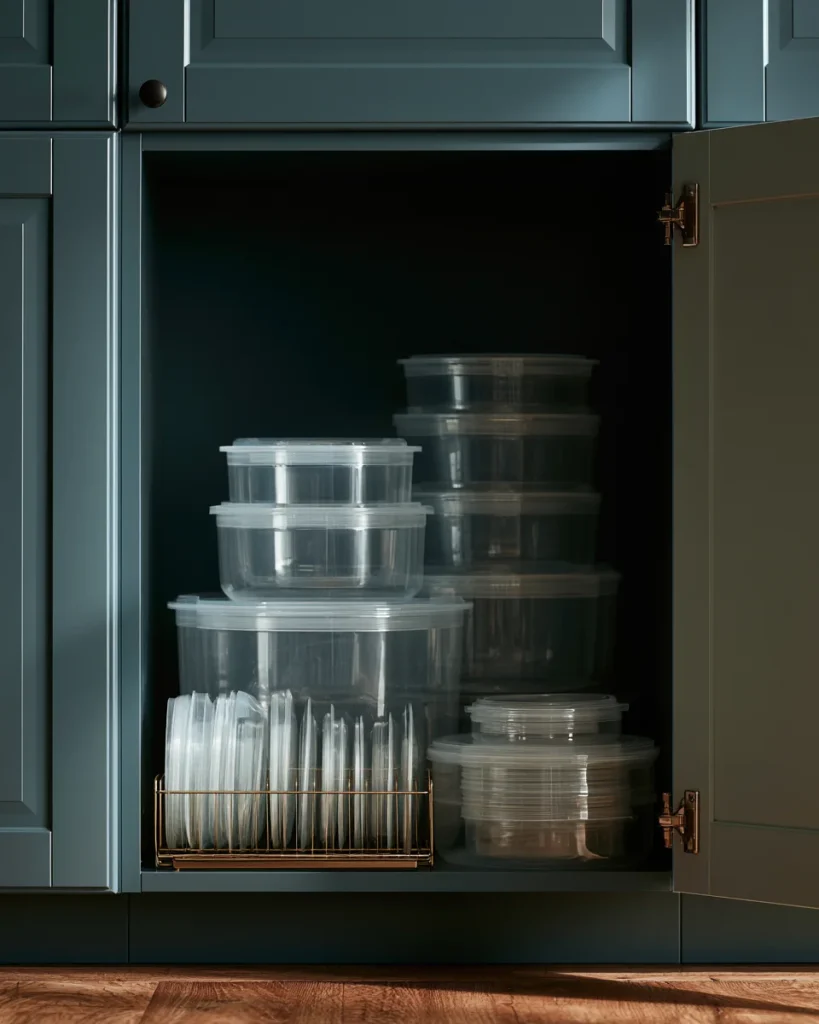
Once the collection is two families, the layout writes itself. Bases nested at the back, lids filed at the front, nothing stacked on top of anything.
Nothing on top matters more than it sounds. A nested stack is lifted out as a unit, and anything resting on it has to be moved first every single time.
Height is the constraint people hit here. A nested stack of ten is 8 inches tall, so a cabinet shelf gap under 10 inches forces you into two shorter stacks.
Two stacks of five is still four times better than ten lidded containers. Tupperware storage gains survive a short shelf, they just arrive in two columns instead of one.
Measure the cabinet shelf gap before buying a set, because nesting needs headroom that lidded storage does not.
The layout, front to back
- Lid file at the front, where you look first
- Everyday family nested directly behind it
- Second family behind that, since it moves less
- Nothing above either stack, because that blocks the lift
- A shallow drawer for lids instead, if the cabinet is deeper than 18 inches
A drawer beats a deep cabinet for this whenever you have one to spare, for the same reason a single layer keeps small items findable rather than stacked and forgotten.
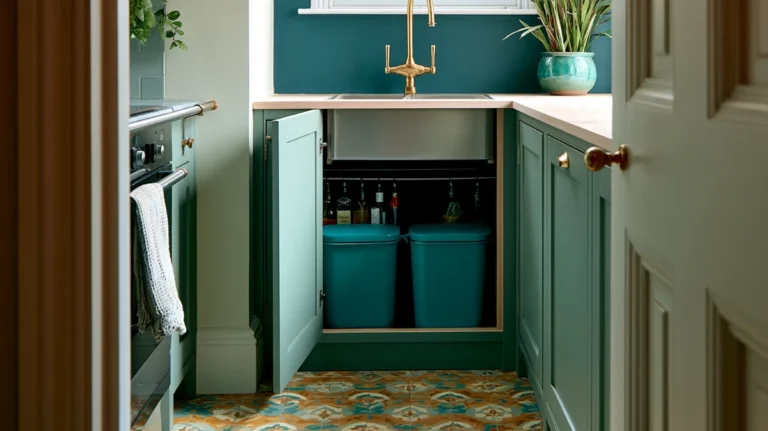
If the cabinet under the sink is the only space left, check what belongs there first. The plumbing and damp constraints in that cupboard rule out more than people expect.
Read more: why the wall above the counter suits some things and destroys others
Keeping it to two families
The collection grows back by acquisition rather than by breakage. A new set arrives, it does not nest with anything, and the family count goes from two to three.
Every Tupperware set sold is internally consistent and externally incompatible. That is not an accident, and it is the whole reason family counts creep upward.
One rule holds it. Replace within a family or do not replace at all.
That rule is easier to keep than a count, because it applies at the moment of purchase rather than during a sort you keep postponing.
The rules that keep the count down
- Buy replacements in the same range you already own
- Discard the base on the day its lid breaks, rather than saving it
- Refuse containers sent home from other households, politely and immediately
- Check the nesting before buying, by stacking two in the shop
- Do a 5-minute count twice a year rather than a full sort
Replace a broken lid within the family, or discard the base the same day.
Counter space is the early warning sign. When containers start living out on the worktop, the cabinet has stopped holding them, and the surface budget that gets spent without anyone noticing is where it shows first.
Dry goods are a separate system with separate containers, and mixing the two is how both stop working. The rotation that keeps a small pantry moving should not share a shelf with leftovers storage.
Pans have the same nesting question and a different answer, since a nested pan needs a liner to avoid scratching. The hanging and stacking options that suit them are worth reading before you nest anything heavy.
Read more: the room by room order that stops a clear out stalling
Tupperware is one of the few kitchen problems with an exact answer. Count the footprints, get them to two, nest the bases and file the lids.
Nothing on that list costs money. The rack is the only purchase, and it is optional, since a shallow drawer or a tension rod does the same work.
The containers you own barely matter after that. The cabinet is holding stacks, and the number of stacks is the only figure it responds to.